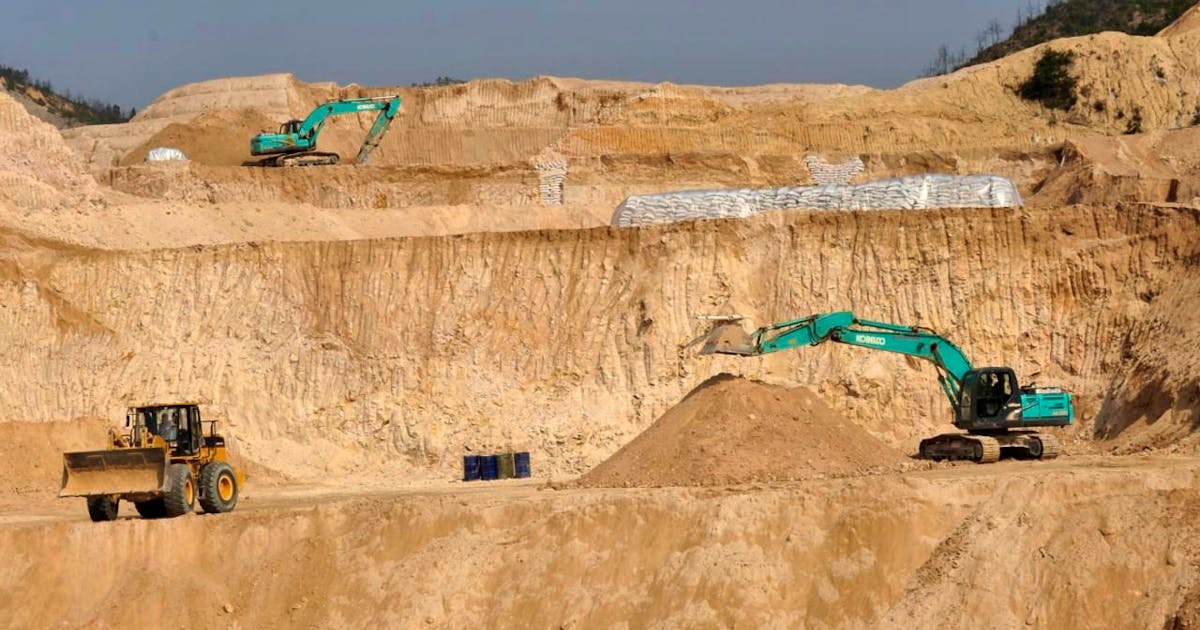
The EU is dependent on imports of raw materials from other countries – the picture shows the mining of rare earths in the Chinese province of Jiangxi. (archive picture)
Keystone
According to the EU Commission, the European Union should coordinate its supply of raw materials more closely. Among other things, a European center is to be set up to coordinate raw material purchases and supplies.
A raw materials platform should support companies in pooling their demand and purchasing together, the Brussels authority announced.
The EU Commission is also announcing a tougher economic policy towards other countries. “The EU will also take a more strategic approach in order to make better use of its economic weight and access to its internal market”, said the Commission.
Parts of the EU are extremely dependent on imports of raw materials from other countries. This became clear, for example, when the Chinese government announced export controls on rare earths. The European-Chinese dispute over the chip manufacturer Nexperia also caused concern in German industry. Beijing had imposed export restrictions on Nexperia chips, which affected car manufacturers among others.
Using existing tools “more proactively”
The Commission also announced that it plans to use existing instruments independently of their original purpose and to take a more “proactive” approach where necessary in order to strengthen economic security. These could include anti-dumping duties, measures against takeovers of European companies from abroad or the exclusion of companies from third countries from public contracts.
“It is probably mainly thanks to China’s current export restrictions on rare earths that the EU is finally taking the next step here,” said Bernd Lange (SPD), Chairman of the Trade Committee in the EU Parliament. An impending ban on the delivery of chips from the Dutch company Nexperia had made it clear how vulnerable European supply chains were.
Deter third countries
The Commission’s communication also aims to deter third countries from using dependencies as a weapon against the EU. At the same time, it states that EU states and industry must increasingly accept economic costs in order to reduce dependencies and increase security. Among other things, the authority announced that it wanted to investigate ways in which companies could be encouraged to be supplied by at least two different suppliers.