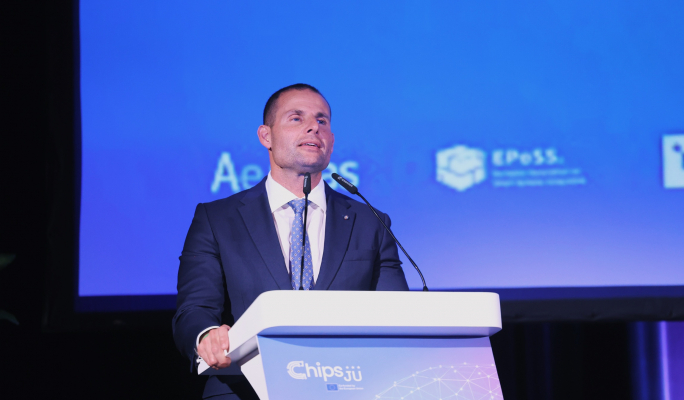
Prime Minister Robert Abela said the European Union must rely on the contribution of Malta and all its member states if it is to remain competitive in the global semiconductor value chain.
Abela made the remarks during the opening of the European Forum for Electronic Components and Systems (EFECS), being held in Malta for the first time and organised through Malta Enterprise.
“A competitive Europe requires that all member states, regardless of size, can contribute to and benefit from the semiconductor value chain,” Abela said. “For this reason, Malta reiterates that all member states must benefit from the European Competitiveness Fund, ensuring balanced growth and EU-wide technological resilience.”
He highlighted Malta’s decades-long strengths in the sector.
“Our semiconductor industry is built on a proud 50-year legacy, anchored by the presence of STMicroelectronics, whose operations have been central in shaping Malta’s technological capabilities and industrial resilience,” he said. The sector, he added, continues to contribute significantly to capital investment, high-quality employment and export performance.
Abela said Malta now stands at a “pivotal moment” as it moves further up the value chain through higher-value, technology-driven activities designed to generate long-term economic and social benefits.
“Our focus is clear: to continue enhancing productivity and generating higher-value activity that translates into a better quality of life for our citizens,” he said, referencing Malta Vision 2050.
A major component of Malta’s strategy is the creation of the Malta Semiconductor Competence Centre, aimed at strengthening local expertise, promoting advanced manufacturing and supporting the development of new technologies, the PM explained.
This is complemented by a semiconductor start-up incubator programme developed by Malta Enterprise in partnership with Silicon Catalyst, intended to nurture early-stage innovators and attract international talent.
The government is also drawing up a national Semiconductor Strategy following extensive consultation with industry stakeholders, academia and international partners.
The strategy will set national priorities, identify upcoming opportunities and reinforce Malta’s position in the European semiconductor value chain.
Looking ahead, Abela said Malta has growing potential to develop into a European hub for specialised semiconductor manufacturing, chip design, testing services and sustainable semiconductor processes.
Economy Minister Silvio Schembri said semiconductors have become essential to economies and everyday life around the world.
“Malta recognised this early on. We may not have natural resources beneath our soil, but we chose to invest in this strategic resource of the future, proving that even a small nation with a clear direction can play a meaningful role in Europe’s technological competitiveness,” Schembri said. “Today, this vision is delivering results, and we are strengthening our systems so that our people can benefit from even better opportunities.”