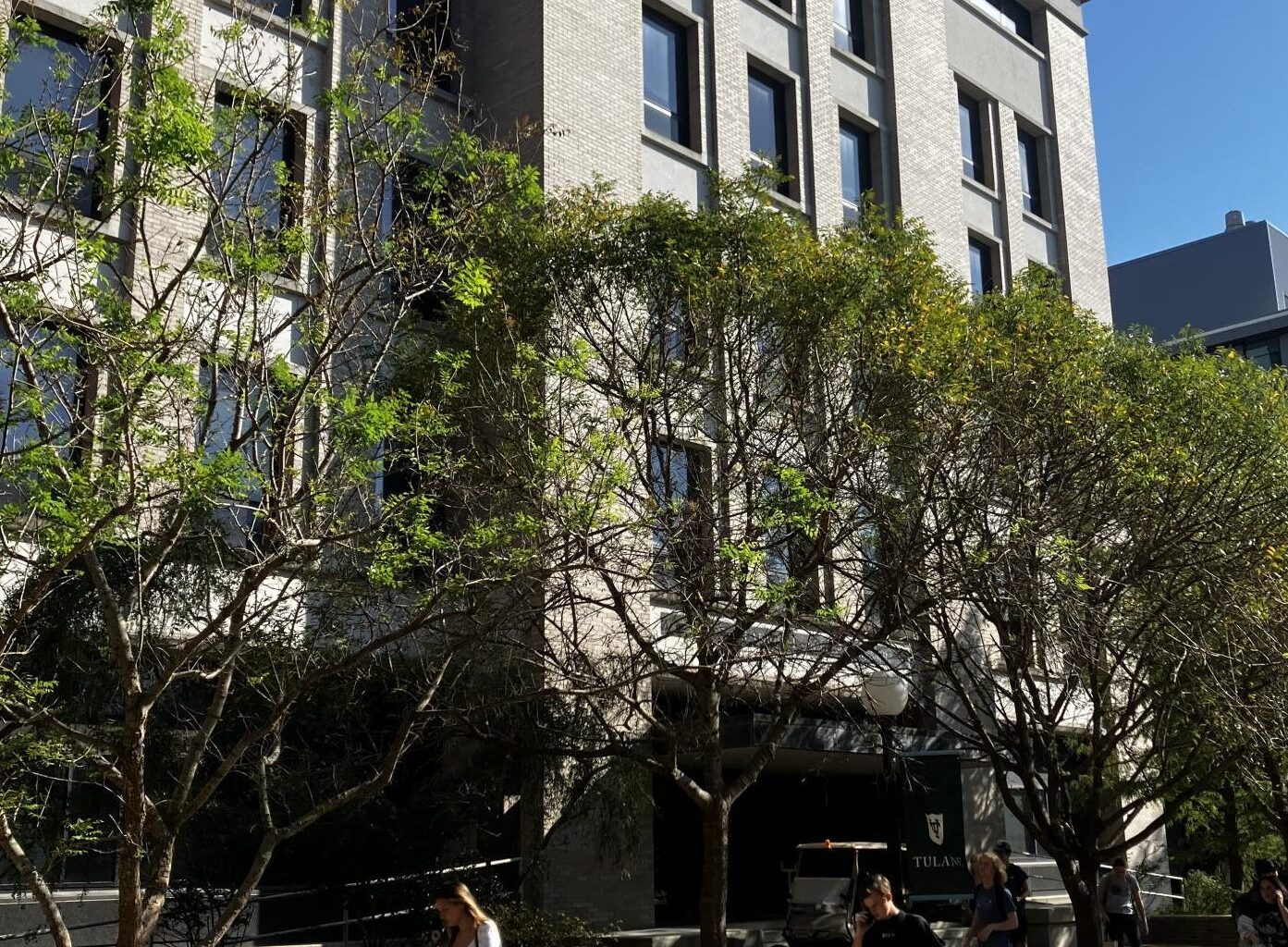
The Tulane University School of Science and Engineering welcomed 24 new faculty members this year across departments ranging from biology and physics to engineering, mathematics and computer science. The new hires bring new experiences, perspectives and expertise to Tulane’s science and engineering programs.
Biomedical engineering
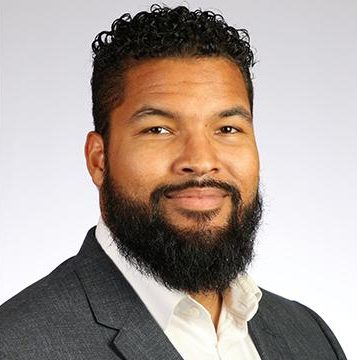 Mykel D. Green
Mykel D. Green, a new assistant professor of biomedical engineering, focuses on biomaterial technologies to address menopausal health and sickle cell diseases. Besides teaching and research, he is the advisor for the National Society of Black Engineers and the Black Excellence in Medicine.
Green is currently working on a project in collaboration with fertility institutes around New Orleans and the Tulane School of Medicine’s physiology department to develop a new, more natural hormone replacement therapy.
“I’m currently in the process of developing a project where we are trying to get hormone-producing cells from IVF patients so we can use them for a menopausal therapy,” Green said.
Next semester, Green will teach an introductory organic chemistry and biochemistry course. His goal is to “expose [students] to what’s going on and help them figure out what career paths they want to go down.”
Mathematics
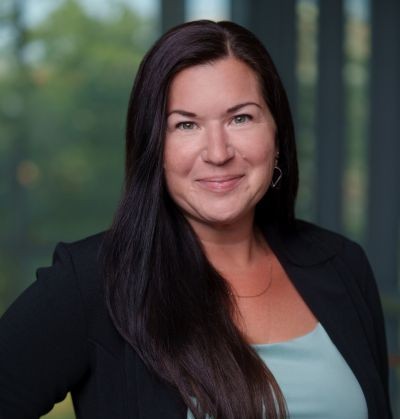 Emily Gamundi
Emily Gamundi, a new professor of practice in mathematics, is a New Orleans native and Tulane Ph.D. alumna. Gamundi returned to Tulane after serving as a Clare Boothe Luce Professor of Mathematics at Trinity Washington University in Washington, D.C.
Now a joint professor in both the Department of Mathematics and the Murphy Institute, Gamundi hopes to change students’ perspectives on mathematics through her teaching.
“I get to teach math to people who don’t love math, but hopefully by the end, their opinion has changed,” Gamundi said.
Gamundi said that having a good experience in a mathematics class partly stems from a good student-teacher relationship. In her first semester, Gamundi memorized all 70 of her students’ names to build connections with them in the classroom.
“Seeing the students and seeing their faces and then calling on them and answering their questions … brought me a lot of joy.”
Earth, environmental sciences
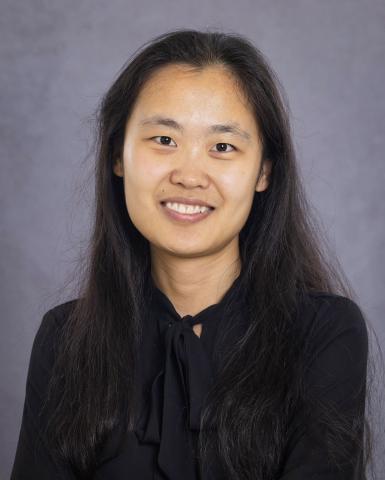 Yi Wang
Yi Wang, a new assistant professor of earth and environmental sciences, received her Ph.D. from the University of Michigan, where her research focused on paleo-oceanography and paleoclimate. She then completed a postdoctoral position at Woods Hole Oceanographic Institution in Massachusetts.
Yi Wang says both research and location drove her move to Tulane.
“I work on ocean deoxygenation … and the Gulf of America has a dead zone, which means that their oxygen concentrations get super low in the summer,” Wang said. “That has become a huge issue for local fisheries. And I studied a lot of that zone stuff and low oxygen areas in my PhD. I always wanted to expand my research to this area.”
Currently, she is collaborating with colleagues in the School of Liberal Arts, including anthropology professors.
“We’re planning to collect lake sediments to study climate change and how shifts in climate may have contributed to the collapse of different civilizations,” Wang said.
 Wayne Wagner
River coastal science, engineering
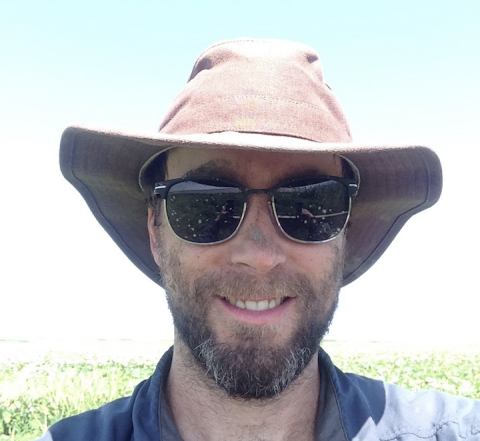
Wayne Wagner, a new professor of practice in the Department of River-Coastal Science and Engineering, received his undergraduate degree in civil engineering from Auburn University and his Ph.D. from the University of California, Berkeley. At Tulane, he mainly teaches water resources engineering, bringing more than two decades of teaching experience to the classroom.
As a former high school teacher, he said, “My favorite thing is seeing your old high school students smile on campus.” He said those moments help him feel more connected to students and remind him why teaching matters.
Ecology, evolutionary biology
 Brian Sidlauskas
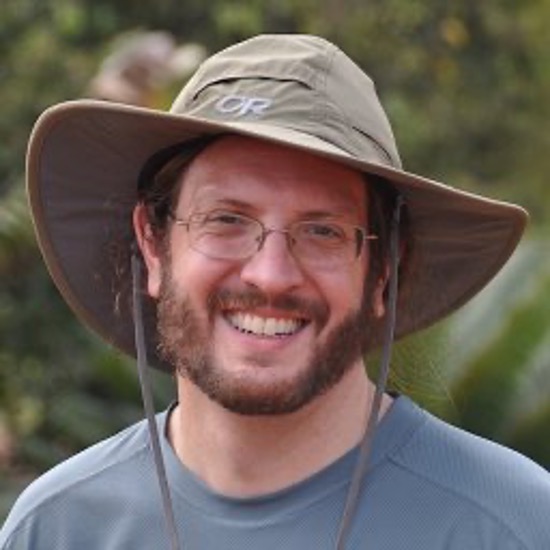
Brian Sidlauskas, a new professor of ecology and evolutionary biology, mainly studies the biodiversity and the evolutionary history of fish. His interest led him to become the director of the Tulane University Biodiversity Research Institute, where he manages the Royal D. Suttkus Fish Collection, the largest collection of post-larval fishes in the world, with over 7 million specimens.
For interested students, “I would want students to know that the fish collection is always interested in help,” Sidlauskas said.
On campus, Sidlauskas is excited about a new micro-CT scanner that is arriving next year. This tool will create 3D models of fish skeletons and other materials, opening opportunities for students to analyze data, generate models and take measurements.