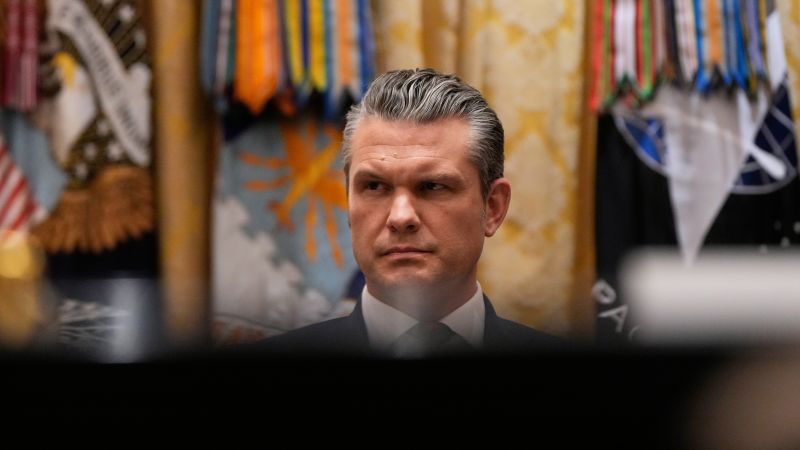
When a scandal-plagued top official needs a public vote of confidence from a president, it’s usually a certain sign they’re headed for the exit.
But Pete Hegseth is starting to look like a defense secretary with nine lives. After surviving a bitter confirmation showdown that included damning details of his personal life, he’s now in the midst of additional controversies that would have been career-ending in more normal political times.
Hegseth, who prefers to be called the secretary of war, was on Thursday in the middle of two raging Washington melodramas sparking calls for his resignation. But President Donald Trump is standing firm.
— A new government watchdog report finds that Hegseth risked compromising sensitive military information, which could have endangered US troops and mission objectives, when he used Signal in March of this year to share highly-sensitive attack plans targeting Houthi rebels in Yemen, CNN exclusively reported, citing four sources familiar with the contents of a classified assessment.
— A storm is intensifying over what orders Hegseth issued and what he knew about a follow-up attack on an alleged drug trafficking boat in the Caribbean on September 2, that reportedly killed surviving crew members, prompting Democrats to claim those involved may have committed a war crime. Hegseth says he didn’t know about the second strike in advance, but that the admiral who he says did order it, Frank “Mitch” Bradley, has his full support.

The backlash from both incidents is creating new distractions for a president whose approval ratings have plunged and a Republican Party looking with trepidation towards next year’s midterm elections. In such circumstances, White Houses often conclude it’s best to tip the scandal-plagued official overboard.
But this is not a normal White House.
A blow like the one delivered to Hegseth in an inspector general’s report would have most public officials contemplating their position. But Trump has dismantled the government’s architecture of accountability. He’s fired multiple inspectors general and turned the Justice Department into a vessel to target his enemies. Hegseth has enthusiastically followed suit at the Defense Department, ousting military lawyers and purging top brass he considered insufficiently loyal to Trump.
In an administration determined to purge the “deep state,” an unfavorable report from an inspector general doesn’t even rank as a blip.
But Hegseth’s value to Trump runs deeper.
The former Fox News anchor might bring bad headlines, but he’s also a pure distillation of the president’s convention-busting psyche — an outsider bent on smashing the status quo, a fighter who picks the same enemies as his boss and who views laws and rules of engagement as things to be fought against in a quest to unleash American might.
Trump ‘stands by’ Hegseth
White House press secretary Karoline Leavitt told CNN in a statement Wednesday that “President Trump stands by Secretary Hegseth” and argued the IG report proved no classified information was leaked and operational security was not jeopardized in Hegseth’s posts to top officials on Signal.
For now Hegseth seems safe.
True, Trump’s assurances of confidence have sometimes had a short half-life. He backed first term Attorney General Jeff Sessions and Secretary of State Rex Tillerson before he fired them. His initial support for Matt Gaetz, his first pick for his second term attorney general, couldn’t stop his nomination from quickly dissolving. And many Trump subordinates have discovered that loyalty often goes only one way when they become a millstone for a transactional president.
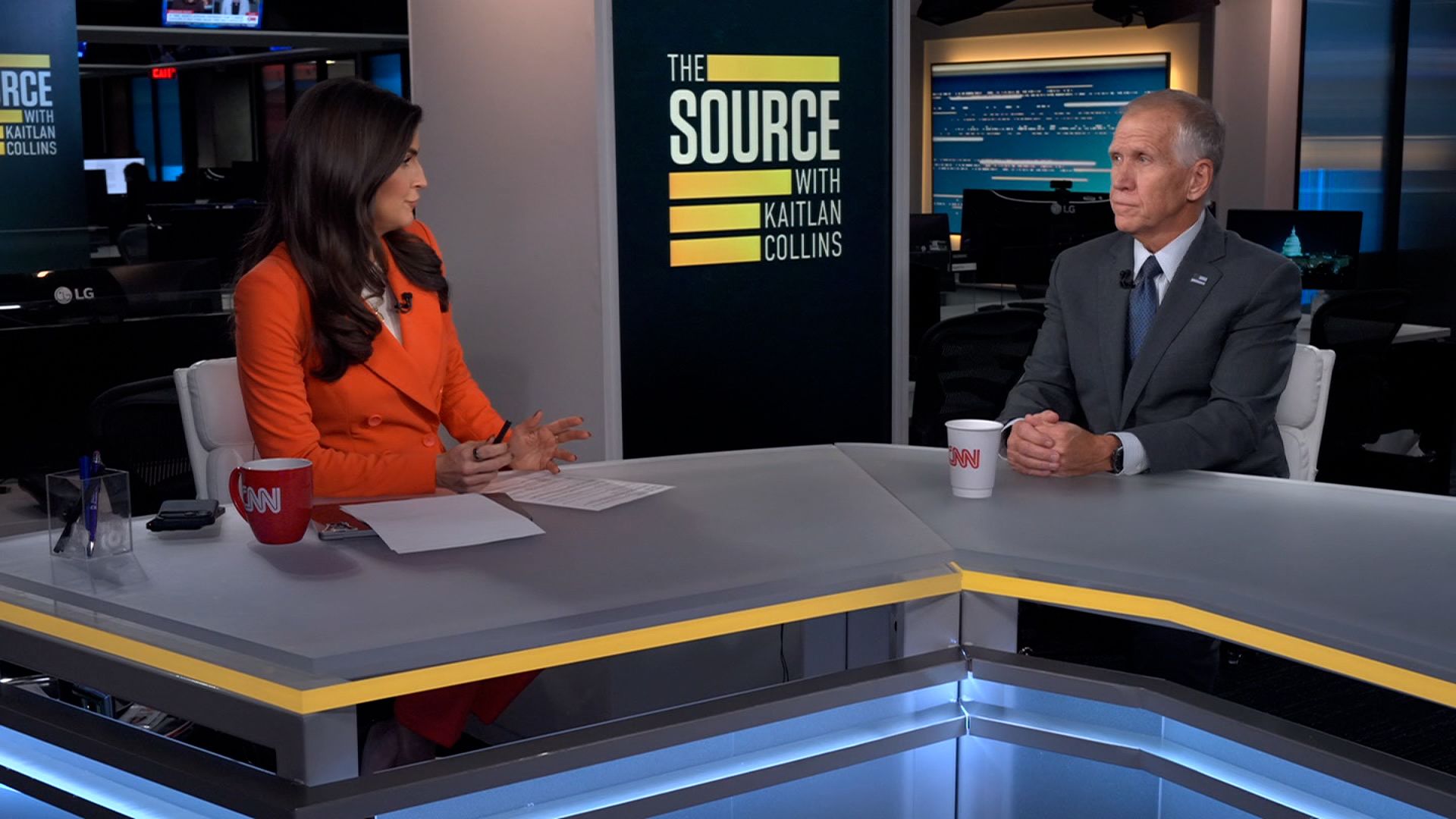
GOP Senator: Pete Hegseth “is responsible” for processes that lead to strike on survivors in the Caribbean

The president’s confidence in Hegseth is hardly shared on Capitol Hill. Senior Republicans danced a tightrope when asked if they share his assessment. Hegseth “serves at the pleasure of the president” Senate Majority Leader John Thune told CNN’s Manu Raju, arguing he was part of a team that made America safer. Senate Armed Services Committee Chairman Roger Wicker said the defense secretary was in a “pretty good position” in regard to the IG report but did not respond when Raju asked if he had confidence in him.
Other Republicans are less discrete. Kentucky Sen. Rand Paul this week implied Hegseth had lied about the September 2 boat attack. Alaska Sen Lisa Murkowski pointed out that she had never backed Hegseth. “I had suggested that perhaps we can and should do better,” she said.
Democrats want Hegseth gone. They include Arizona Sen. Mark Kelly, who is locked in a feud with the defense secretary after the Pentagon warned he could be called back into uniform and court martialed over a video in which he and other Democrats reminded service personnel they didn’t have to obey illegal orders. “Pete Hegseth should have been fired,” said Kelly, a retired Navy pilot, war hero and astronaut, referring to the Signalgate fiasco.
Aside from Hegseth’s shifting explanations of the boat strike and Signalgate, he has given his critics plenty of evidence for their case that his lack of top-level government experience, temperament and hyper-partisan antics make him a bad fit to run the Pentagon.
There was the furious rhetorical assault on the “fake news” media at the White House Easter Egg roll and another overwrought rant at the press in Hawaii. Hegseth’s Defense Department kicked out the press corps that refused to sign up to draconian censorship rules and welcomed pliant MAGA-oriented replacements.
His willingness to bring the antics and pyrotechnics of conservative news to showdowns with foreign officials surely appeal to a president who is a master of stunt politics.
And as much as he can be a headache, it would be an inconvenience for Trump to lose Hegseth. No White House relishes a difficult confirmation hearing for a new nominee, especially one that would bring unflattering scrutiny of its own conduct.
And the president will struggle to find a like-for-like replacement.
Hegseth may be safe so far because he’s not made the same mistake as two of Trump’s first-term defense secretaries. Retired Marine Gen. James Mattis tried to leaven the president’s “America first” foreign policy instincts. He quit when Trump demanded the withdrawal of US troops from Syria. Another of Trump’s former defense secretaries, Mark Esper, wrote his resignation letter months before a departure that was made inevitable when he publicly said he’d oppose the use of troops to quell domestic political protests.
Hegseth has been an enthusiastic proponent of Trump’s bid to send US reservists and even active-duty Marine units into American cities on law enforcement missions that several judges ruled flouted the Constitution and the law.
It’s not just that Hegseth’s campaign against “woke” generals and diversity, equity and inclusion in the Defense Department reflect the president’s own culture wars.
He’s an avatar for the MAGA movement and America First. Like the president, he believes that many of the rules the US military long sought to honor show weakness. If Trump were to reject Hegseth, he’d not simply be losing a key supporter, he’d be rejecting a value system that mirrors his own.

Trump has long railed against what he considers politically correct behavior and adherence to laws that he thinks spike the power of the US military. He has expressed admiration for autocrats like Chinese President Xi Jinping and former Philippine President Rodrigo Duterte who killed drugs traffickers without due process — remarks which seem especially relevant to the administration’s attacks on what they have declared to be narco terrorists in the Caribbean Sea.
Hegseth emerged from his own decorated military service in the Army National Guard and deployments to Iraq and Afghanistan with strident views against what he saw as left-wing laws of war and even the Geneva Conventions.
In his book “The War on Warriors” Hegseth wrote, “When you send Americans to war, their mandate should be to lethally dominate the battlefield.” He added: “Should we follow the Geneva Conventions? What if we treated the enemy the way they treated us? … Makes me wonder, in 2024 — if you want to win — how can anyone write universal rules about killing other people in open conflict?”
Such sentiments alarmed Hegseth’s many Capitol Hill critics as well as former military top brass who believed that the United States had an imperative to show moral leadership on the field of battle.
Hegseth tried to qualify his views during his Senate confirmation hearing earlier this year. He argued that lawyers worried about ethics and international conventions were getting in the way of troops in the field, and that certain rules of engagement are outdated in the face of non-state actors and terror groups like Al-Qaeda and ISIS that US troops encountered in the war on terror.
One of Hegseth’s most prominent critics, Rhode Island Sen. Jack Reed, the top Democrat on the Senate Armed Services committee, told CNN’s Kasie Hunt on Wednesday that Hegseth lacked a basic understanding of why the US should conduct military action according to international law or that the soldier’s first duty was to the Constitution, not an individual political leader.
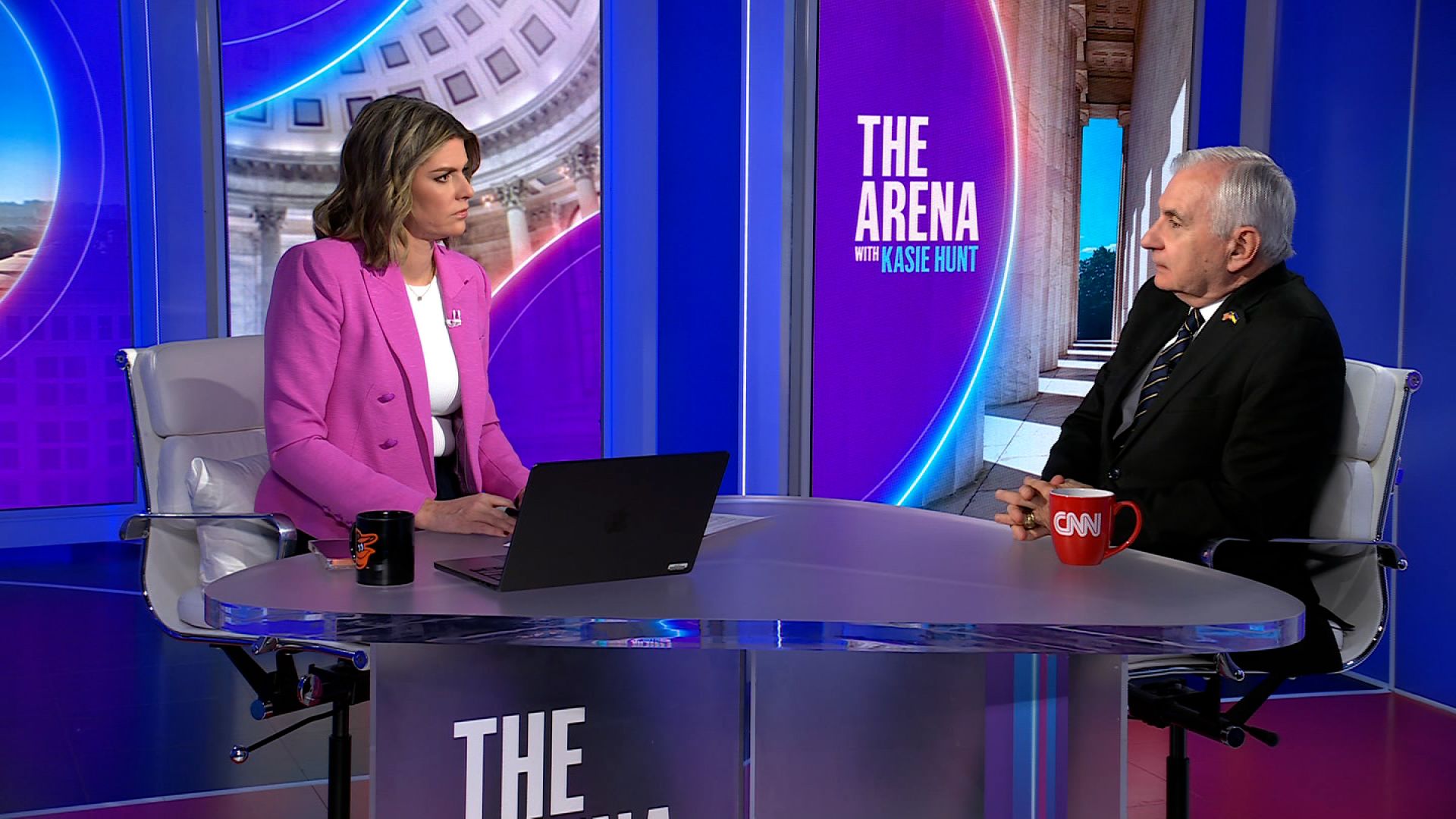
“They’re refusing to give us information that by law we are entitled to”: Sen. Jack Reed on the Pentagon’s cooperation

“We do that for self-interest,” Reed said. “If we don’t respect the law, how can we expect opponents of ours to treat our prisoners, or wounded or those that are no longer hostile — to treat them fairly and according to the law.”
Such arguments don’t fit the ruthless, no quarter attitude to warfare envisioned by Trump and Hegseth. And in retrospect, Hegseth’s contempt for rules of engagement makes it seem inevitable that under his leadership the Pentagon would face accusations of crossing ethical, moral and legal lines.
Trump has said that he believes Hegseth didn’t order the second strike on September 2, and that he wouldn’t have wanted it to happen himself.
But the worldview that makes Hegseth so unacceptable for so many critics seems to be what recommends his continued service to a commander-in-chief who flouts rules of engagement across the spectrum of political life.