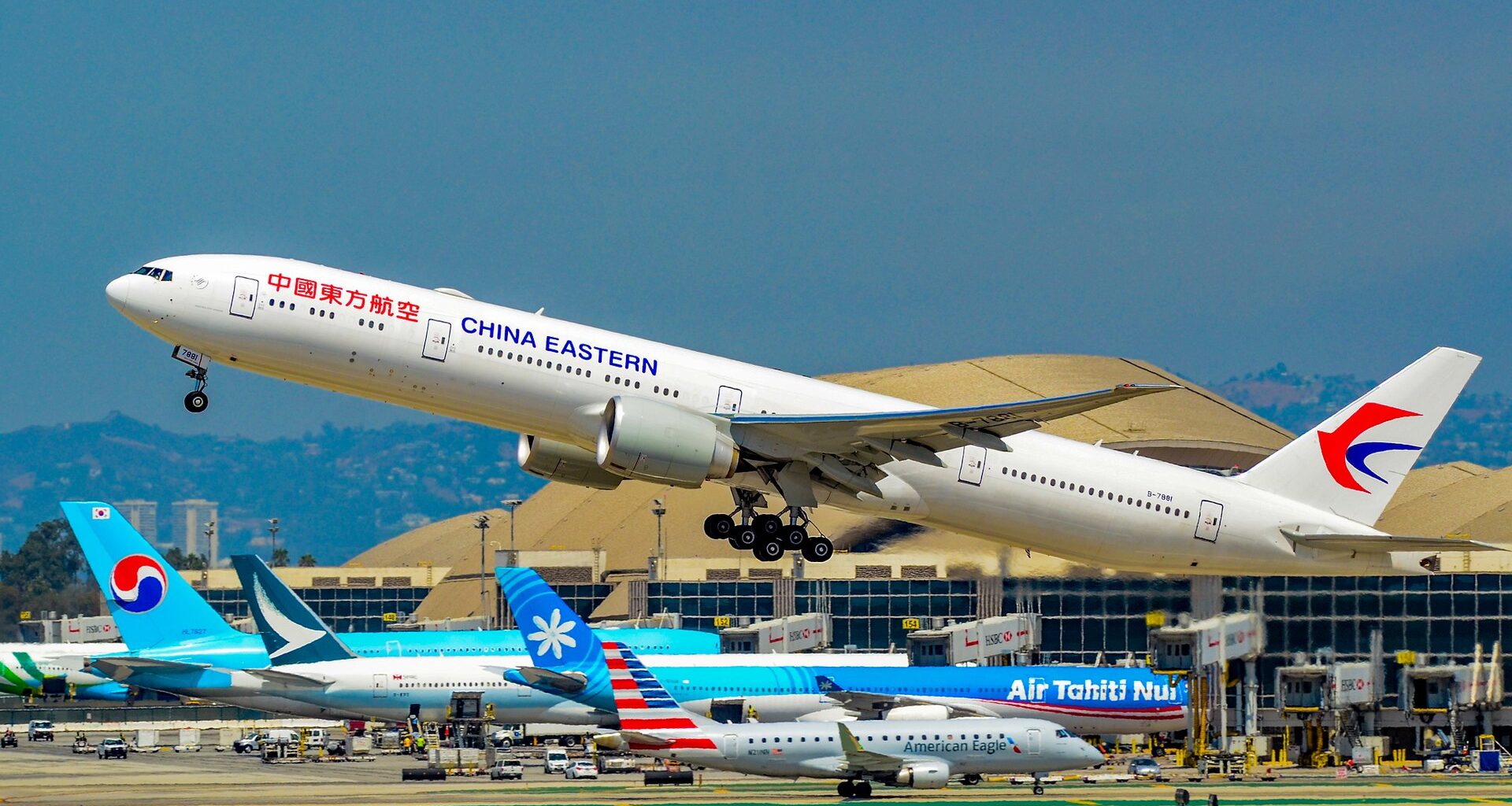
BEIJING– More than 1,900 flights scheduled this month between mainland China and Japan have been cancelled as escalating political tensions sharply disrupt passenger demand and airline operations.
The cancellations affect routes operated by major Chinese carriers such as Air China (CA) and China Eastern Airlines (MU), with significant cuts at key hubs including Beijing Capital International Airport (PEK) and Shanghai Pudong International Airport (PVG).
 Photo: By byeangel from Tsingtao, China – B-5293 | China Eastern Airlines | Boeing 737-79P(WL) | Golden Peacock Livery | CAN, CC BY-SA 2.0, https://commons.wikimedia.org/w/index.php?curid=39503334
China-Japan Flights Cancellations Impact
The disruption follows a month-long deterioration in diplomatic ties between Beijing and Tokyo after comments by Japanese Prime Minister Sanae Takaichi raised concerns about potential military involvement in a Taiwan Strait conflict.
Airlines, travel platforms, and tourism analysts report that declining bookings, government warnings, and refund policies have amplified the slowdown, accelerating flight cuts across December.
Chinese state broadcaster CCTV reported that more than 40 percent of flights planned from mainland China to Japan had been cancelled for December.
Travel platforms have also recorded a sharp drop in demand. December bookings by Chinese travelers to Japan fell by 35 percent compared with October. This decline has prompted airlines to widen their refund windows and adjust capacity for the rest of the month.
In addition to suspended flights, several cultural events involving Japanese performers have been cancelled in China.
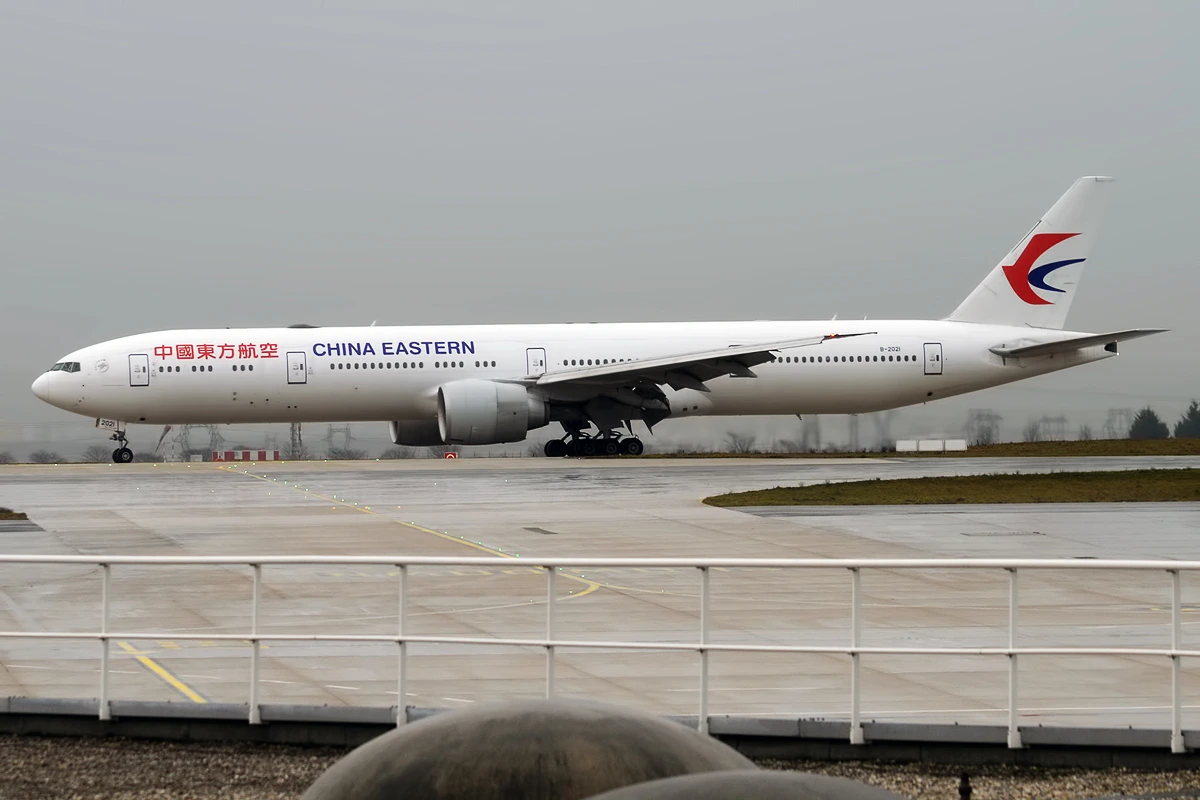 Photo: By Anna Zvereva from Tallinn, Estonia – China Eastern Airlines, B-2021, Boeing 777-39P ER, CC BY-SA 2.0, https://commons.wikimedia.org/w/index.php?curid=67096372
Tourism and Market Effects
The political dispute is already reshaping Asia’s travel flows. Russia, South Korea, and parts of Southeast Asia have reported a surge in new bookings from Chinese travelers who changed their plans after Japan-bound cancellations.
According to travel firms, Russia stands out as a particularly popular alternative because of low prices and visa-free entry.
The ongoing diplomatic strain has also prompted Japanese businesses to monitor potential economic fallout. According to research estimates, spending by Chinese tourists accounts for about 0.4 percent of Japan’s GDP, meaning a prolonged halt could produce measurable economic pressure.
Analysts caution, however, that a complete collapse of Chinese tourism is unlikely, given historical patterns of recovery.
Market watchers note that the dispute could push the Japanese yen, already under pressure, toward 160 per US dollar if conditions worsen.
The weaker currency has been a major factor behind Japan’s recent tourism boom, drawing travelers seeking more affordable international destinations.
 Photo: byeangel | Flickr
Industry response
Travel technology companies report that cancellations are continuing into late December, with uncertainty extending into early 2026. Industry experts warn that visitor volumes between January and April 2026 may fall 40 to 50 percent if political conditions do not improve.
These declines would be most visible during peak travel periods, including major holidays and popular flight corridors.
Airlines continue to evaluate operational risks as they adjust capacity, although most carriers have not issued long-term projections. Analysts emphasize that the situation remains fluid and will depend heavily on diplomatic dialogue between the two governments.
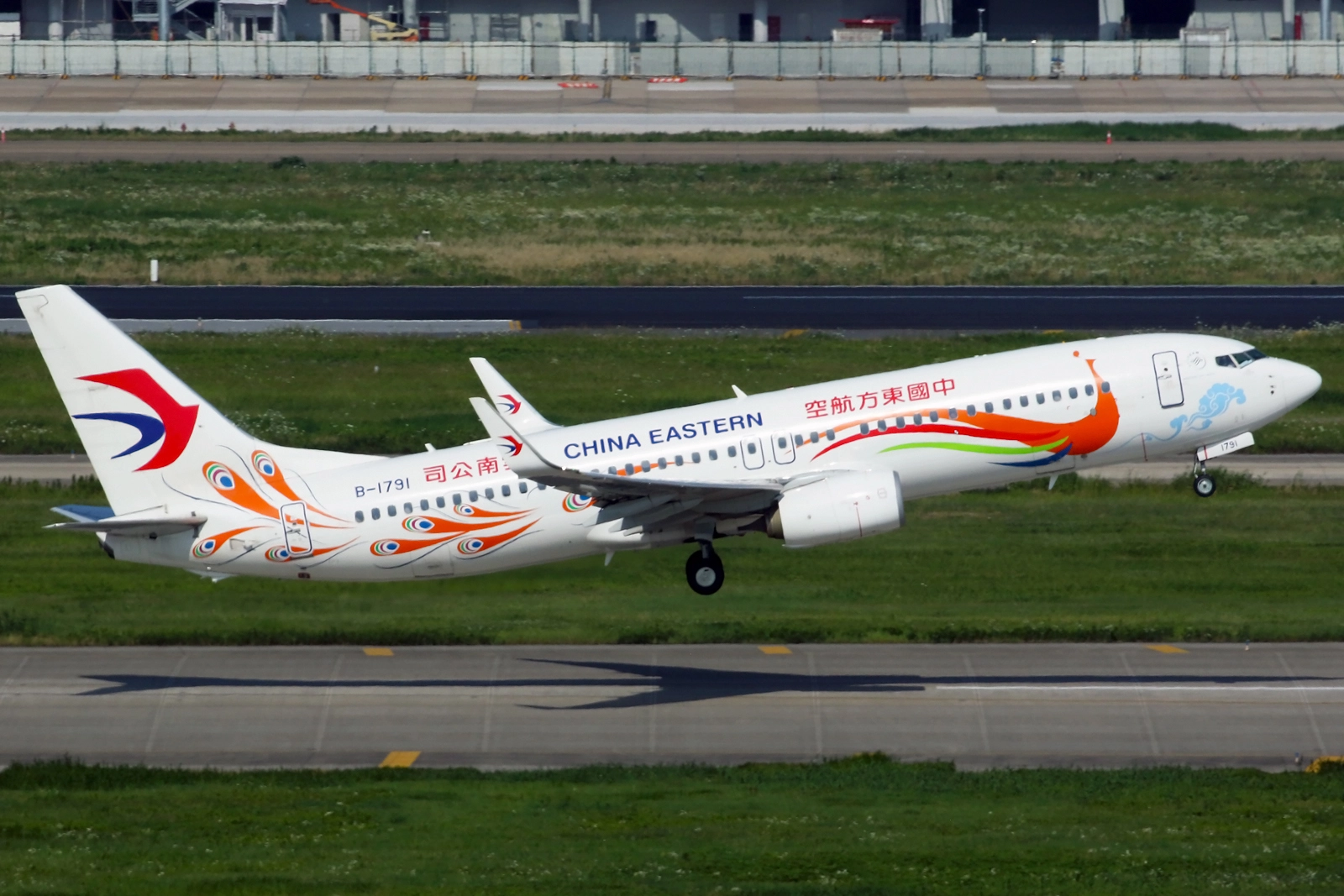 Photo: By Dennis HKG – https://www.flickr.com/photos/79691705@N05/51966478673/, CC BY 2.0, https://commons.wikimedia.org/w/index.php?curid=125486185
Bottom Line
The December wave of flight cancellations underscores how quickly geopolitical tensions can reshape Asia’s travel landscape. Airlines, tourism operators, and passengers are navigating a period of uncertainty that extends well beyond scheduled flights.
While most analysts anticipate eventual stabilization, the near-term effects on aviation networks, tourism spending, and market sentiment remain substantial.
Stay tuned with us. Further, follow us on social media for the latest updates.
Join us on Telegram Group for the Latest Aviation Updates. Subsequently, follow us on Google News