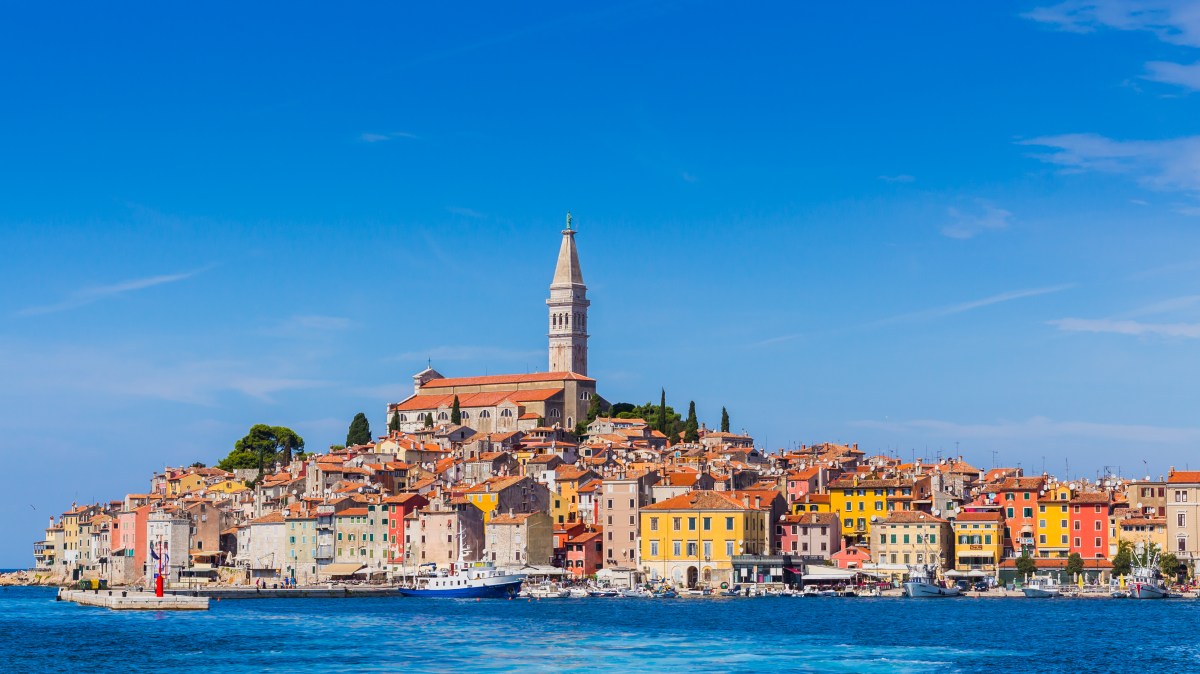
Day three in Rovinj, Croatia’s pocket-sized Venice (albeit without the canals), and I have found genius-level gelato. Sicilian pistachio, squeezed into a cone with a scoop of chocolate, chilli and peanut, ordered from the corner window at Ombra Laboratorio, recommended to me by everyone I talk to as the best gelateria in town (cones from £2.50; instagram.com/ombralab). Each of the eight flavours available is handmade, every mouthful the consistency of fire-softened marshmallow.
Being the best gelateria in Rovinj is no small feat. The town’s unique mix of Italian, Austrian and Slavic heritage has made it one of Croatia’s leading foodie destinations, with ten restaurants in the city or nearby listed in this year’s Michelin guide.
I’m staying right in the thick of it, at the Villa Tuttorotto, tucked away down a back street in the old town; the kind of hotel where you step through the door and the hubbub outside instantly melts away. A restored, 16th-century Venetian palace, it has just seven rooms (including my small attic space, with a fantastic view over the harbour), furnished with antiques and vintage pieces, a guest lounge and elegant breakfast room, with a tiny outdoor terrace.
Outside, restaurants, cafes, gelaterias and bakeries thrum with customers; it’s undergone some changes since I first visited in the mid-Eighties, when Rovinj was part of Yugoslavia. Back then it was somewhere you visited in spite of, rather than because of, its cuisine. On family holidays, I remember breakfasts of hard rolls and harder eggs (supplemented with Marmite and Dairylea triangles we’d brought from home), dinners of spaghetti and overcooked steak. Back then, it was an “under-the-radar gem”. Now, for visitors from outside the UK, Rovinj is a bigger draw than Dubrovnik, pulling in weekending Italians, Austrians and Slovenes in huge numbers.
It’s not hard to see why. The town is extremely picturesque, a tangle of cobbled alleyways and stone-flagged pedestrian streets, winding between cheek-by-jowl townhouses painted in vivid autumn colours: butter-yellow, terracotta, warm, faded reds.

Rovinj is made up of a tangle of picturesque alleyways
Above the rooftops, the bell tower of Saint Euphemia’s Church, built in the mid-17th century, stands as a legacy of Rovinj’s 500-year stint as an important port in the Venetian Empire. Now the harbour is crammed with pleasure cruisers and fishing boats, the wide promenade wrapping round the waterfront to where a clutch of luxury hotels hugs the opposite side of the bay.
Delicious, quirky menus
Everywhere there are restaurants, cafés, gelaterias and bakeries. All of them are busy, tables laden with sundae glasses piled with ice creams, bowls of mussels buzara (with wine and garlic) and molten, scarlet-skinned pizzas. On my first wander out, I stumble across the pocket-sized Tunaholic, set in a narrow back street, pull up a stool and tuck into a pusterla, a black, seeded hot-dog roll filled with piping hot grilled shrimp, crispy onions and beetroot mayonnaise (mains from £8, open April to October; tunaholicfishbar.com). It’s delicious, quirky and very different from the lookalike menus that roll out along the prom — perfect fuel for a walking tour to reacquaint myself with Rovinj’s quieter corners.

The harbour is full of restaurants and bars
ALAMY
It quickly becomes clear that in spite of the huge growth in tourist numbers, Rovinj is not somewhere that’s forgotten its history. I’ve joined a free, two-hour walking tour organised by the local tourist board, which takes in a visit to a centuries-old spacio, a traditional meeting house where festivals were held and deals done over local wine and food; the Batana Eco-museum, which celebrates the town’s fishing heritage; and an old-fashioned, dimly lit cobbler’s (book in advance; rovinj-tourism.com).
• Explore our full guide to Croatia
A trip out on a traditional batana boat
When destinations develop on the scale that Rovinj has, it can be easy for traditions and culture to get lost along the way. But Istrians have been through enough battles and sieges and occupations to keep their community heritage close. I feel this most strongly on my second evening, out at sea, balanced precariously with four other visitors in a batana, a traditional fishing boat, punted along rather like a gondola. We’re one of half a dozen batanas, a group excursion by flotilla, one carrying a trio of folk singers, who serenade us as we bob towards a sunset so spectacular that the pier is lined with people, phones held aloft towards the fading auburn light (£47; batana.org). It’s my favourite moment of the trip, the sea that shade of shimmering blue it only ever hits at sunset, the centuries-old houses seemingly rising out of the sea, unchanged from centuries ago, when Venetian merchants and dignitaries would have sailed the 70 miles across the Adriatic to trade and strategise.
• 13 of the best places to visit in Croatia
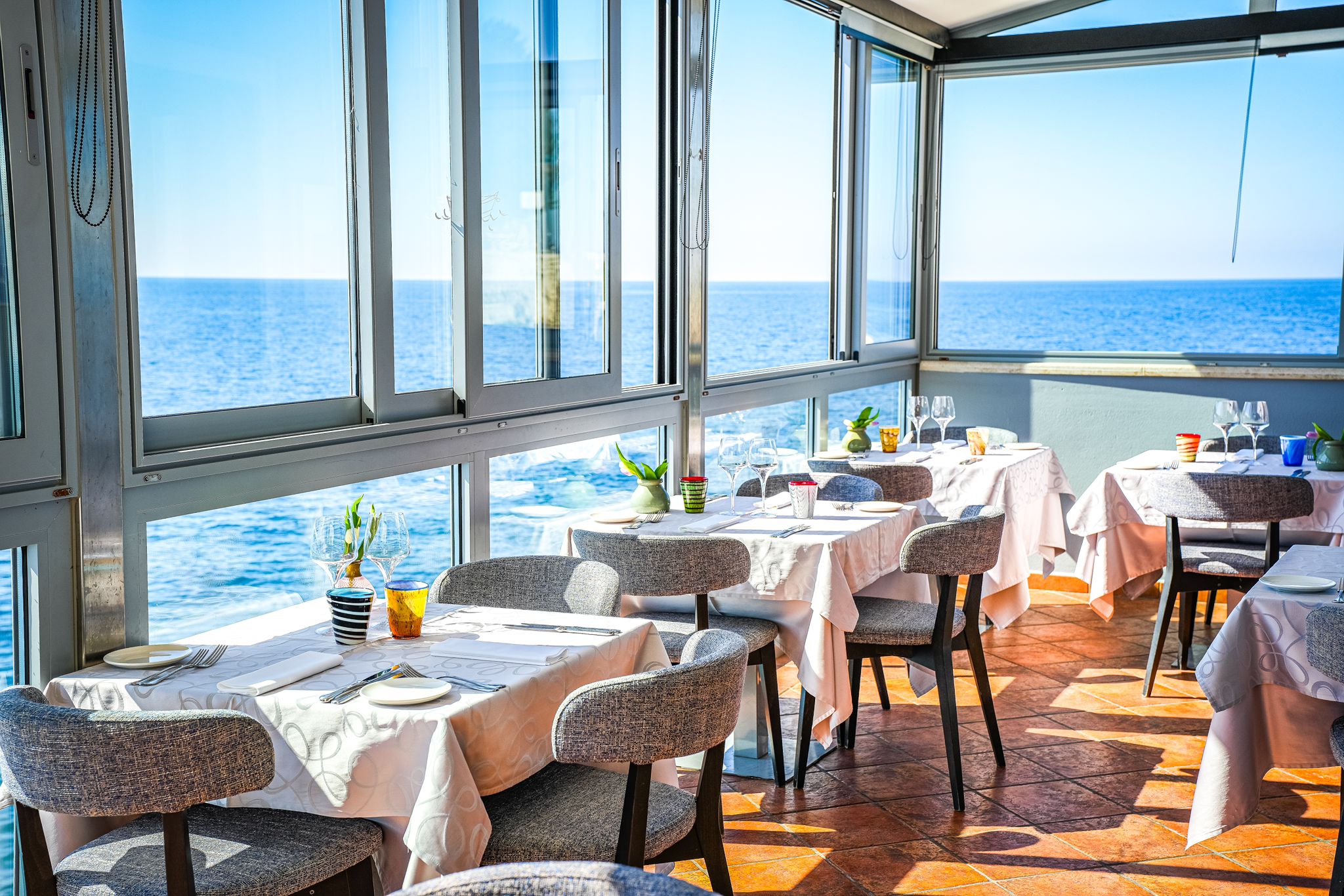
The sun-drenched terrace of Puntulina
But boat trips and guided tours are only a temporary distraction from the main business of Rovinj: food. Over three days, I eat clever, intricate dishes — a miniature truffled doughnut, unctuous risotto, velvety plum sorbetto — at Cap Aureo, the Grand Park Hotel’s newly awarded Michelin-starred restaurant (tasting menus from £115; maistra.com); succulent grilled shrimps lazing in local olive oil, laced with garlic and chilli, on a sun-drenched terrace at Puntulina (mains from £27; puntulina.eu); and crispy-skinned bream at Giannino, one of the town’s favourite haunts since 1972 (mains from £23; restoran-giannino.com). Up in the hills, just a ten minute taxi-ride from town, I nibble on home-produced cheese and salami at the One Hill vineyard, while its co-owner Juraj Mastilovic talks to me about his love for the land, the vines he harvests by hand and the small-batch wines that he sells to only two restaurants in town (tastings from £31, onehillwines.com).
On my final morning, I take another sea trip, on a larger boat this time — the Quo Vadis — buying my ticket from the kiosk on the small harbour (90-minute tour; £13.50). We head out towards St Catherine Island, where small ferries glide back and forth carrying tourists to the white-pebble beaches, overlooked by an elegant Renaissance palace that was once a summer home for the Hapsburgs. There’s only a handful of us on board, and rather than talking over the tannoy, the captain comes round to each of us in turn, first with grappa, then water, then wine, giving little snippets of history and stories about the sea.
• 16 of the best beaches in Croatia
It’s this, I think, that sets Rovinj apart. If you designed the perfect short-break destination, you couldn’t fashion it better; beautiful scenery, shimmering seas, picturesque old town — yet there’s still a real sense of place and tradition beneath the surface. Everyone I met wanted to tell stories of the town: what their parents remembered, their grandparents before them. Individual insights into a place with real soul — and the best gelato you’ll ever taste.
Annabelle Thorpe was a guest of the Istria Tourist Board (istra.hr), and the Villa Tuttorotto, which has B&B doubles from £195 (villatuttorotto.com). Fly to Pula