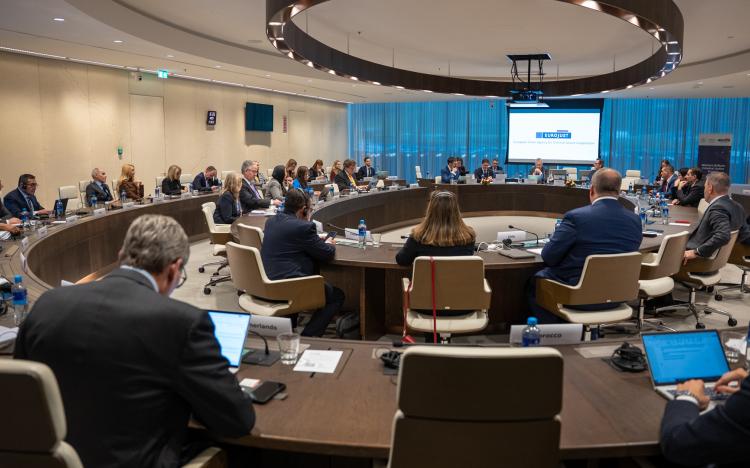
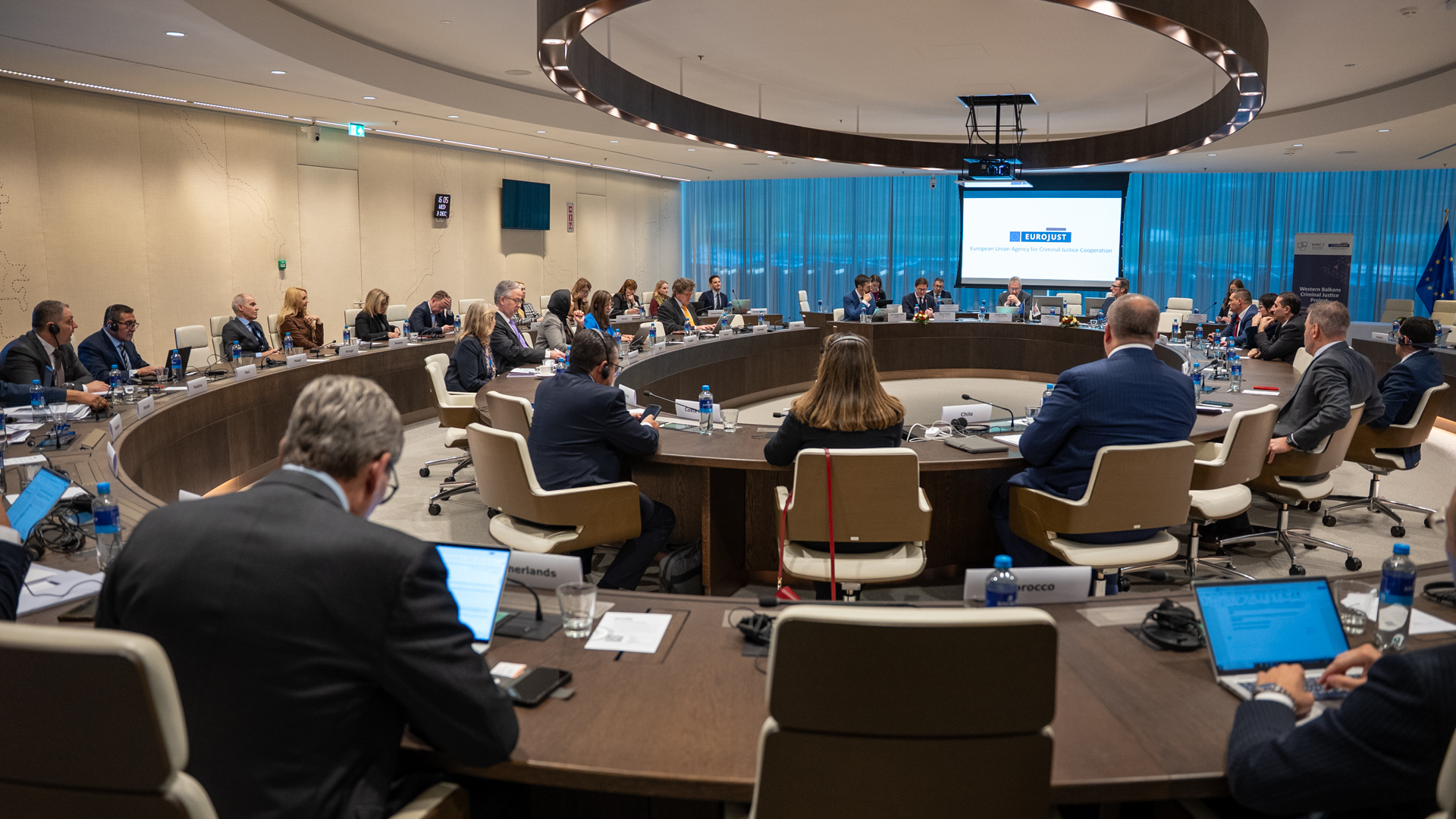
Representatives from Albania, Algeria, Bolivia, Brazil, Chile, Colombia, Costa Rica, the Dominican Republic, Ecuador, Egypt, Israel, Lebanon, Libya, Montenegro, Morocco, North Macedonia, Panama, Palestine¹, Paraguay, Peru, Serbia and Uruguay were present at the event along with the National Members representing EU Member States and Liaison Prosecutors stationed at Eurojust.
Eurojust President Michael Schmid commented, According to law enforcement analysis, 76% of the most threatening criminal networks operate globally.² To meet this challenge, Eurojust acts as a central gateway for international judicial cooperation. We give EU prosecutors direct access to their counterparts around the world and ensure that non-EU partners can work with us just as well when their cases reach the European Union. By facilitating this two-way cooperation, we help turn shared challenges into joint operations that deliver real results. Today’s event is one example of how we put this role into practice, bringing together partners from 50 jurisdictions to strengthen our collective response to organised crime.
Strengthening ties with Latin America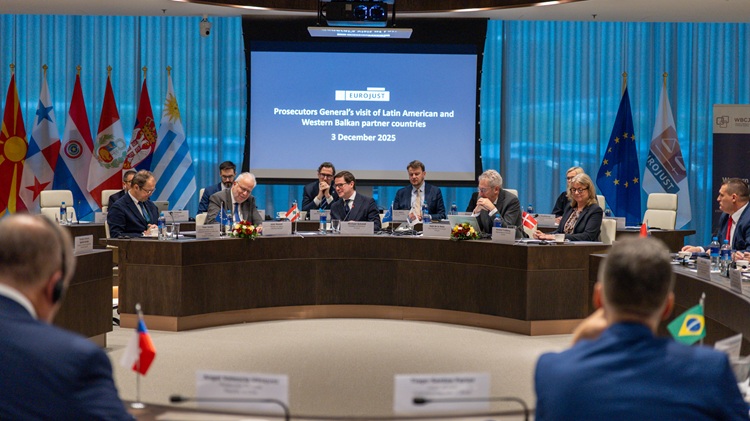
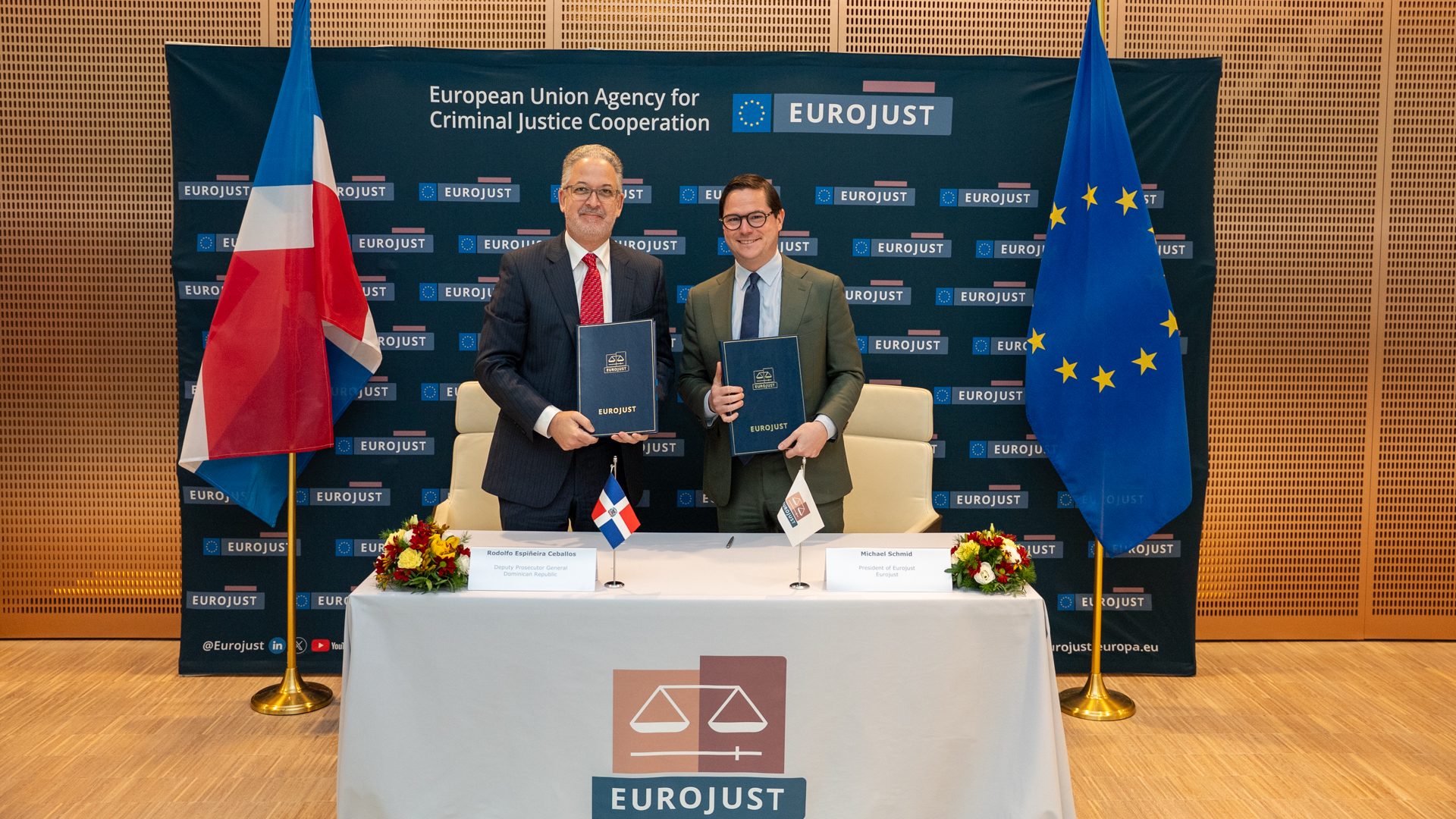
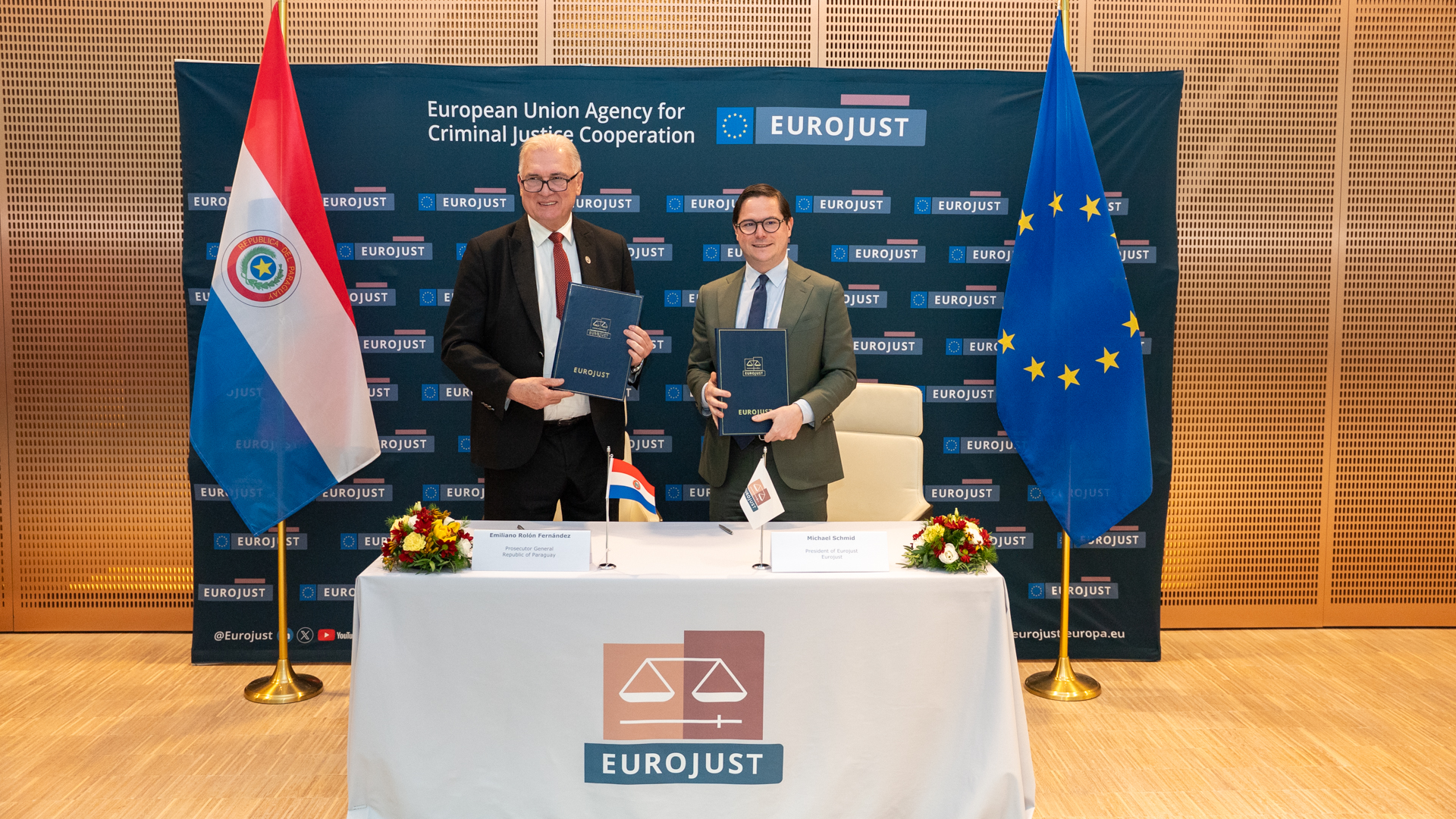
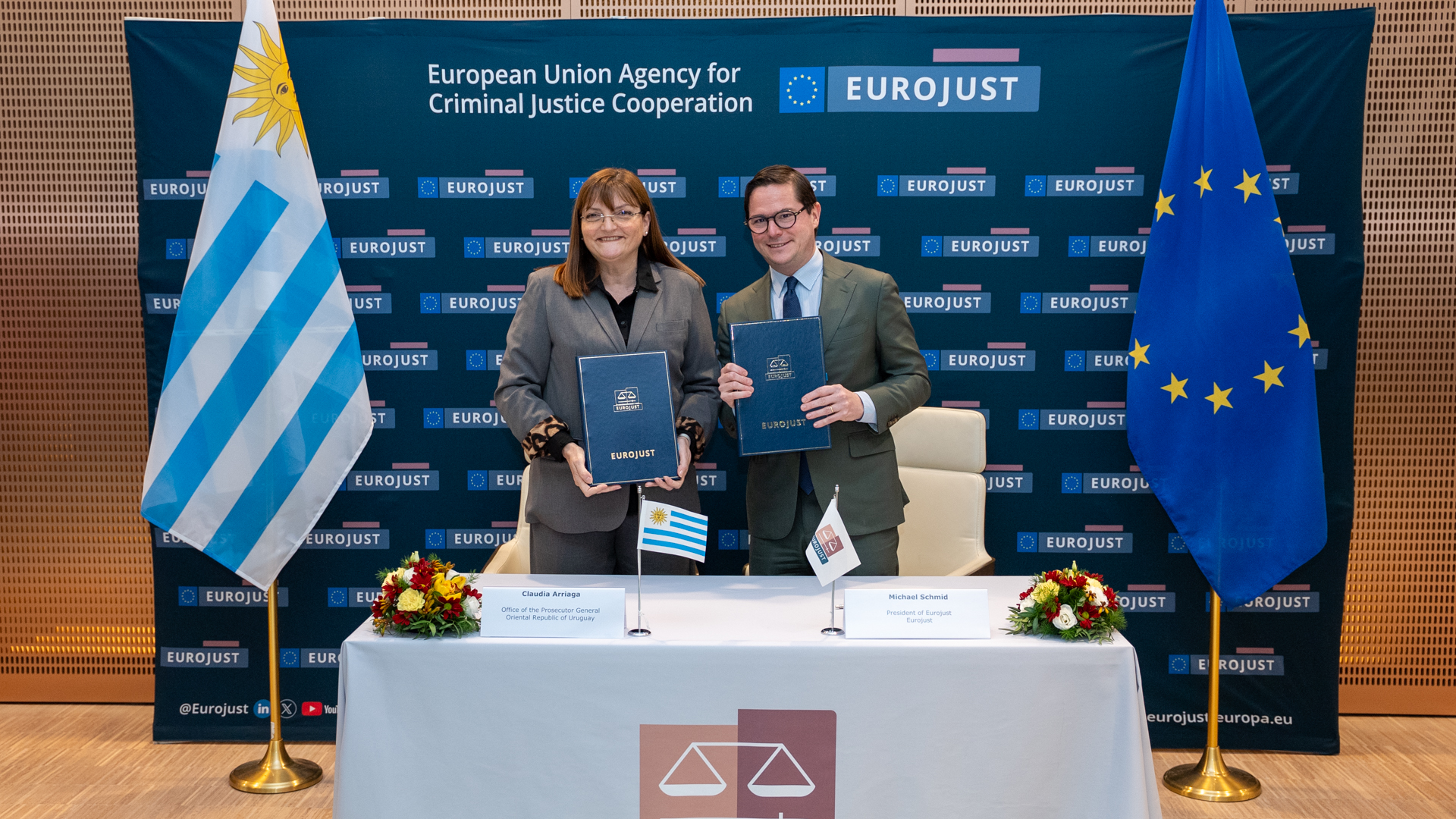
The signing of three new Working Arrangements with the Dominican Republic, Paraguay and Uruguay builds on the Agency’s strong existing cooperation with Latin American countries. Working Arrangements were already signed with Bolivia, Chile, Costa Rica, Ecuador Panama and Peru in 2024. Eurojust increased its cooperation with these nine Latin American countries thanks to the support of EL PAcCTO 2.0, the European Union cooperation programme that supports Latin American and Caribbean countries in their fight against transnational organised crime, corruption, and money laundering.
In a joint declaration, the heads of delegation³ from Latin America, the Western Balkan and the European Union expressed their commitment to reinforce institutional and operational cooperation to effectively combat organised crime. This strengthened cooperation enables authorities to tackle crime areas affecting both EU and Latin American countries, such as arms trafficking, money laundering and cybercrime. Particular focus is given to combating the growing problem of drug trafficking, by dismantling the transport routes that allow large quantities of drugs to enter the European Union.
Successful collaboration with third countries has already proven effective in taking down global criminal networks. A human trafficking ring operating between Colombia and Albania was recently dismantled. Thanks to successful judicial coordination led by Eurojust, with the Western Balkans Criminal Justice Project and Europol, links between the local handlers and the main criminal group were uncovered. This led to simultaneous operations in Albania and Colombia. Fifty-four victims from South America were identified, and 17 suspects were arrested in both countries. During 16 house searches, authorities collected evidence and equipment that will support further investigations into the criminal group.
Working Arrangements with Latin American countries have proven effective, with the number of judicial assistance requests channelled through Eurojust in the past year more than tripling that of 2024.
EU Judiciary Hub for global impact
 In addition to supporting national authorities with cross-border cases, Eurojust plays an important role as an EU hub where specialised prosecutors convene to solve the most complex cases. The Agency is also responsible for coordinating projects targeting different crime areas and regions, thereby extending Eurojust’s expertise and impact. The event focused on two such programmes: the Western Balkan Criminal Justice Project (WBCJ), targeting the Western Balkans region and the EuroMed Justice Project which works with EU Southern Neighbourhood partner countries to strengthen strategic and operational cooperation in judicial criminal matters.
Over the past three years, the WBCJ project has supported authorities across the region in more than 60 cross-border investigations involving partner countries and EU Member States. These investigations have targeted organised crime, serious offences and corruption. Importantly, the project also successfully strengthened direct ties between Latin American and Western Balkan jurisdictions by organising events that brought together prosecutors from both regions and by facilitating agreements between countries. This reinforces their long-term commitment to jointly tackling global organised crime.
 The EuroMed Justice Project Expert Group in Criminal Matters (CrimEX) brought together experts from seven partner countries (Algeria, Egypt, Israel, Lebanon, Libya, Morocco and Palestine). The group focused on challenges and best practices in drug trafficking, as well as facilitating an International Agreement between Lebanon and the European Commission. This international agreement will lay the groundwork for closer collaboration between judicial authorities from Lebanon and Eurojust.
Background
Eurojust: As the EU hub for criminal justice cooperation, Eurojust is actively connected to over 75 jurisdictions worldwide. To bring non-EU Member States closer together in the fight against serious cross-border crime, Eurojust is facilitating closer working relations by signing Working Arrangements that enable more structural long-term cooperation.
Working Arrangements allow the exchange of strategic information and best practices, and can facilitate access to Eurojust’s tools for operational cooperation in investigations involving at least one EU Member State. Working Arrangements do not allow for the sharing of personal operational data. Learn more about Eurojust’s work and strategy on cooperating with international partners.
Eurojust cases with third countries
More on Eurojust case work here.
Facts and figures on organised crime in Europe:
¹ This designation shall not be construed as recognition of a State of Palestine and is without prejudice to the initial positions of the Member States on this issue.
² Decoding the EU’s most threatening criminal networks
³ Public Prosecution Offices of Albania, Argentina, Bolivia, Brazil, Chile, Colombia, Costa Rica, the Dominican Republic, Ecuador, Montenegro, Panama, Paraguay, Peru, Serbia, Uruguay and the College of Eurojust