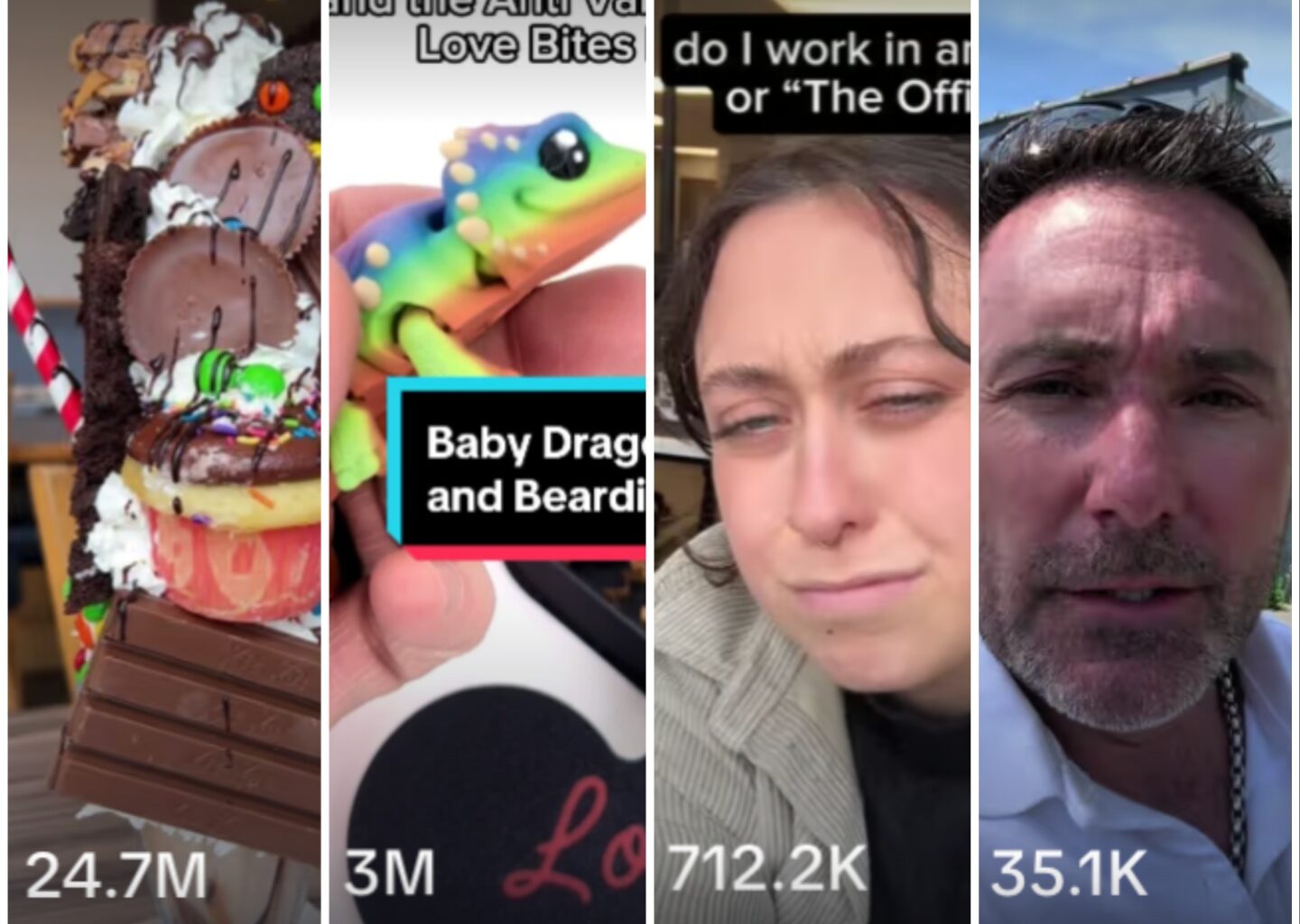
For Somers business owner Adam Rivard, everything started with a toy bearded dragon.
Rivard’s son had asked for the toy, which was made using a 3D printer in his basement. With a day job in airplane manufacturing, Rivard didn’t initially think much of the request, viewing the toy as part of his 3D printing hobby.
But when the toy dragon became a hit with his son’s friends, a new business idea came into focus.
Rivard printed out more toys, taking them to a birthday party, where they were instantly a hit. Inspired, he opened up a small Etsy shop to sell a few trinkets here and there.
He was also inspired to try out TikTok Shop, an ecommerce feature on TikTok that allows brands and creators to sell items directly to users. To get acquainted with the platform, in the fall of 2023 Rivard posted a video of a small dinosaur. By the end of the night, he had more than 30 orders.
The demand led Rivard to buying more printers. In four months he went from one printer in the basement to 70. His 3D-printed toy business, affectionately called “Bumpa Built” in honor of Rivard’s father, was taking off.
TikTok became a key part of his business, with Rivard regularly posting videos in the hopes of going viral.
“You’re just getting these surges of orders,” he said.
Within a year, Bumpa Built had 60,000 followers. The demand for the business encouraged Rivard to open a storefront in Somers. But TikTok, where the company has amassed more than 1 million likes on its business page, is still a key aspect of how he markets and tests products.
“I can 100% say we would not exist today if it wasn’t for TikTok,” Rivard said.
This week, Rivard joined a group of small business owners in Hartford to speak about how TikTok has propelled his business. The event was hosted by the Connecticut Business and Industry Association and TikTok, the popular social media platform where users post short videos ranging in length from a few seconds to 10 minutes.
The event offered a chance for business owners, local and state officials, and the broader community to better understand how the platform is transforming business activity across the country. That includes in Connecticut, where more than 50,000 businesses are using TikTok to promote events, sell products and connect with potential customers.
“We’ve got to think about the way in which we communicate with people, and reach people, whether it’s their living rooms, in their cars, on the go,” said Hartford Mayor Arunan Arulampalam, who delivered opening remarks at the event. “TikTok provides incredible opportunities to reach people right where they are, in a way that is digestible, that makes sense.”
The social media platform — which has found itself at the center of controversies around national security, data collection, and social media use by children — has grown considerably in the years since its official US launch in 2018. By the first quarter of 2024, the site reported having some 170 million users. One-third of adults in the U.S. and nearly two-thirds of teenagers use the platform, according to the Pew Research Center.
Some of TikTok’s biggest stars, like the D’Amelio sisters and model-influencer couple Nara and Lucky Blue Smith, have ties to Connecticut.
But the platform is also a key tool for small business owners like Rivard, who have used TikTok to grow their customer base and revenue, and have also leaned on TikTok staff for additional support. They say the platform’s tools are crucial in marketing and sales strategies. And as media and advertising continues to shift, business users say TikTok has become a key way to get in front of an audience.
The power of viral moments
During a discussion moderated by CBIA policy director Danielle Cloud, panelists at Wednesday’s event shared similar stories, all noting that the social media platform has become an invaluable tool in their business outreach strategies, giving them a no-cost way to organically connect with brand lovers and potential customers alike.
“We’ve been around for a very long time, and we’ve always had a great product, but we didn’t have great distribution,” said Bryan MacDonald, director of ecommerce for Oma’s Pride Pet Food, a decades-old poultry operation that transitioned into selling pet food during the 1990s.
The Avon-based company has built its brand on TikTok using skits and parodies, often riffing on the popular 2000s comedy series The Office. In one sketch, MacDonald and other employees debate whether moose can be found in Montana. In another, they stage an impromptu fire drill as one employee looks on with concern.
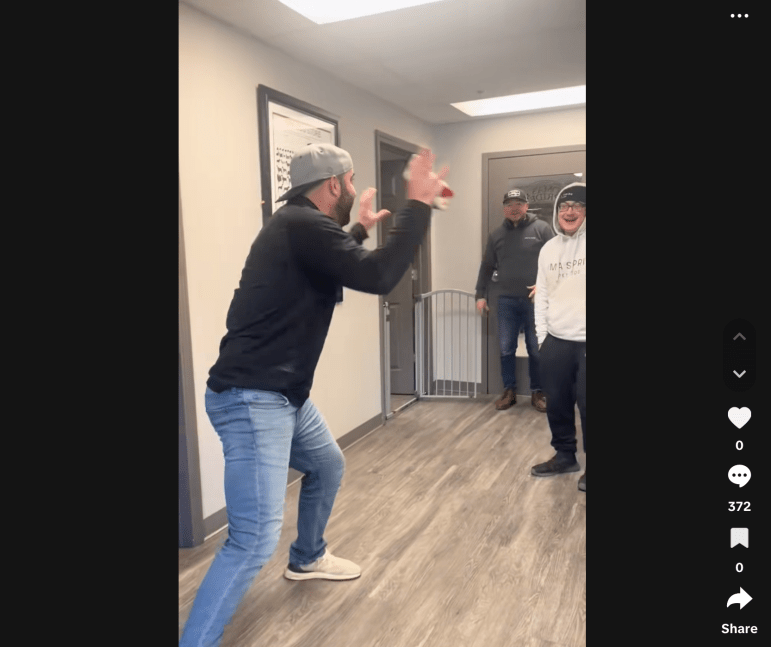 Oma’s Pride Pet Food has used TikTok sketches to build an audience, creating a nearly 50-part series based on The Office. Credit: Courtesy of Bryan MacDonald / Oma’s Pride/TikTok
“It had nothing to do with pet food, but it showed how crazy we were in the office,” MacDonald said of the sketch series, which has grown to more than 40 parts. “It allows consumers to fall in love with the creator.”
“And then ultimately, that brings them down the funnel to buy the product that the person that they fell in love with is selling,” he added.
For others, like Elm Street Diner owner John Moshos, TikTok has become a tool for reinvention and innovation. The restaurant, which was founded in 1987 and has locations in Stamford and Norwalk, has become a viral sensation with posts of extreme milkshakes and its popular waffle towers. Elm Street Diner’s 221,000 TikTok followers, along with followers on other platforms like Instagram make it the most followed small business account in the state.
When it comes to the restaurant’s posts, “the virality of them just went out of control,” Moshos said. “We had one hit 25 million without even trying. And then you’re like, ‘All right, now we got to top this. We got to go bigger. We have to get better.’”
The company has since launched a “Social Media Superstars” section on their menu, encouraging visitors to try some of their most viral offerings and upload their meals to Instagram and TikTok. And the restaurant has become a pilgrimage site for aspiring foodies from around the globe, becoming a part of Connecticut’s state marketing and tourism efforts.
“People say, “I drove eight hours to come see you guys,’” Moshos said. “They passed thousands of restaurants on the way. That means the world to us.”
It’s the sort of success that inspires new restaurateurs like Chris Allen. A local tech entrepreneur, Allen is preparing to launch Gas Burgers, a retro burger restaurant that will operate out of a rehabilitated North Haven gas station.
While the business won’t open until March 2026, Allen said TikTok has helped him to start building his customer base now. He’s been able to collect feedback on what types of burgers customers want, provide updates on an old tow truck that parked outside called “Towmater” and he has even let people vote on what colors they want to see the gas pumps out front painted.
Allen also uses the account to host giveaways of shirts and other items, promoting the brand further.
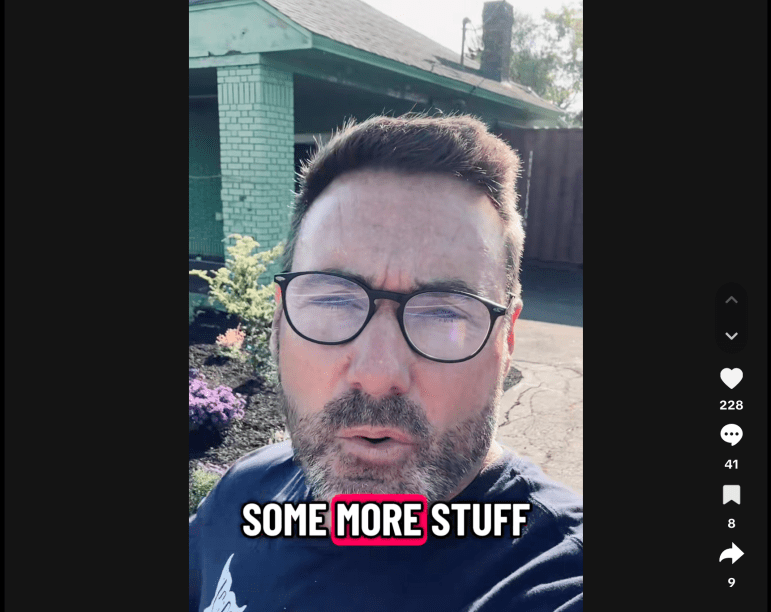 Gas Burgers owner Chris Allen is using TikTok to show future customers how his restaurant is coming together ahead of its March 2026 opening. Credit: Courtesy of Chris Allen / Gas Burgers USA/TikTok
“It’s been a great way to prove the concept out,” Allen said of his approach to gathering input. “You really get them bought in, and it becomes, realistically, very much like a TV show, right? They’re looking forward to the next episode, or the next content, the next piece of content that they want to see and they yearn for it.”
“If you do it that way, you can really build a great community,” he added.
TikTok says it is a powerful resource for business owners
Building a community, and then providing the means for that community to generate sales, is just how TikTok promotes its value for business owners in Connecticut and around the country.
The company has offered original research to further make this case. In a recent study TikTok released in 2024 as a collaboration with Oxford Economics, researchers noted that the social media platform offered several advantages to businesses that maintained accounts. In the first quarter of 2024, there were more than 7 million businesses operating on the platform.
The study authors surveyed some 1,050 small and midsized businesses, defined as businesses with less than 500 employees, from around the country. The study also included surveys of 7,500 TikTok users.
The study found that TikTok can have a big impact on businesses, with 49% of those surveyed saying TikTok helped them with exposure. An even greater percentage, 73%, said the platform helped improve their business’ exposure to new diverse audiences across the country.
TikTok says that its economic impact goes even further. Last year, the company claimed that 5 million jobs benefitted from the platform, and that between its marketing and research support as well as other free services provided to TikTok users, the platform “supported a $24.2 billion contribution to the US GDP in 2023.”
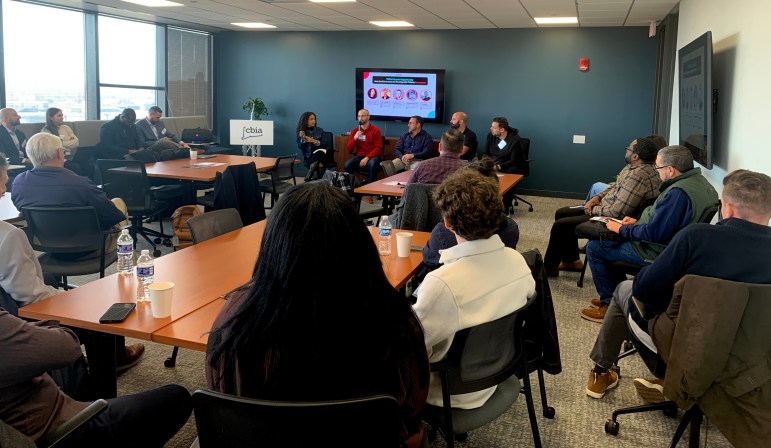 Panelists discuss how TikTok is helping small businesses on December 3, 2025. Credit: P.R. Lockhart / Connecticut Mirror
In updated data from earlier in 2025, TikTok and Oxford Economics provided state-level data. In Connecticut, the social media company said some 56,000 businesses use TikTok and that 43,000 jobs in the state benefit from business accounts on the platform. Much like the larger national study, most Connecticut businesses surveyed reported that using TikTok has helped them with promotions, sales and finding new customers.
TikTok said that its use by small and midsized businesses added an estimated $310 million to Connecticut’s GDP in 2023 and $42 million in federal, state, and local tax revenue in the state.
“While Tiktok is a global platform, the impact is actually local,” said Julien Nagarajan, state public policy manager for TikTok.
And for Connecticut’s small business owners, like Moshos of Elm Street Diner, who now gets visitors from multiple states and countries across the globe, the platform is about more than profits and free ad space. It is a chance to expand his business’s reach in ways he never imagined.
“This platform has essentially made it possible for a local, neighborhood place in Stamford, Connecticut, to become a global brand that’s seen all over the world,” he said.