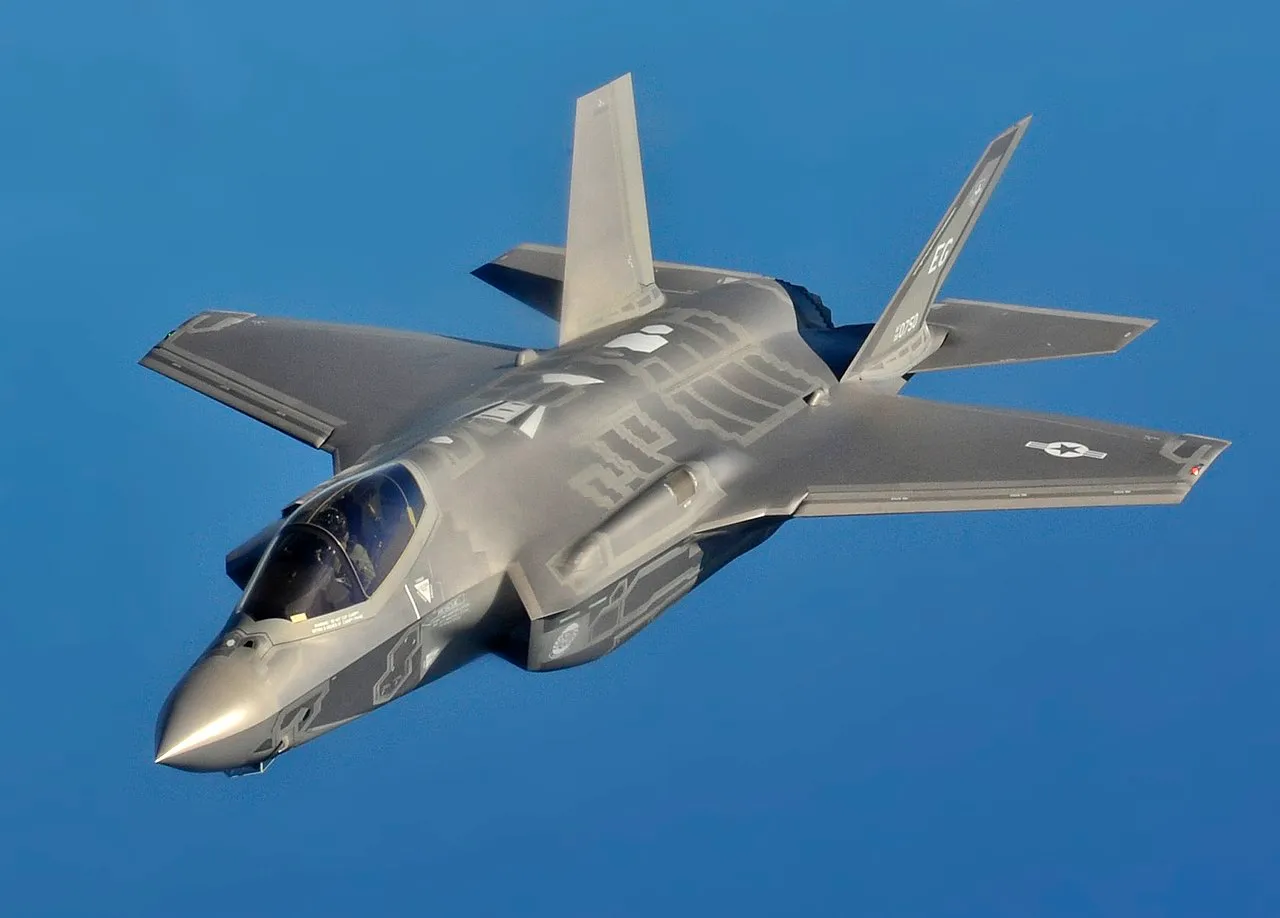
OTTAWA- Canada’s decision to join the EU’s SAFE initiative marks a major shift in its defense posture and signals a wider strategic pivot. The move opens new funding channels, reshapes procurement options, and raises questions about the future of its $50 billion F-35 fighter jets deal.
The alignment with SAFE also forces a reassessment of Canada’s reliance on US-origin systems and sets the stage for a complicated adjustment in Canada’s relationship with Washington.
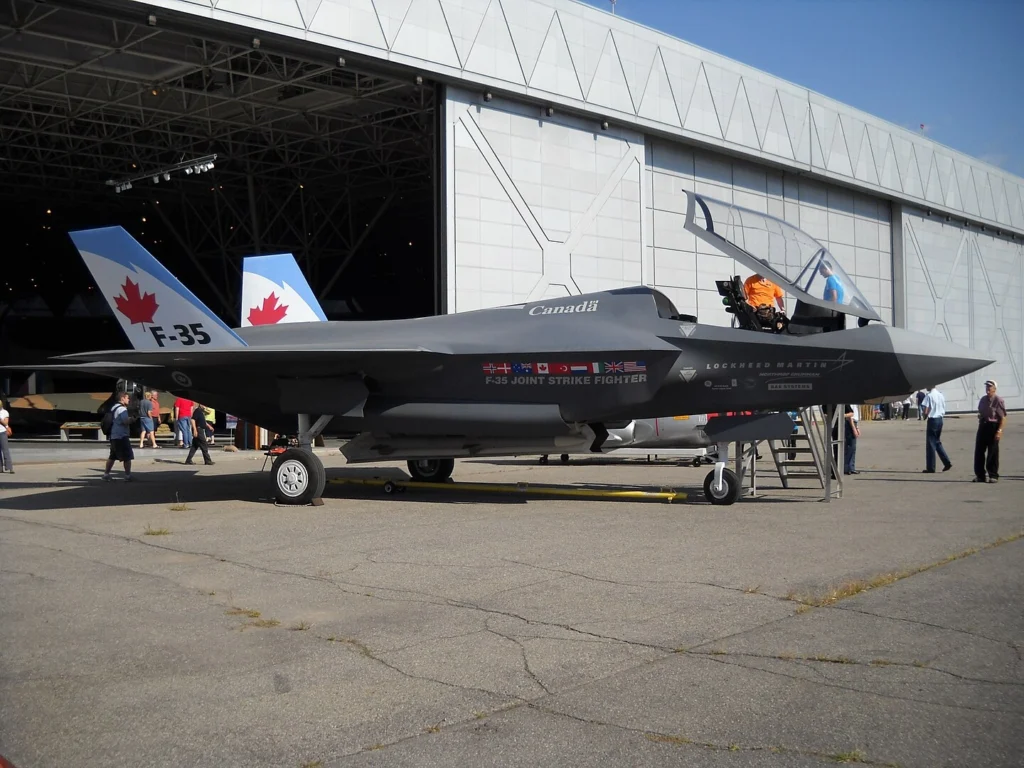 Photo: By Ahunt – Own work, Public Domain, https://commons.wikimedia.org/w/index.php?curid=11321819
Canada Charts a New Defense Path
Canada’s entry into the EU’s Security Action for Europe initiative places it as the first non-EU partner to join the bloc’s sweeping defense modernization program.
SAFE provides access to 150 billion euros in low-interest loans aimed at joint procurement, industrial expansion, and capability development across ammunition, drones, artillery, missiles, and other core systems.
Ottawa now gains full access to this financing structure, giving its military a powerful tool to meet modernization goals that have long lagged behind NATO expectations.
The loans make it easier for Canada to move toward the 2 percent GDP defense spending benchmark. Current spending stands at 1.37 percent. By linking into Europe’s consolidated market, Canadian defense firms also gain eligibility to compete for SAFE-backed procurement projects.
The structure limits spending on equipment from non-partner countries to 35 percent of any project, a rule that gives Canadian companies a clear advantage over US firms.
SAFE participation also supports Ottawa’s long-term aim to reduce reliance on US-manufactured systems.
Prime Minister Mark Carney has pushed for a procurement mix where no more than 70 percent of capital spending depends on US suppliers. He has framed this diversification as both strategic and economic, offering Canadian firms broader access to European markets and opening the door to fresh inward investment, Eurasian Times reported.
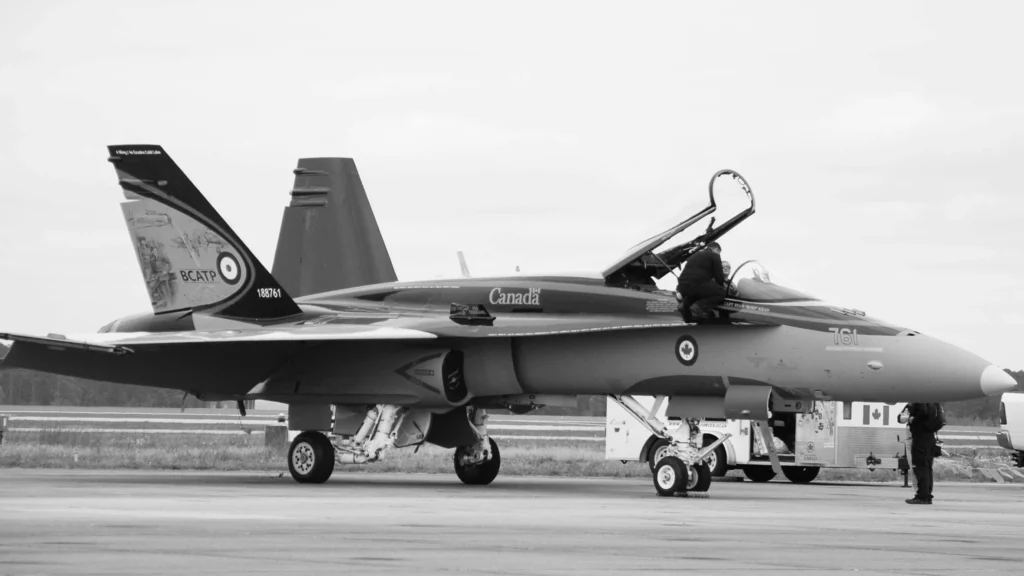 Photo: Geo Teynor | Pexels
Implications for Canada’s Fighter Jet Program
Canada’s alignment with SAFE puts new pressure on the F-35 program, approved in 2023 but now undergoing review. The deal would deliver 88 jets for roughly 70 billion Canadian dollars.
The review is focused on capability fit and sovereignty considerations amid shifting geopolitical conditions.
Sweden has seized the moment to promote the Gripen, a finalist in the original competition. Saab has offered Canada a production hub for Gripens, linking local manufacturing to export orders.
Sweden recently signed an LoI with Ukraine for 100 to 150 aircraft, and Saab claims its proposal could create ten thousand Canadian jobs. Because Sweden is a full SAFE participant, Gripen procurement could qualify for SAFE-backed financing. The F-35 would not.
This funding differential places the Lockheed Martin program at a disadvantage. While the RCAF has historically relied on US fighters, shifting to a non-US platform would require updates to radar, ground systems, and weapons integration.
Such a transition would be costly and time-consuming, but it remains strategically attractive to a government eager to show that it has alternatives to US supply chains.
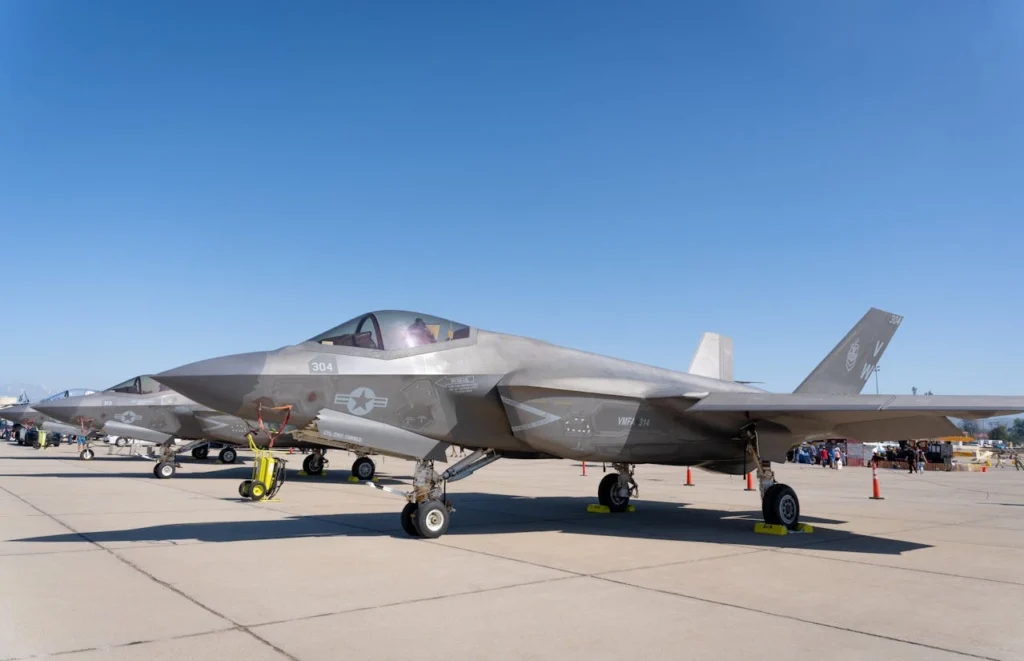 Photo: By Soly Moses: https://www.pexels.com/photo/f-35-fighters-on-the-tarmac-at-an-air-show-18119106/
SAFE’s Growing Influence Beyond Europe
For the EU, Canada’s decision is a significant validation of SAFE’s global relevance. After the UK failed to secure a deal to join, Canada’s participation demonstrates that the initiative can attract like-minded partners outside the bloc.
As a G7 and NATO member with deep ties to Washington, Canada’s entry strengthens SAFE’s credibility and may encourage countries such as Australia to consider joining.
SAFE also supports Europe’s broader push for greater strategic autonomy. Diversifying procurement and reducing reliance on the US aligns with long-term EU priorities. Canada’s involvement broadens that trend into the wider transatlantic community.
 Photo: Staff Sgt. Jensen Stidham | Wikimedia Commons
https://commons.wikimedia.org/wiki/File:Australian_airman_on_the_wing_of_a_F-35_in_August_2018.jpg
Strains and Risks for US-Canada Relations
Ottawa’s move could irritate Washington at a moment of rising trade tensions. The US and Canada share a tightly integrated defense and intelligence ecosystem that spans NATO, NORAD, Five Eyes, and multiple economic and security frameworks.
Any shift away from US platforms complicates interoperability, supply chain planning, and long-term force integration.
Canada is also exploring participation in the proposed US Golden Dome missile defense program. Balancing these commitments with SAFE’s procurement incentives will require careful political and operational management. While the SAFE partnership gives Ottawa leverage in its dealings with the US, it also risks escalating friction with a key ally.
For Canada, the choice reflects a pragmatic hedge in a volatile environment. Many countries are pursuing multi-aligned strategies to diversify defense dependencies, and Canada is signaling that it will not rely solely on Washington for its future force structure.
Stay tuned with us. Further, follow us on social media for the latest updates.
Join us on Telegram Group for the Latest Aviation Updates. Subsequently, follow us on Google News