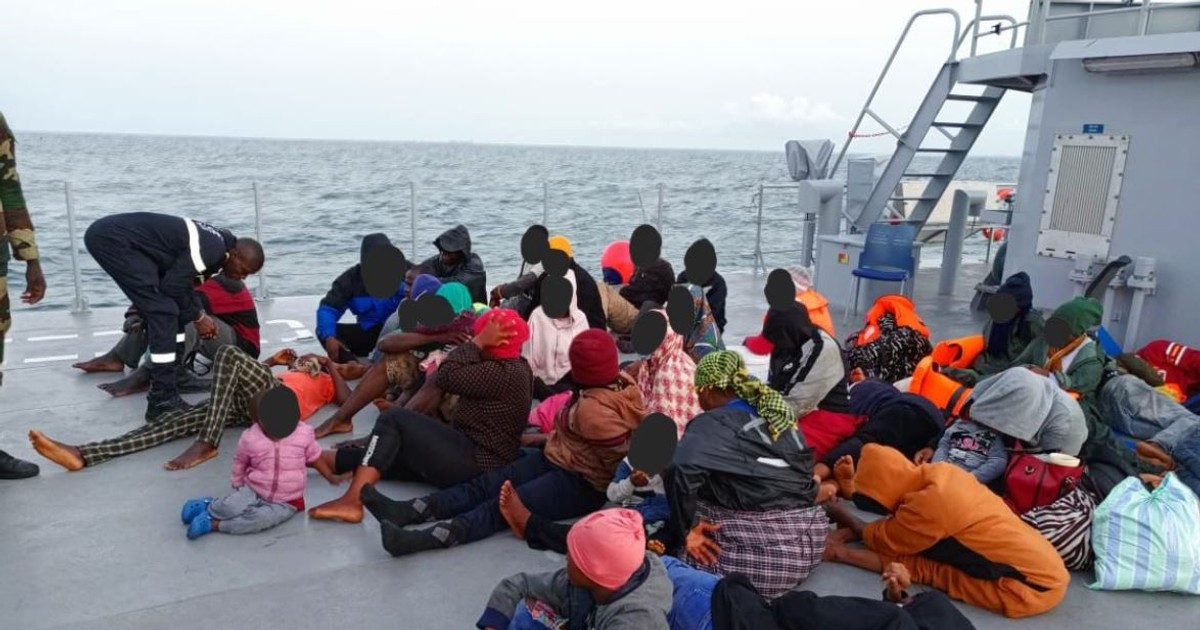
Speaking at a Tripoli press conference, Interior Minister Major General Emad Al-Trabelsi said the National Programme for the Deportation of Illegal Immigrants has already repatriated “thousands” since October, covering migrants from Egypt, Niger, Nigeria, Bangladesh and other countries.
Minister Al-Trabelsi added that the country now aims to scale removals up to 60,000 people per month.
Thousands deported under coordinated programme
The minister delivered the update before a room filled with diplomats from Europe, the Gulf, Asia and Africa, underscoring the geopolitical weight Libya’s migration policies continue to carry.
He said the ongoing repatriations cover migrants from “Egypt, Niger, Nigeria, Bangladesh and several other nationalities,” adding that all flights were carried out in coordination with the respective embassies.

Al-Trabelsi stressed that the operations were not ad-hoc, but part of a long-running strategy. “We have been working on this file for the past fourteen months, and we have been able to deport thousands of migrants to their countries,” he said. “We are not preparing to launch these operations, we have already begun.”
He insisted the programme adheres to what he described as humanitarian standards, noting that migrants receive temporary accommodation, safe transportation and exit-visa processing within 48 hours.
According to him, individuals facing deportation are “exempted from fines and provided with temporary accommodation in assembly centers,” with priority given to women and children.
Security and border control at the centre
Still, the minister made clear that Libya’s stance on long-term settlement remains uncompromising. “The settlement of migrants is categorically rejected, and the Libyan people, in all their diversity, oppose this,” he said, framing the programme as central to national security and border stability.
With additional deportations planned throughout December, including for migrants from Chad, Sudan, Syria, Somalia and Mali, Libya is signaling that its escalating removals will remain a central pillar of migration management heading into 2026
The renewed pressure comes amid a surge in migrant activity. More than 22,500 people have already been intercepted at sea and returned to Libya in 2025 surpassing the total for all of last year.