December 5, 2025
JAKARTA – Deadly floods and landslides across northern Sumatra have intensified public scrutiny of extractive industries, with environmental groups warning that years of weak oversight have magnified the scale of the ecological disaster.
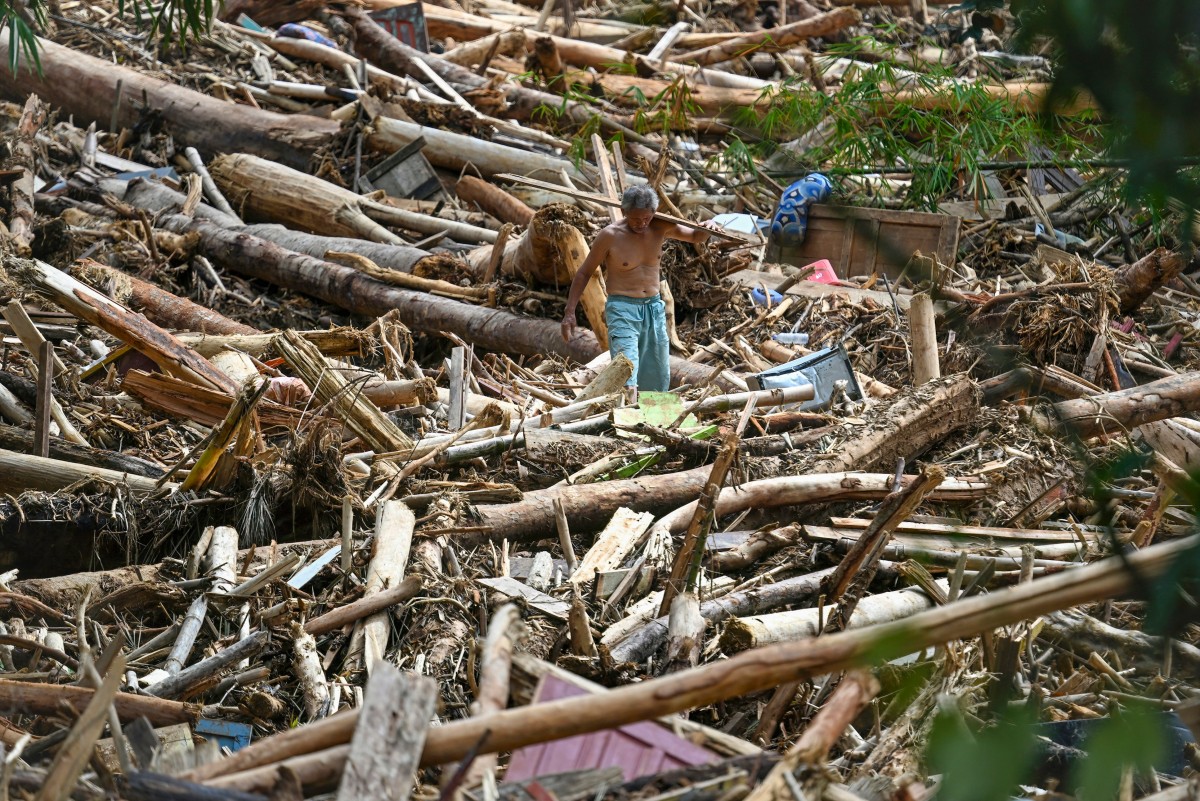
Tropical Cyclone Senyar made landfall in northern Sumatra on Nov. 25, unleashing extreme rain and winds that triggered massive flooding and landslides in Aceh, North Sumatra and West Sumatra provinces. At least 3.1 million people were affected with 770 killed, some 2,600 injured and nearly 500 still missing as of Wednesday, according to the National Disaster Mitigation Agency (BNPB).
Environmental organizations, such as the Indonesian Forum for the Environment (Walhi), attributed the severe toll to large-scale deforestation and lackluster enforcement of environmental regulations.
The group noted that 1.4 million hectares of forest cover had been cleared across the three provinces between 2016 and 2025 to make way for businesses such as plantations and mining.
“These facts clearly show that today’s ecological disasters are caused by state officials and corporations. The government needs to evaluate all business permits, especially ones located in critical ecosystems,” Walhi forest and plantation campaigner Uli Arta Siagian said on Monday.
Data from Walhi show areas hardest-hit by floods and landslides were degraded watersheds (DAS). In North Sumatra, for instance, the flood-stricken regencies of South, Central and North Tapanuli and Sibolga City sit within the Batang Toru watershed, which lost nearly 73,000 ha of forest between 2016 and 2024.
The group alleged activities by seven companies, including gold miner PT Agincourt Resources and pulp producer PT Toba Pulp Lestari, significantly contributed to the environmental degradation.
Responding to the allegations, PT Agincourt Resources was quoted by Kompas.com as saying on Wednesday that linking its activities to the floods was “premature and inaccurate”.
Meanwhile, PT Toba Pulp Lestari “strongly rejected allegations” that its operations caused the ecological disaster, as quoted in a statement issued on Monday.
South Tapanuli Regent Gus Iwan Pasaribu also claimed last week the Forestry Ministry had reinstated logging permits in October. But the ministry denied the claim.
Read also: ‘Paralyzed’ businesses reel from $4b losses due to Sumatra floods
Walhi’s local chapters pointed out widespread deforestation, palm oil plantation expansions, illegal gold mining and weak oversight from authorities as drivers of the disaster in Aceh and West Sumatra.
In Aceh, the 1.2-million-ha Singkil watershed lost 66 percent of its forest cover over the past decade. Meanwhile, around 780 ha of tree cover were lost from the Aia Dingin watershed in West Sumatra.
The floods and landslides across Sumatra should serve as a “final warning” for President Prabowo Subianto’s administration to overhaul environmental governance and commit to meaningful climate action, said Greenpeace Indonesia forest campaigner Arie Rompas.
The Consortium for Agrarian Reform (KPA) also urged the government to immediately review and impose a moratorium on land permits and concessions that have long led to the monopoly of indigenous land and forests across the country, including in Aceh, North Sumatra and West Sumatra.
North and West Sumatra ranked first and second nationwide for the number of agrarian disputes in the KPA’s 2024 year-end report, with 32 and 12 cases recorded, respectively.
“There must be structural police changes rather than merely responding to the impacts of disasters after they occur,” the consortium said in a statement on Wednesday. “The government has been acting like a firefighter: busy during a crisis, but forgetful once conditions return to normal.”
Moment to change
During a press briefing on Wednesday, Cabinet Secretary Teddy Indra Wijaya acknowledged that environmental degradation had worsened the disaster. In response, the government was “investigating the issue seriously”.
National Police chief Gen. Listyo Sigit Prabowo added the police had begun coordinating with the Forestry Ministry as part of a joint investigation against alleged illegal logging. The four-star police general asserted the force would duly process any violations found.
During a visit to North Sumatra on Monday, President Prabowo previously reaffirmed his commitment for stronger climate action, saying the government must “function properly” to protect the environment. He also urged local administrations to be better prepared for impending climate impacts.
In a video statement on Sunday, Forestry Minister Raja Juli Antoni called the Sumatra flood and landslides “the right moment” to reassess the country’s forestry and environmental policies.
“There is clearly something wrong with how we manage our forests and environment,” he added.
Read also: Frustration in flood-stricken Sumatra as survivors await aid
Amid mounting calls for the government to declare a national state of emergency, Coordinating Human Development and Culture Minister Pratikno insisted the government had already launched a “national-level response” for the disasters.
“The President’s instructions were clear: We must deploy all central government resources […] so that every hour and every minute brings improvements and acceleration to our response to the people’s needs,” he said on Wednesday.
He added more than 500,000 tonnes of aid had been distributed to people affected by the disasters. The government also deployed a large transport aircraft and more than 50 helicopters to reach cut-off communities.
“State-owned enterprises [SOEs] are also working at full capacity to restore public services,” Pratikno said, “including electricity, telecommunications, fuel distribution as well as road and logistics access.”