The Eurovision Song Contest has been plunged into turmoil after four nations announced they would refuse to participate in next year’s competition following a decision by the European Broadcasting Union to permit Israel’s entry.
Ireland, Spain, the Netherlands and Slovenia all confirmed their withdrawal from the 2026 event on Thursday, after EBU members gathered in Geneva voted against holding a ballot on excluding Israel over the conflict in Gaza.
The crisis threatens to overshadow what should be a landmark year for the competition, with Vienna set to host the 70th anniversary edition following Austrian singer JJ’s victory in Basel this May.
Around 50 broadcasters attended the general assembly meeting, where a substantial majority backed new contest regulations rather than proceeding with a vote on Israel’s eligibility.

Four nations are refusing to participate in next year’s competition following a decision by the European Broadcasting Union to permit Israel’s entry
| GETTY
The decision has exposed deep divisions within the Eurovision community, with further withdrawals potentially still to come.
The new regulations, backed by 65 per cent of delegates, include cutting the maximum number of phone votes permitted from a single payment method from 20 to 10.
Additional measures will be introduced to guard against suspicious or orchestrated voting campaigns.
Crucially, accepting these rule changes was linked to a condition preventing members from pursuing a separate ballot on whether Israel should be allowed to compete.
 Eurovision Song Contest | GETTY
“This vote means that all EBU Members who wish to participate in the Eurovision Song Contest 2026 and agree to comply with the new rules are eligible to take part,” the organisation stated.
The reforms followed allegations of vote manipulation at this year’s contest, when Israeli entrant Yuval Raphael surged from 14th position to second place in the public vote, receiving 297 televote points, the highest in Eurovision history.
Irish broadcaster RTÉ declared it would neither take part in nor air the 2026 competition.
“RTÉ feels that Ireland’s participation remains unconscionable given the appalling loss of lives in Gaza and the humanitarian crisis there which continues to put the lives of so many civilians at risk,” the broadcaster stated.

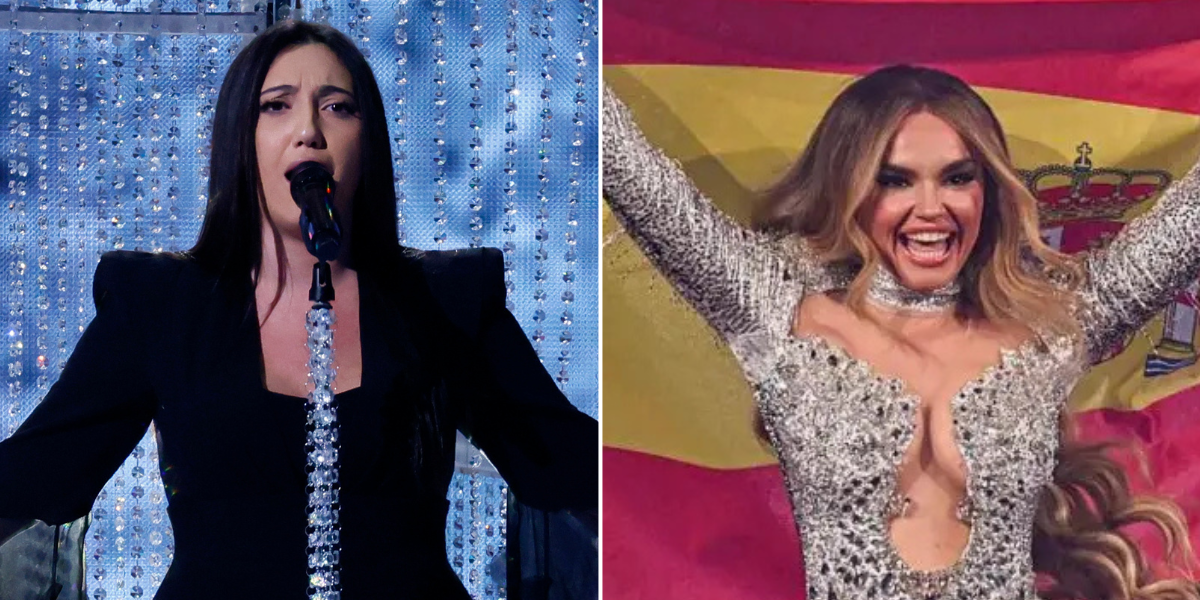
Norwegian singer Emmy Kristine, known as Emmy, represented Ireland with the song “Laika Party” in 2025
|
GETTY
Spanish broadcaster RTVE, which led demands for a secret ballot on Israel’s involvement, expressed frustration at the process.
“The EBU presidency has denied RTVE’s request for a specific vote on Israel’s participation. This decision increases RTVE’s distrust of the festival’s organisation,” it said, adding that Spain would not broadcast the final or semi-finals.
Meanwhile, Dutch broadcaster Avrotros concluded that participation “under the current circumstances is incompatible with the public values that are essential to us”.
Slovenia’s RTV also said recent rule amendments did not alter its stance, citing its commitment to “upholding ethical principles”.
However, Israeli President Isaac Herzog welcomed the outcome, describing it as “an appreciated gesture of solidarity, brotherhood, and co-operation, symbolising a victory over those who seek to silence Israel and spread hatred.”
He added that Israel “deserves to be represented on every stage in the world” and expressed hope the contest would continue to champion “culture, music, friendship between nations, and cross-border cultural understanding”.
Golan Yochpaz, chief executive of Israeli broadcaster KAN, characterised the attempted exclusion as a cultural boycott.
“A boycott may begin today — with Israel — but no one knows where it will end or who else it may harm,” he warned.

Spanish singer Melody represented Spain in Eurovision 2025
|
GETTY
“Is this what we truly want this contest to be remembered for on its 70th anniversary?”
KAN confirmed it would participate in Vienna, having been an EBU member since 1957 and a Eurovision competitor for five decades.
The BBC expressed support for the collective decision, stating: “This is about enforcing the rules of the EBU and being inclusive.”
Meanwhile, German broadcaster ARD, which had threatened to withdraw if Israel were expelled, said it was “looking forward to participating” in Vienna, describing the event as “a celebration of cultural diversity and solidarity.”
It added that while it “deeply regretted” the boycott decisions, it respected the choices of individual broadcasters.
Belgium’s broadcaster said it would announce its position within days, while Iceland’s RÚV confirmed its board would make a final determination at a meeting next week.
Nordic broadcasters from Norway, Sweden, Finland, Denmark and Iceland jointly endorsed the EBU’s efforts to address voting system shortcomings.
Competing broadcasters have until mid-December to confirm their participation, with the full list of entrants for the 70th anniversary contest expected before Christmas.