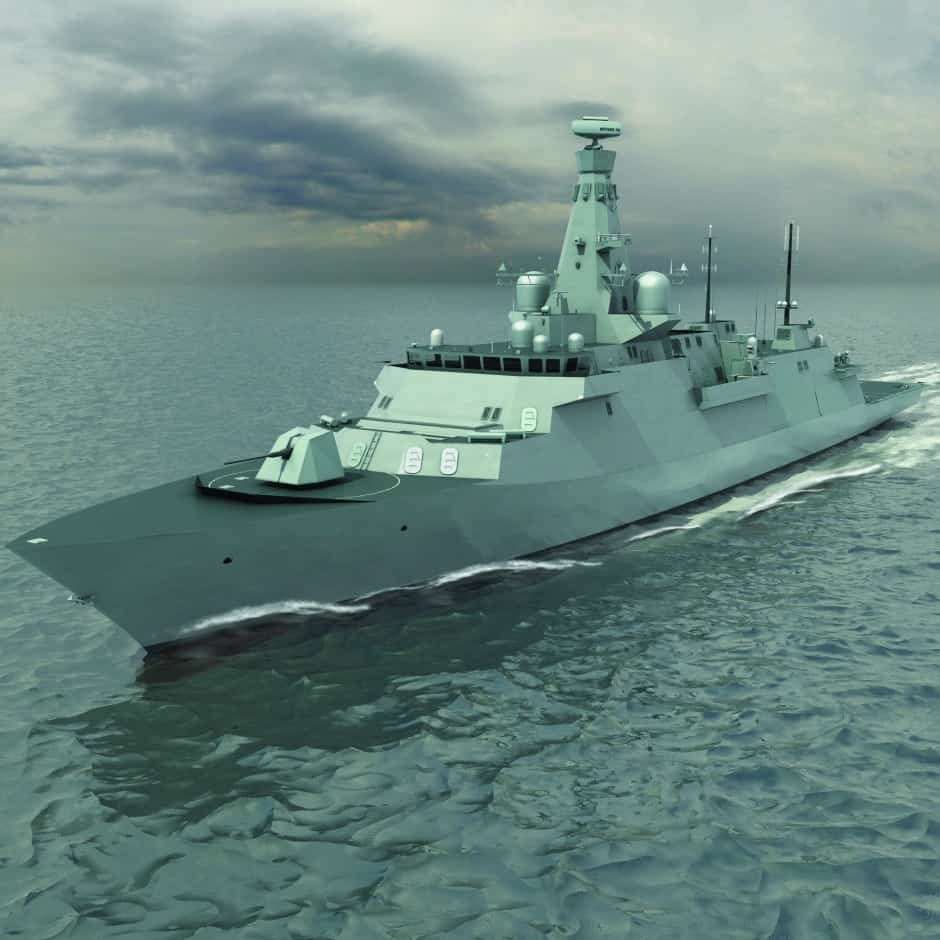
Under the agreement, signed as the PM welcomed his Norwegian counterpart Jonas Støre to RAF Lossiemouth, a combined fleet of at least 13 warships, bolstered by autonomous systems, will hunt Russian submarines and protect critical infrastructure in the North Atlantic.
The new so called Lunna House Agreement, which is named after the Scottish headquarters of the Norwegian resistance during the Second World War, will see the Royal Navy and Royal Norwegian Navy operate an interchangeable fleet of British-built Type-26 anti-warfare frigates.
The deal follows a 30 per cent increase in Russian vessels threatening UK waters in the past two years and follows September’s £10bn deal – reportedly the UK biggest ever warship deal by value – for the UK to supply Norway with five of the warships.
The warships will patrol the strategically vital gap between Greenland, Iceland and the UK, monitoring Russian naval activity and defending critical infrastructure such as underwater cables and pipelines.
Prime Minister Keir Starmer said: “At this time of profound global instability, as more Russian ships are being detected in our waters, we must work with international partners to protect our national security. This historic agreement with Norway strengthens our ability to protect our borders and the critical infrastructure our nations depend on.
Both navies will operate as one – sharing maintenance facilities, technology and equipment to create truly interchangeable forces able to deploy rapidly wherever needed.
The new agreement also confirms that the UK will join Norway’s “mothership” programme, which aims to develop offshore support vessels for deploying uncrewed mine hunting and undersea-warfare systems.
Designed and built by BAE Systems the Type-26 Frigate, also known as the global combat ship, has been developed to replace the Type-23 Frigates, the first of which – HMS Norfolk – was commissioned in 1989. The new ships are expected to enter service between 2028 and 2035.
A further new Frigate, Babcock’s Type 31, which is designed for general-purpose roles, is also expected to begin entering service in the early 2030s.