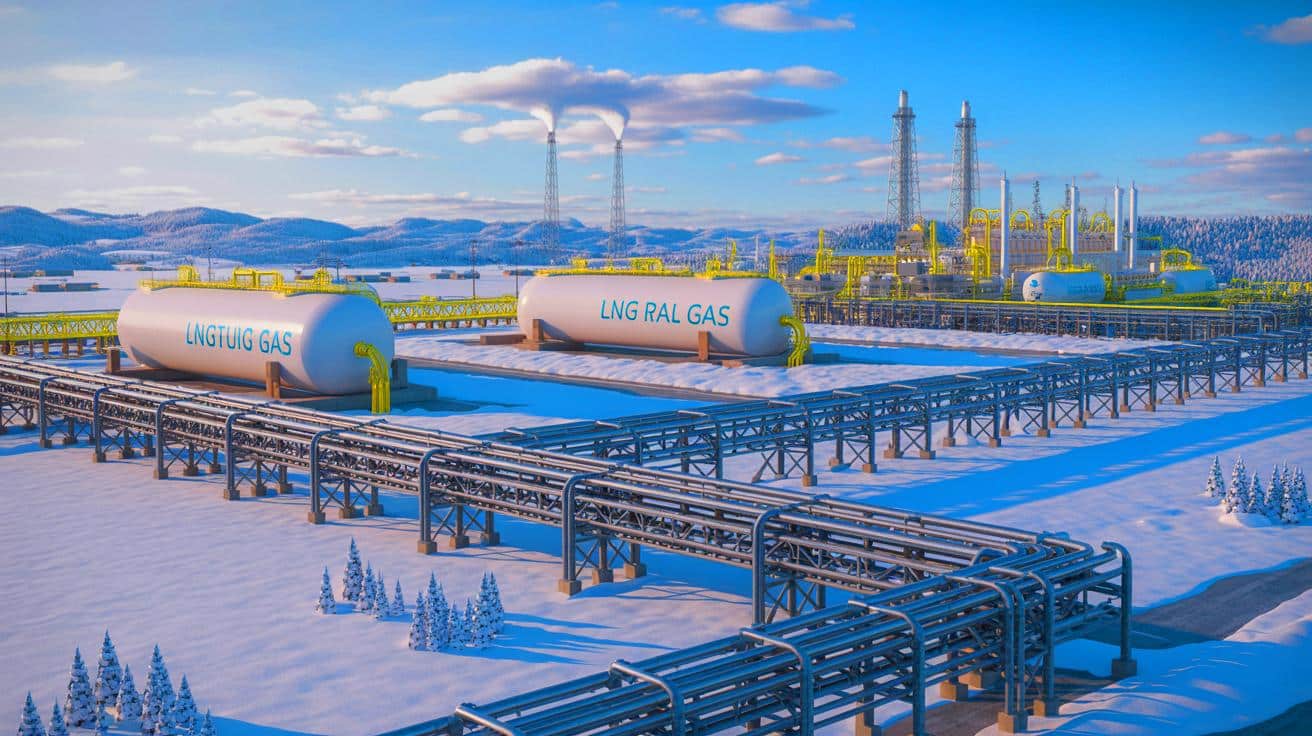
IN A NUTSHELL
❄️ U.S. natural gas prices hit a 35-month high due to increased LNG exports and a cold snap.
📉 Average gas output in the Lower 48 states decreased slightly in December, affecting supply dynamics.
🚢 LNG exports remain strong, with new facilities like Golden Pass enhancing export capacity.
🌍 Global market trends, including potential peace talks in Ukraine, influence natural gas prices worldwide.
The U.S. natural gas market recently experienced a significant surge, reaching its highest point in nearly three years. This rise is attributed to a combination of factors, including increased liquefied natural gas (LNG) export flows and a cold snap that has driven up heating demand. Despite these upward pressures, several elements, such as a small storage withdrawal and reduced demand forecasts, have played a role in moderating the price increases. As the winter season progresses, the dynamics of supply and demand are closely watched by industry analysts and consumers alike, offering insights into the future of energy consumption and pricing.
Natural Gas Prices Hit New Highs
Natural gas prices in the United States have climbed to levels not seen in nearly three years. The front-month gas futures for January delivery on the New York Mercantile Exchange rose to $5.063 per million British thermal units (mmBtu), marking their highest close since December 27, 2022. This increase places the contract in overbought territory, as prices surpassed the psychological resistance level of $5 per mmBtu for the first time since late 2022.
Several factors have contributed to this price surge. A significant cold snap has driven up heating demand, causing cash prices to rise across various regions. In New England, for instance, next-day gas prices soared to $25 per mmBtu, the highest since February 2023. Such fluctuations highlight the sensitivity of gas prices to weather conditions and underscore the importance of robust supply chains to meet increased demand during peak periods.
US Oil and Gas Rig Count Declines, Raising Questions About Future Amid Record Production Levels
Supply and Demand Dynamics
The balance of supply and demand is a critical factor influencing natural gas prices. Recent data from financial firm LSEG indicates that average gas output in the Lower 48 states has decreased slightly in December, falling to 109.4 billion cubic feet per day (bcfd) from a record 109.6 bcfd in November. This decline is largely attributed to reduced production in key states such as Pennsylvania, Texas, and West Virginia.
Meanwhile, average gas demand, including exports, is projected to decrease from 144.5 bcfd this week to 142.6 bcfd next week. This reduction in demand forecasts may help temper price increases, though the overall market remains volatile. The fluctuations in output and demand highlight the ongoing challenges faced by the natural gas industry, as it seeks to balance production with consumption in an ever-changing market landscape.
US Natgas Prices Surge Amid Cold Weather and Strong LNG Exports, Impacting Heating Costs Nationwide
Impact of LNG Exports
The role of LNG exports in shaping the natural gas market cannot be overstated. The U.S. continues to see strong LNG export flows, with average gas flows to the eight major LNG export plants in the country reaching 18.0 bcfd in December. This is a slight decrease from the monthly record high of 18.2 bcfd in November, yet it still represents a significant portion of the market.
The commissioning of new LNG facilities, such as the Golden Pass project in Texas, is expected to further boost export capacity. The U.S. Federal Energy Regulatory Commission recently approved the introduction of hazardous fluids for testing purposes at the Golden Pass plant, indicating progress towards operational status. Such developments are crucial for maintaining the U.S.’s position as a leading exporter of natural gas, particularly amid fluctuating global prices and geopolitical influences.
Global Market Influences
Global market conditions also play a significant role in the U.S. natural gas landscape. In Europe, gas prices have fallen to a 19-month low at the Dutch Title Transfer Facility, driven by optimism surrounding peace talks in Ukraine and the potential lifting of sanctions against Russia. If these sanctions are lifted, Russia may increase its gas exports, impacting global supply and pricing dynamics.
Similarly, in Asia, prices at the Japan-Korea Marker have dropped to a three-month low, reflecting shifts in regional demand and supply. These global trends highlight the interconnected nature of energy markets and the need for strategic planning to navigate potential challenges. As the world continues to grapple with geopolitical tensions and climate considerations, the natural gas sector remains a focal point for energy security and economic stability.
As we move further into the winter season, the natural gas market remains a dynamic and critical component of the energy landscape. With prices fluctuating due to a mix of local and global factors, industry stakeholders and consumers alike are keeping a close eye on developments. How will these trends shape energy policies and consumption patterns in the coming months, and what strategies will emerge to ensure stability and sustainability in the face of such volatility?
This article is based on verified sources and supported by editorial technologies.
Did you like it? 4.6/5 (27)