
The first thing Mohammed notices when he walks through the narrow lanes of Harasta is not the silence, but the echoes.
At 25, he moves like someone much older, each step carefully placed on broken stones and twisted rebar.
“I was 14 when everything started,” he says, his eyes fixed on a collapsed wall still bearing scorch marks from the earliest battles in Eastern Ghouta. When the fighting engulfed Harasta a decade ago, Mohammed was just a teenager.
By the time the old regime imposed its crushing siege, he had seen more bodies than schoolbooks, more explosions than sunsets. “We left only when they finally let us go,” he says. “But even after leaving, the siege stayed inside us.”
Today, a year after the ousting of Bashar al-Assad in December 2024 — an event many here simply call “turning the black page” — Mohammed’s voice still shakes when he speaks of that time.
“You don’t forget what hunger tastes like and fear feels like,” he murmurs.
70-year-old Zahra, her back bent from decades of carrying more than bags and bread, pushes through the rubble with a cloth bag hanging from her wrist. “We are all traumatized,” she says. “To this day, I wake up in the night thinking about the days we had no food. We boiled grass just to drink the water.”
Harasta wears its wounds openly: Collapsed apartment blocks, hollowed-out stairwells, streets that resemble open graves. Walking through its centre feels like crossing the aftermath of an earthquake — except the destruction was human-made, accumulated through years of airstrikes, starvation and slow decay caused by conflict.
Months after regime collapse marked by violence
Syria’s post-Assad transition has been anything but peaceful. Though the collapse of the old regime triggered celebrations across parts of the country, the months that followed were marked by instability, reprisals and mass violence.
The transitional government now grapples with what one official called “a nation shattered in layers.” The March 2025 killings of Alawite civilians, the sect to which al-Assad belongs, and the July attacks on Druze communities remain raw wounds, reminders that sectarian tensions did not disappear with the regime’s fall.
Across the country in 2025, more than 16 million Syrians still require humanitarian assistance, and funding gaps continue to stall reconstruction.
In Harasta, infrastructure loss is immense: Damage across Rif Dimashq — the wider region that includes the city — has been estimated at over $22 billion. Despite the devastation, transitional officials say the past year has brought measurable progress in essential services.
On the sidelines of a medical conference in Damascus, Syria’s transitional Health Minister, Musab Nazzal al-Ali, a doctor himself who lived in Germany and speaks fluent German, expressed cautious optimism.
“We are focusing on bringing back the country’s sons — the scientific and professional talents who had been abroad,” he said. “They are returning to advance science, train those who stayed and provide surgical operations to our people.”
According to al-Ali, more than 8,500 surgeries and 30,000 medical consultations have been performed in the past seven months, thanks largely to medical missions returning from the diaspora.
Rehabilitation efforts, he added, are underway across the sector, yet al-Ali insists that the government is still far from meeting its goals. “We haven’t reached the level we aspire to,” he says. “But compared to the first months after liberation, there is real progress. The people are the judges.”
Education for a future not yet built
Minister of Education Mohammed Abdulrahman Turko echoes the sentiment, describing education and training as Syria’s “true oil.”
For him, the priority is reconnecting universities to society’s needs.
“We are working to close the digital transformation gap. The next stage is investment in human capital and linking education to the labour market.”
But here in Harasta, grand strategies feel far away. What dominates is the weight of memory.
A group of children chases a ball in what might once have been a school courtyard — the building now roofless, its walls shredded by shrapnel. They run and laugh loudly, as if determined to drown out the screams that once filled these same streets.
“Hope is slow,” Zahra says, pausing to catch her breath. “But we carry it, even if only a little.”
For Mohammed, the future remains uncertain, yet he insists on hope. “I want to stay … I want to rebuild Harasta,” he says with a small, tired smile. He walks these broken streets often. “I do it to remind myself: I survived.”
Amid the destruction and painful memories, Syrians across the country are preparing for celebrations marking one year since the ousting of Bashar al-Assad.
Decorations now fill the neighbourhoods of Damascus, and posters featuring security forces under the slogan “Toward a safe homeland” hang from buildings.
“The face of the country has brightened; the dark era has ended,” reads another.
The celebrations will include musical evenings and popular festivals in public squares, alongside shopping fairs and other events. In Damascus, major festivities are planned in Umayyad Square.
Authorities have emphasized that gunfire will be strictly prohibited during the celebrations — a rule many hope will mark a symbolic break from the violence of the past.
A year after liberation, Syria still stands in a fragile space — somewhere between survival and the long, painful work of learning how to live again.
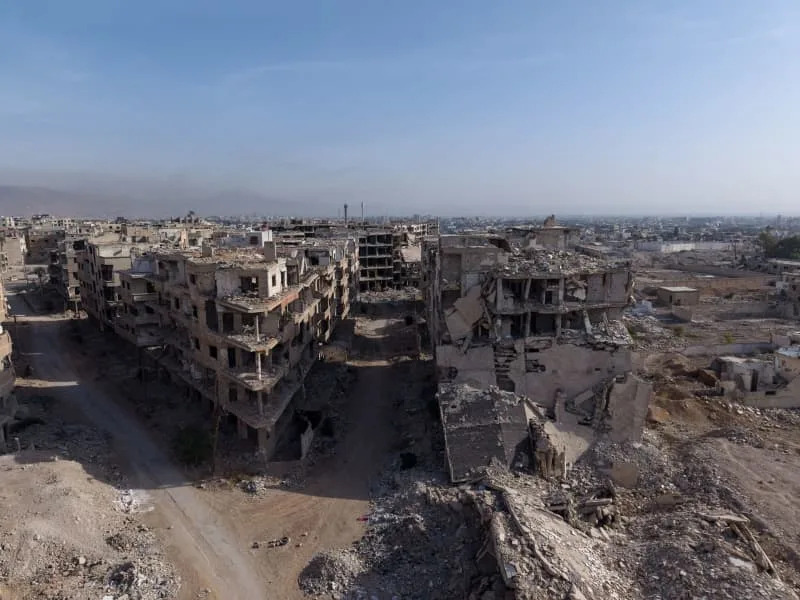
An aerial view shows the destruction to the city of Harasta, resulting in widespread poverty, damage to infrastructure and a collapse of services. Moawia Atrash/dpa

A Syrian boy walks past destroyed buildings in Harasta. Syria has suffered immense destruction due to the ongoing conflict, leading to widespread poverty, infrastructure damage, and a collapse of services. Moawia Atrash/dpa
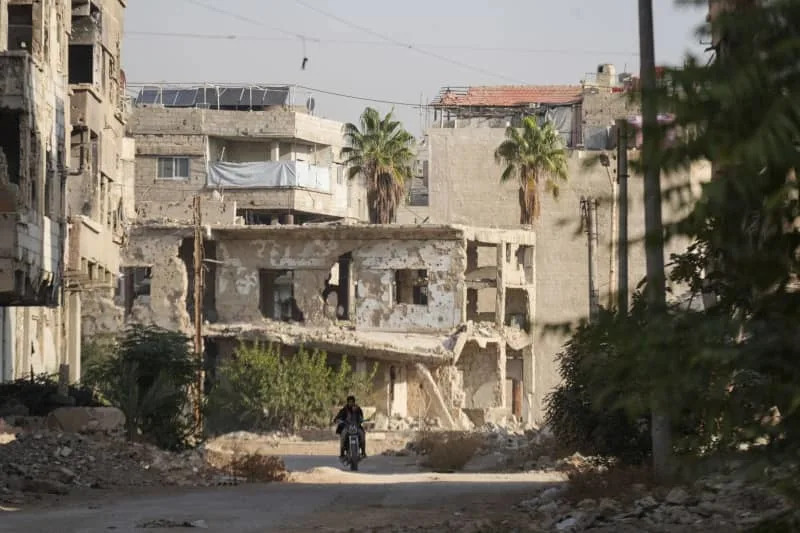
In the shattered streets of Harasta, where memories cling as stubbornly as the dust, survivors mark the first anniversary of Syria’s new beginning — with hope in their pockets and trauma in their bones. Moawia Atrash/dpa
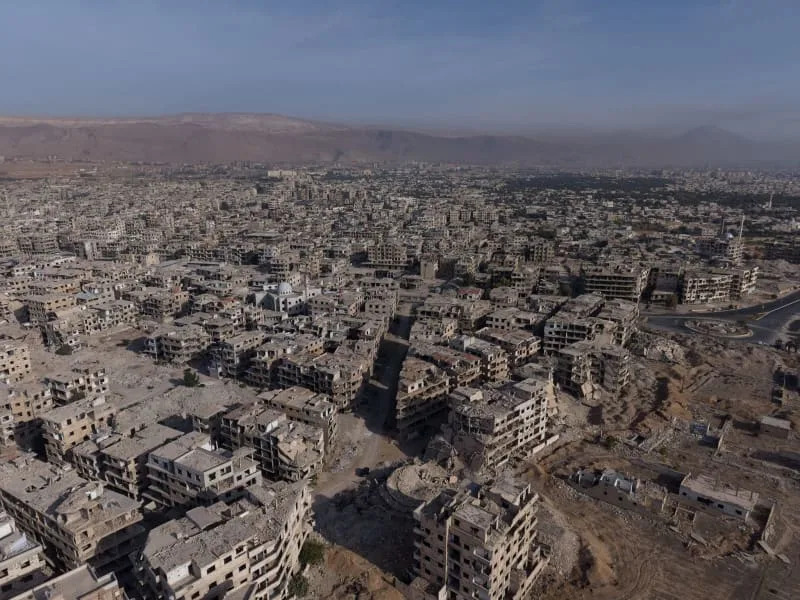
An aerial view shows the destruction to the city of Harasta, resulting in widespread poverty, damage to infrastructure and a collapse of services. Moawia Atrash/dpa
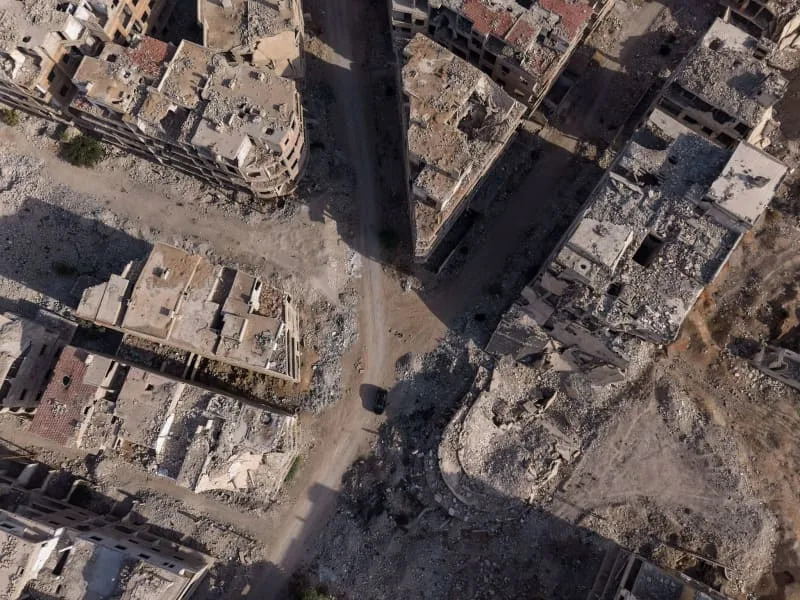
An aerial view shows the destruction to the city of Harasta, resulting in widespread poverty, damage to infrastructure and a collapse of services. Moawia Atrash/dpa
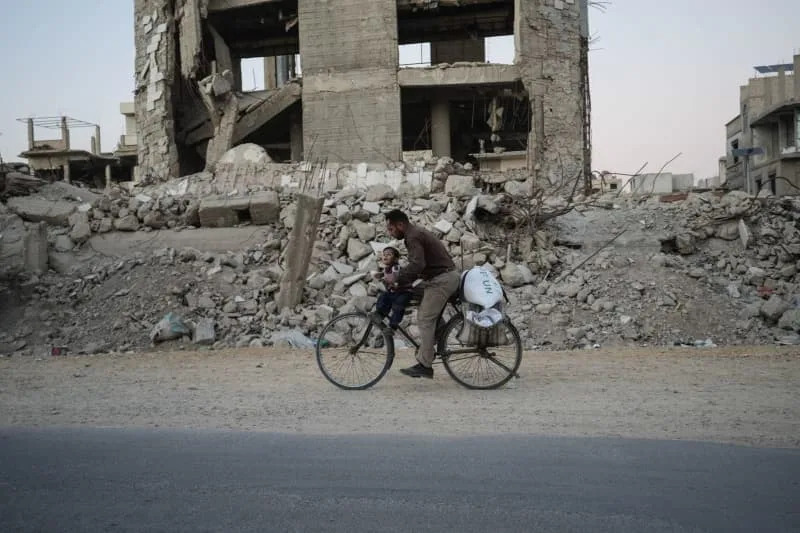
Harasta wears its wounds openly: Collapsed apartment blocks, hollowed-out stairwells, streets that resemble open graves. Moawia Atrash/dpa
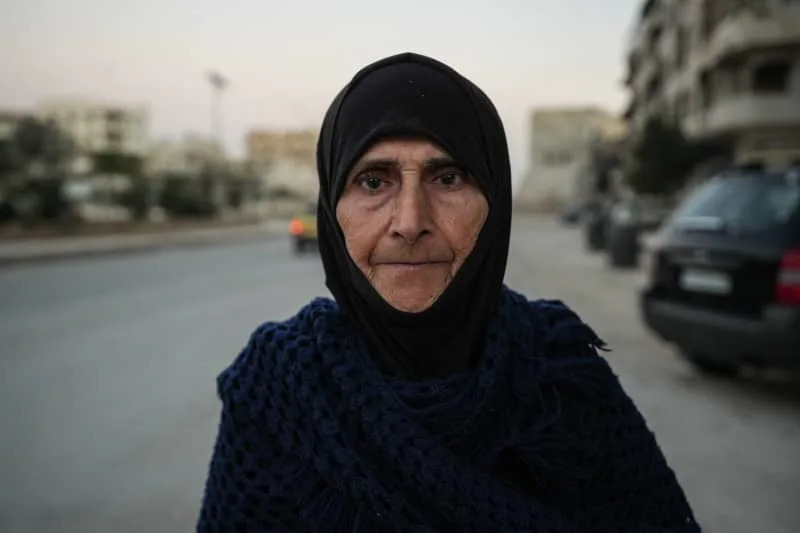
Hadiya, a 71-year-old Syrian woman who lives in a room in her destroyed house in Harasta. Moawia Atrash/dpa
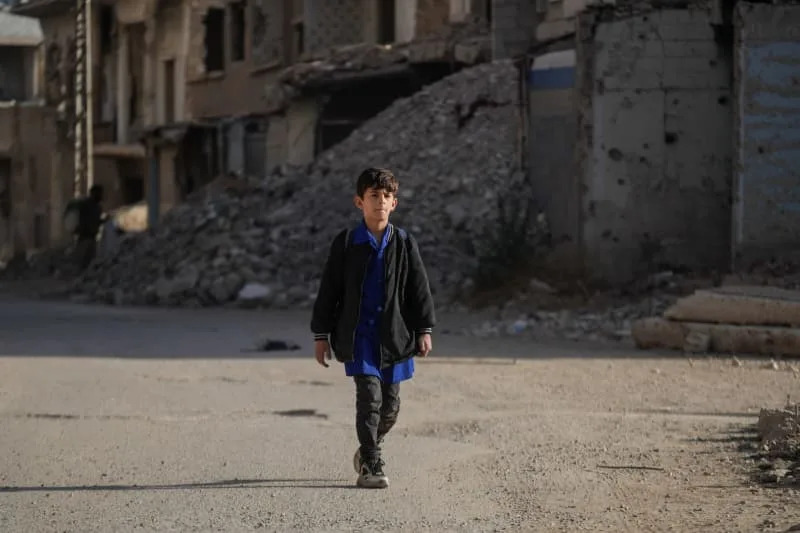
A Syrian boy walks past destroyed buildings in Harasta. Syria has suffered immense destruction due to the ongoing conflict, leading to widespread poverty, infrastructure damage, and a collapse of services. Moawia Atrash/dpa