Normal text sizeLarger text sizeVery large text size
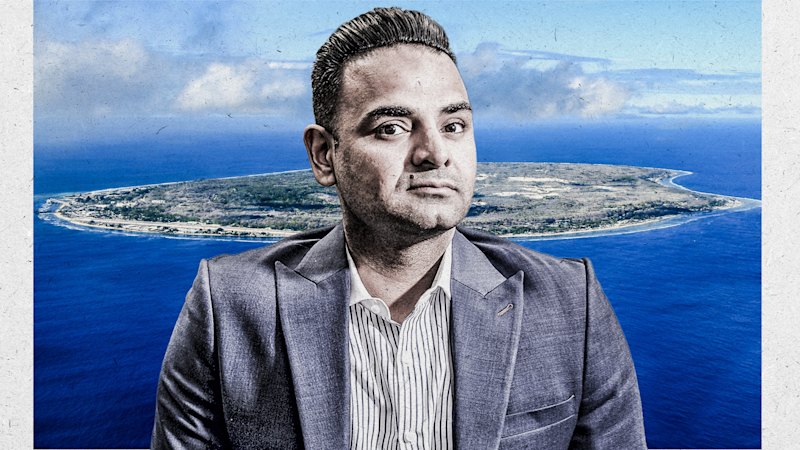
On an unseasonably cold November morning, the charming yet enigmatic owner and chief executive of MA Services Group, Micky Ahuja, held an urgent meeting with a fellow executive about what was rapidly becoming the country’s most controversial security contract.
At stake was a high-risk and secretive deal worth potentially tens of millions of Australian taxpayer dollars, which had become the subject of intense and growing scrutiny in Canberra.
Chief executive of MA Services Group, Micky Ahuja.Credit: Michael Howard
Ahuja also knew his company’s reputation was on the line, even though it was yet to emerge that executives at MA Services – whose blue-chip clients include Coles, AFL clubs and government agencies – were actively involved in the opaque operation to send a private Australian security force to the tiny Pacific island of Nauru.
Instead, what was reported a week earlier in an investigation by this masthead and 60 Minutes was that a labour-hire company controlled by the international boss of the Finks outlaw bikie gang was recruiting guards to join the security force.
The reporting caused uproar in Canberra, not only because the notorious bikie outfit was involved, but because the security force was being ultimately funded by the Albanese government, albeit via the allegedly corrupt ruling regime in Nauru.
Labor is pumping millions of dollars into Nauru each year – up to $2.5 billion over 30 years – to resolve a political nightmare involving about 300 former immigration detainees released into the community after a High Court ruling, but deemed too dangerous to remain in Australia. Solving that political problem created another.
After Nauru agreed to take the so-called NZYQ cohort last year, the question of who would protect its population from the potentially dangerous ex-detainees quickly emerged.
The impoverished country has a tiny police force and most large Australian security providers were reluctant to service the infamous offshore border security outpost for reputational reasons.
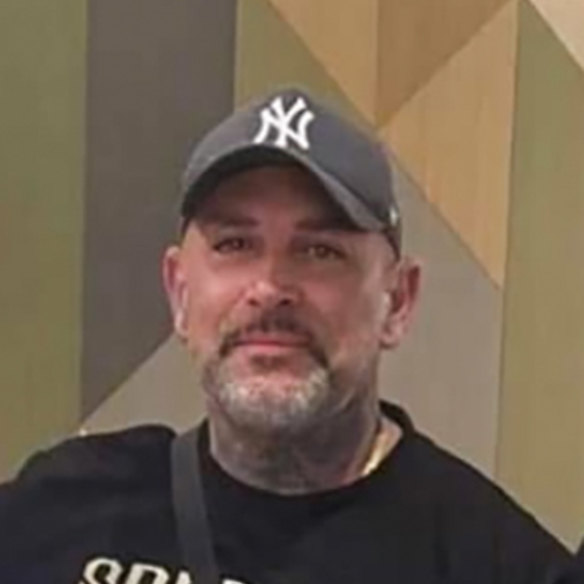
Ali Bilal, global leader of the Finks bikie gang.
The Finks had no such qualms. A firm controlled by the gang’s international president, Ali Bilal, began quietly marshalling security guards to dispatch to Nauru.
After the extent of the bikie gang’s involvement was described by a whistleblower in the November reporting, the Albanese government held a crisis meeting with the allegedly corrupt president of Nauru, David Adeang, to demand the proper use of Australian funds.
Adeang acquiesced and removed the organised crime-linked entity from his nation. Behind the scenes, Micky Ahuja was also scrambling.
Key senior figures from his company, MA Services, had played key and protracted roles in co-ordinating the Nauru security arrangement. Now Ahuja would be stepping in personally to help clean up the mess.
On November 17, Ahuja convened a meeting with MA’s national manager, Paul Maroun, to discuss how to revive the Nauru deal. According to sources with detailed knowledge of MA’s Nauru plans, Ahuja and Maroun agreed to scout for a new security manager with a clean background to replace former bikie-linked MA executive Tim Jones (whose murky relationship with the operation appears to have ended amid the media storm).
Loading
Ahuja made it clear that MA wanted to safeguard its reputation given the increasing toxicity of the offshore venture: in addition to the bikie links, Adeang’s sordid history of suspected corruption was also back in the spotlight.
Ahuja wanted to stop the damaging publicity, according to sources with intimate knowledge of his planning. Senior MA personnel had arranged for the Nauru operation to be insured; all guards would be paid $120,000 a year, with a requirement to manage their own superannuation (which is not mandated on Nauru); and those personnel were also to take a key role in managing the requirements of the Adeang government, albeit via a corporate structure in Nauru.
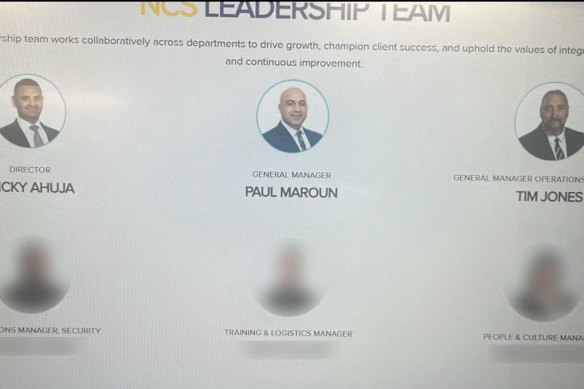
Screenshot of a website listing senior MA Services Group personnel as having association with Nauru Community Safety.
Ahuja’s November 17 Nauru revival plan built on 12 months of earlier work MA had already done to operate offshore. In late 2024 and early 2025, MA managers recruited Nauru project managers; hosted meetings with Nauruan officials at MA’s offices in Melbourne and in Brisbane; created a website with Ahuja listed as “director” of an entity called Nauru Community Safety; and drafted risk management plans and corporate structures to carry out the venture.
This was all done in secret. While the Nauru deal was well known to MA insiders, the company’s government, corporate clients and the public – who interact with the firm’s security guards at retailers such as Coles, Bunnings and Kmart or at major events such as the spring racing carnival – had no idea about the Nauru operations.
According to sources and leaked communications, Ahuja wanted to keep MA’s involvement secret by using a separate corporate vehicle to operate offshore. When this masthead first asked Ahuja about his involvement on November 6 and 7, he refused to respond. When he was approached for comment again by reporters in the days after the November 17 meeting, Ahuja also declined to comment.
His hope of keeping MA out of the Nauru story came to an abrupt end in late November, when this masthead published revelations of the firm’s involvement in the offshore operations and links with a Finks-linked subcontractor.
Still, Ahuja sought to deny and downplay his firm’s Nauru dealings.
On November 27, Ahuja’s public relations agent sent reporters a Nauru corporate document that he said disproved that Ahuja had a key role in the Nauru venture.
The document did not show that. It was created on November 8, 2025 – the day the first chapter of the Nauru scandal broke in the news. It listed the sole shareholder of Nauru Community Safety as Tim Jones, the former bikie-linked MA executive whose role Ahuja was hoping to fill via his recruitment efforts on November 17.
Within a week, Ahuja had replaced his PR agent with a new public relations spinner. On Thursday, this PR agent said MA Services was “not aware” of Ahuja’s November 17 meeting with fellow MA executive Paul Maroun.
“MA Services Group was offered an opportunity, and after a detailed and considered analysis, chose not to proceed,” the statement said.
Loading
Earlier this week, Ahuja and MA also insisted in a statement it had no knowledge of bikie involvement in any of the firm’s dealings, insisting again that MA’s interest in the Nauru security operation was both temporary and fleeting.
MA also insisted it had no knowledge or involvement in a range of tax and workplace investigations linked to the firm’s Australian operations, which have entangled the AFL and corporate giants such as Coles.
Liquidators’ reports unearthed by this masthead reveal MA is suspected of engaging the services of a series of subcontractors to provide thousands of security guards across Australia.
Some of those same subcontractors have been placed into liquidation owing huge sums to the Tax Office and are also accused of exploiting the migrant workers who, while wearing MA security guard uniforms, are in reality employed via opaque company structures.
According to liquidators’ reports, the Tax Office is probing a scheme featuring “numerous liquidated labour-hire companies” and “tax evasive behaviours” involving companies that are used by MA Services or its subcontractors supplying guards to businesses such as Coles and Amazon.
MA and Ahuja insisted they had no knowledge of this suspected wrongdoing, but more than a dozen MA insiders have briefed this masthead outlining suspicions that MA benefits financially from the arrangements while trying to ensure subcontractors would carry blame for any wrongdoing.
Some of the sources have provided detailed information to the Tax Office and other regulators. If their allegations are true, they mirror claims also made about Ahuja’s role as a key figure in the Nauru operation.
The overlap between the Nauru dealings and MA’s Australian operations, and the controversy involving both, has ongoing fallout that has shown no sign of disappearing.
Foreign Minister Penny Wong has put Adeang on notice about the security operation, and Greens and teal MPs have named MA Services repeatedly in attacks on the government in federal parliament.
Coles, Bunnings and other corporate giants have launched probes, while Australia’s private security association has held crisis discussions about the integrity cloud being cast over an industry already known for its underpayment of migrant workers.
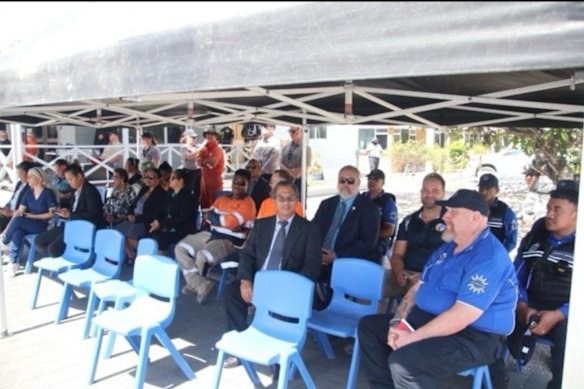
Tim Jones (front row on the right) at an event in Nauru wearing a Nauru Community Services shirt.
Victoria Police is also investigating MA’s claims in tender documents it has a veteran serving police office on its training committee (police are banned from working with private security providers).
This week, Ahuja again insisted he and MA were merely the victims of suspected wrongdoing by others.
In the case of Nauru, Ahuja is blaming former executive Tim Jones for bringing in a bikie gang firm without MA’s knowledge.
Ahuja insists all subcontractors used to supply Coles, AFL clubs and his other clients are vetted and have impeccable corporate governance.
Loading
In addition to a new public relations agent, Ahuja has also instructed corporate law firm Gadens to send legal threats to this masthead demanding stories about him and his company be removed.
He has successfully made such demands before. In 2020, this masthead took down a series of stories about MA as part of a settlement with Ahuja and involving different reporters.
Last week, as part of this masthead’s new investigation, MA insiders confirmed the company had gone to extraordinary lengths to protect its reputation.
After giving a security manager facing significant family pressure a $6000 bonus, the manager was told to prepare a positive statement about the firm to be given to reporters to ward off negative news.
MA denied that the bonus was connected to a statement previously provided to The Age.
But the manager, who has since left MA and declined to comment, has told his former colleagues he felt pressured to do so.
“It’s the worst thing I ever did,” he recently told a colleague.
Start the day with a summary of the day’s most important and interesting stories, analysis and insights. Sign up for our Morning Edition newsletter.