Photo: Wikipedia
India-West News Desk
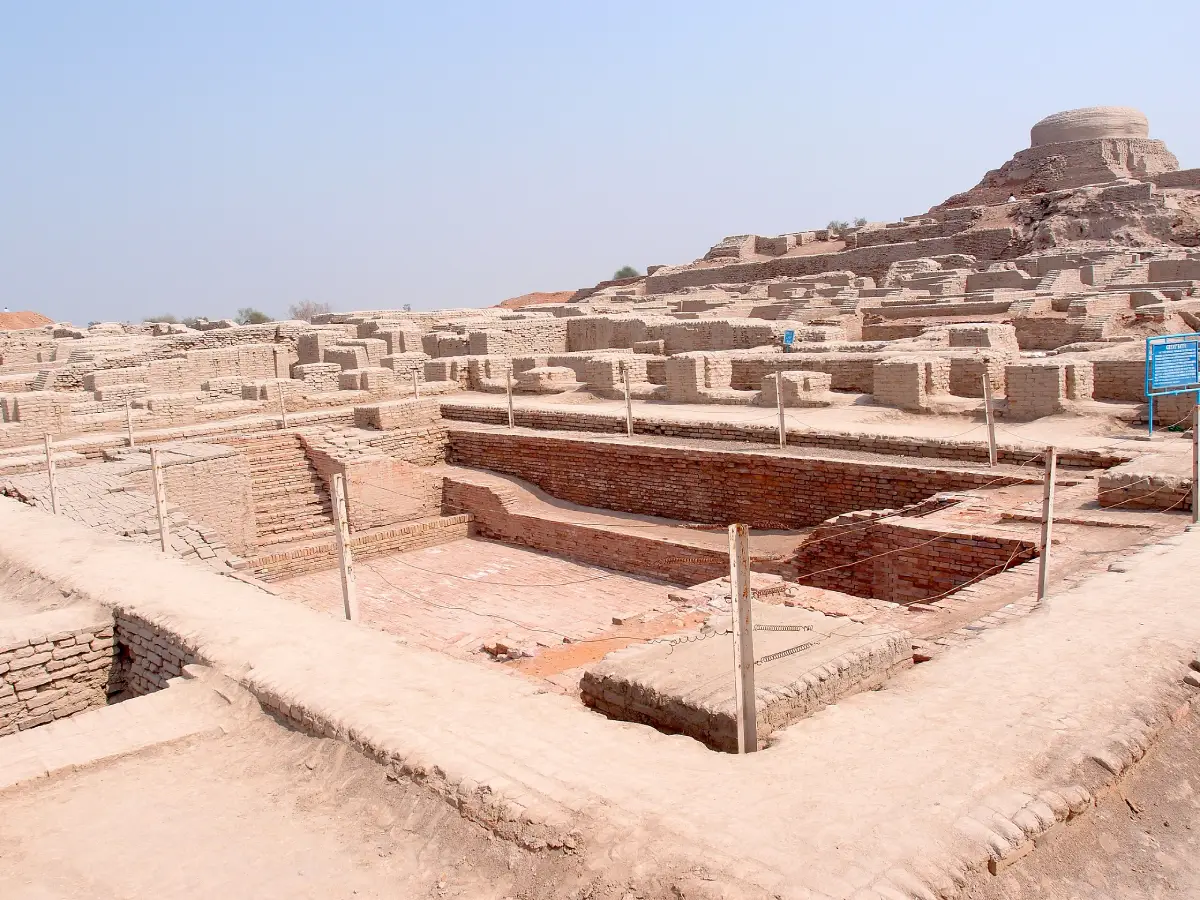
NEW DELHI – For thousands of years, Harappa, Mohenjo-Daro, and Lothal, the great cities of the Indus Valley Civilization, were the center of one of the world’s earliest and most advanced urban societies. Then, around 3,500 years ago, this flourishing culture began to decline. Its disappearance has been one of the world’s most enduring mysteries.
New research from IIT Gandhinagar presents a compelling answer: the climate changed, and the people had to follow. It wasn’t a sudden, dramatic collapse, but a long, slow process of transformation driven by severe and successive droughts.
The Indus Valley Civilization, now referred to as the Sindhu-Saraswati civilization by Indian historians, peaked between 5,000 and 3,500 years ago across modern-day northwest India and Pakistan. Their entire existence was supported by the Indus River, which provided the water necessary for trade, agriculture, and daily life.
However, historical climate records, taken from ancient sources like cave stalactites and lake sediments, show that the region was heading toward a crisis. Using climate models, researchers found a persistent drying trend: average annual rainfall was decreasing by as much as 20 per cent, and temperatures were rising in proportion.
The most devastating findings point to not one, but a series of major climate shocks. Between 4,450 and 3,400 years ago, the region was hit by four major droughts, each lasting more than 85 years.
The most severe of these prolonged dry spells lasted an incredible 164 years and affected over 91 per cent of the civilization’s territory. These weren’t just bad years; they were generational crises that placed impossible stress on the water supply, forcing communities to adapt or move.
Initially, communities settled in areas with reliable rain. But as the droughts intensified, the people had to move. They began concentrating closer to the Indus River itself, seeking a reliable water source.
Yet, hydrological simulations show that even the great river was vulnerable. River flow anomalies coincided directly with the major droughts, leading to severe water scarcity even along the banks.
Farmers tried to adjust their way of life. Plant remains show that they switched from water-guzzling crops like wheat and barley to drought-tolerant millets. But these attempts to adapt could not fully offset the impact of such prolonged aridity.
Contrary to earlier theories of a sudden, mysterious abandonment, the new evidence points to a more subtle and complex end. The great urban centers weren’t conquered or destroyed; they were simply fragmented. The civilization broke down into smaller units, marking a slow but profound transformation of the society rather than a complete disappearance.Photo: Wikipedia
E