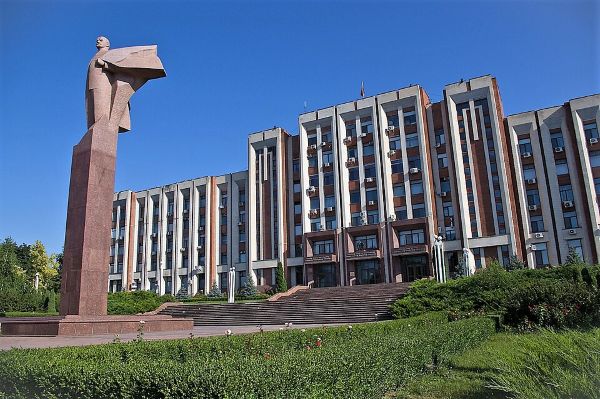
On 3 December, the Moldovan government announced that, in partnership with the European Union and the United States, it is formulating a plan for the reintegration of Transnistria. However, officials have opted not to disclose specific details of this strategy, citing concerns that such disclosures could compromise the desired outcomes.
Transnistria, officially known as the Pridnestrovian Moldavian Republic (PMR), emerged following a conflict between pro-Moscow and pro-Moldovan forces that lasted from 2 November 1990 until early summer of 1992, culminating in a ceasefire agreement. Since that time, Transnistria has remained a non-recognised state characterised by economic challenges, high levels of corruption, and significant dependence on Russia for financial and military support. Moldova is actively seeking peaceful avenues for the region’s reintegration into the Moldovan Republic.
In November, Prime Minister Alexandru Munteanu publicly acknowledged for the first time that Chisinau is in discussions with its European and American partners on a plan for the country’s reintegration, although specific details were not disclosed. Parliament Speaker Igor Grosu estimated that the annual costs associated with reintegration would be approximately €500 million.
Valeriu Chiveri, a diplomat and the Deputy Prime Minister for Reintegration, made public these developments following a government meeting. He indicated that certain issues remain sensitive and necessitate a cautious approach, while others will require additional time to address effectively.
“We are actively engaged in developing a reintegration strategy or roadmap. However, we must handle sensitive issues with care. We must consider the steps that will yield long-term results. Disclosing every action in real time could undermine the outcome. Our work is ongoing, and we will share results with the public at the appropriate moment,” stated Chiveri.
In response to inquiries about the potential for discussing the resolution of the Transnistrian conflict in the context of Russian-Ukrainian peace negotiations, Chiveri clarified that such discussions could be entertained only from a regional security standpoint.
“We do not wish to be included in any broad conflict resolution package. While we can discuss regional security matters, we are singularly focused on the withdrawal of Russian troops from the region. Regarding the settlement of the Transnistrian issue, we are committed to advancing this process through negotiations, with the participation of the Transnistrian side deemed essential. We will collaborate closely with our primary partners, the European Union and the United States,” he noted.
Chiveri emphasised that Chișinău is dedicated to pursuing reintegration through negotiations that include the Transnistrian side, but not within the conventional “5+2” negotiation format. Previously, the “5+2” format included representatives from Moldova and Transnistria, with the OSCE, Russia, and Ukraine serving as mediators, while the EU and the United States acted as observers. This format has been rendered inactive following the onset of the war in Ukraine. Currently, communication between Chisinau and Tiraspol occurs directly in a “1+1” format, without the involvement of mediators or international observers.
As Moldova continues its journey toward EU integration, the Transnistrian conflict and the illegal presence of Russian troops on the left bank of the Dniester remain pressing concerns. On 1 December, EU High Representative Kaja Kallas highlighted in Brussels, following a meeting of EU defence ministers, that “the withdrawal of Russian troops from Moldova and other European regions is essential for sustainable peace.”