Inspired by Dalí’s vision, it fosters dialogue between artists and scientists to explore new ways of understanding the world.
The Gala-Salvador Dalí Foundation presents Platform Dalí, a new international program inspired by the Empordà-born artist whose work was profoundly shaped by the scientific advances of the 20th century. Directed by Mónica Bello, an internationally recognized leader at the intersection of art and science, Platform Dalí has been created to weave networks of artists and scientists to explore new ways of understanding the world. As Bello notes, the program’s ambition is “to establish a stable framework in which art and science can approach the complexity of the world together and invite us to observe it through multiple lenses.”
Salvador Dalí observed his time through the lens of science. His work and thought absorbed and reimagined concepts from atomic physics, relativity, genetics, neuroscience, mathematics and early computing, weaving them into a cosmology of his own. Throughout his life, he cultivated an extensive intellectual ecosystem, being inspired and in some cases establishing long-term dialogues with scientists such as Santiago Ramón y Cajal, Severo Ochoa, James Watson, and Francis Crick. For the artist, looking was a way of exposing himself to the complexity of the present, acknowledging that the horizons of knowledge are also those of experience. Platform Dalí builds on this vision to explore the limits of knowledge and imagination through the hybridisation of art and science.
Based in Barcelona, the program is anchored in the city’s scientific ecosystem. The program has established collaborations with five leading science centers: the Barcelona Supercomputing Centre-Centro Nacional de Supercomputación (BSC-CNS), the Institute of Photonic Sciences (ICFO), the Institute of Marine Sciences (ICM-CSIC), the Institute for High Energy Physics (IFAE), and the Barcelona Biomedical Research Park (PRBB). The partner centres, which will host and actively participate in the activities, create a singular framework for artistic practices to engage with key areas of contemporary research: life sciences, fundamental physics, supercomputing, marine sciences, and photonics, opening spaces for new forms of experimentation between disciplines.
Starting in 2026, Platform Dalí will foster research, creation and mediation through artist fellowships, residencies, encounters in the laboratories, and public events. Artist fellows will develop 18-month research projects in dialogue with one or more centers, while resident artists will immerse themselves in a one-month research stay in a laboratory to produce new works that will be presented the following year. There will be space for sustained exchange between researchers and artists inside the scientific environments, and public events will share the processes with wider audiences and expand on the program’s core themes with invited researchers. The resulting works will be presented in an exhibition in 2029 that will highlight the development of the programme and its relationship to Dalí’s vision of science.
The first invited artists echo Dalí’s drive to expand the limits of their fields through exchange with other forms of knowledge. These include Mexican artist Tania Candiani, renowned for her work exploring visual, technological and sonic languages; the celebrated Andalusian dancer and choreographer Israel Galván; the Catalan collective Estampa, a reference for their critical engagement with digital technologies and their research on more-than-human environments; and George Mahashe, an artist and academic who explores the relationships between art, science, and knowledge and transmission systems, particularly in the context of South Africa. Over the course of 2026, Platform Dalí will announce the remaining three resident artists, completing an annual cohort of five residents and two fellows.
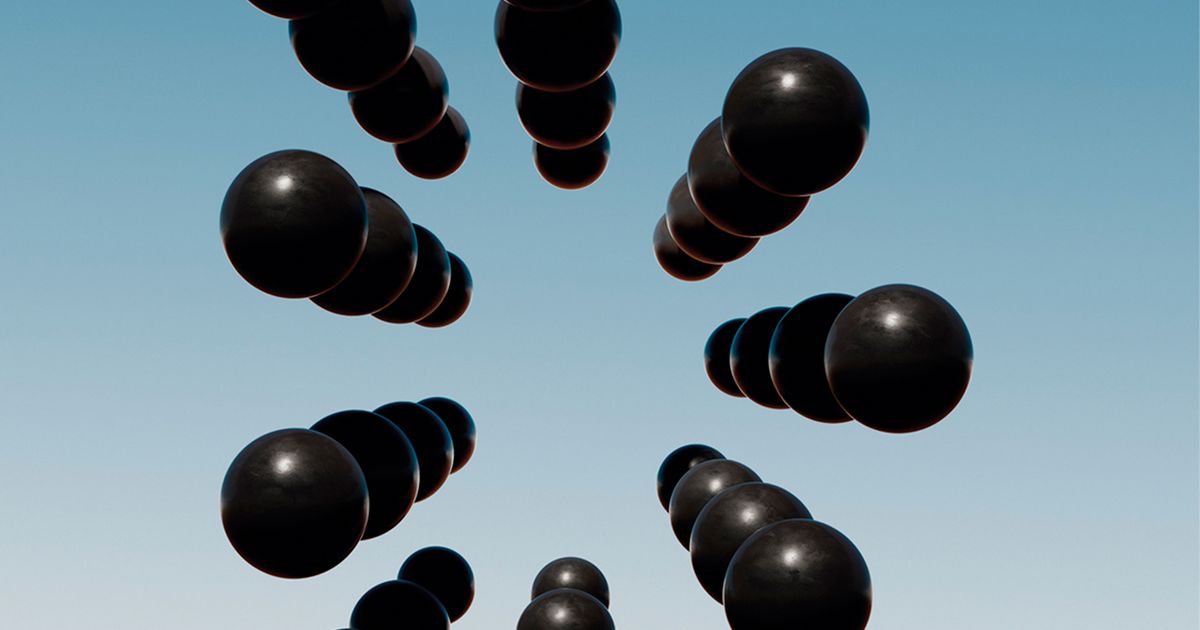
The launch event of Platform Dalí took place at La Pedrera, Barcelona, on 2 December 2025. The event opened with remarks by Jordi Mercader, president of the Gala-Salvador Dalí Foundation, followed by a presentation of the programme by Mónica Bello, director of Platform Dalí. Afterwards, Ignacio Cirac, director of the Max Planck Institute for Quantum Optics, and Tania Candiani, artist and recipient of the Platform Dalí artist fellowship, discussed the growing interest in programmes that bring together scientific and artistic disciplines and the role of institutions in fostering new models of dialogue and collaboration. The event also unveiled the visual identity of Platform Dalí, created by the Catalan designer Javier Jaén. Drawing on Dalí’s atomic vision of reality, the letter “D” is broken down into multiple moving spheres to evoke the processes of transformation of matter in an ambiguous, shifting space.