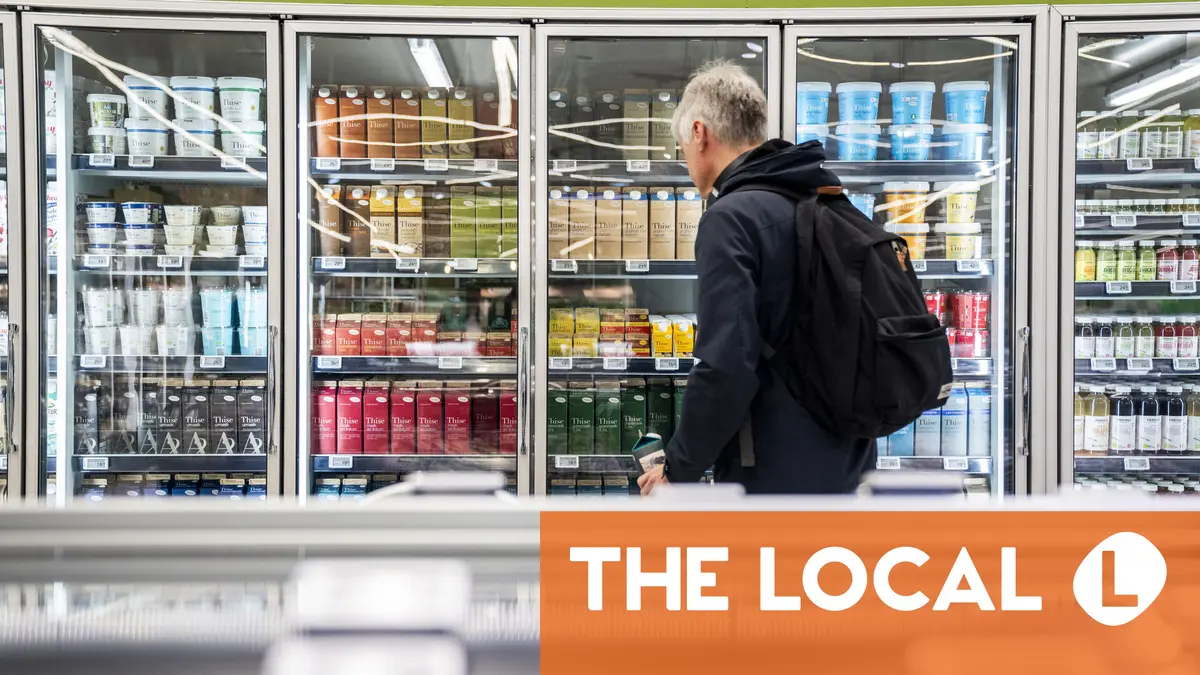
Our column Inside Denmark looks at the stories we’ve been talking about over the past week. Today, the announcement that there will be no further VAT reductions on food this side of the election.
Despite acknowledging the fact that many households across the country are still finding daily living costs an increasing difficulty, the government confirmed this week that VAT on food will not be reduced this side of the election, which must take place by the end of 2026.
Citing technical challenges with how any changes to VAT on food would be implemented, Economy Minister Stephanie Lose said that “we simply cannot manage to actually reduce VAT in time [for the election], it just isn’t possible.”
Lower and potentially variable VAT rates on food items would take up to three years to implement because of technical issues related to government IT systems, the minister explained.
“But the government has said that we are setting work in motion that will make it technically possible. Denmark has not previously had differentiated VAT rates, and a path needs to be created for that to be feasible,” she said.
Denmark has the highest tax rates on food in the EU, which makes it highly conceivable that, firstly, the country has the means to reduce it, and secondly, it could make a noticeable difference to the cost of living experienced by the public if it did so.
In the 2026 budget, the government has already announced a number of tax reductions on a number of products and services, including chocolate and confectionery, books and electricity.
READ ALSO: Will Denmark’s 2026 budget really improve your finances?
Meanwhile, a national economic forecast issued this week stated that the lower electricity taxes are expected to help inflation fall to 1 percent next year. Wages are forecast to rise by 3.2 percent on average.
Data for the last couple of years confirms the fact that inflation in general has been under control during that time, and that it has been falling since the energy crisis of 2022 that came in the wake of the Russian invasion of Ukraine.
Advertisement
National statistics on food prices show that many items are still rising in price quite drastically, however, while others have stabilised or even fallen slightly.
How this fits with your personal experience of going food shopping in Denmark is possibly another matter. My own anecdotal view is that it has never felt more costly, never taken a larger chunk out of our household income, to buy the food we need than it does today.
READ ALSO: Danish food prices up again despite inflation decline
The Confederation of Danish Industry, DI, which is the largest interest organisation for Danish companies, described the government’s decision to wait on reducing VAT on foods as “clever.”
Citing “rising purchasing power” for consumers, predicted in the economic reports, businesses argued there is no reason to cut VAT on food.
DI also said that introducing different VAT rates for different products would create unnecessary administrative complications.
“We fully respect the political desire to ensure that everyone in Denmark can afford good-quality food,” Jacob Bræstrup, deputy director for tax policy at DI, told news wire Ritzau in a statement.
Advertisement
“But there are many ways to achieve that goal, and some are more cumbersome than others,” he said.
In the end, the biggest disappointment of all could be heading the way of the government.
Making everyday costs for the general public lighter, at a time when this would be much needed and appreciated, would conceivably be an ideal move to make in an election year.
With the recent local election defeat in mind, it almost looks like an open goal the government is choosing not to shoot at.