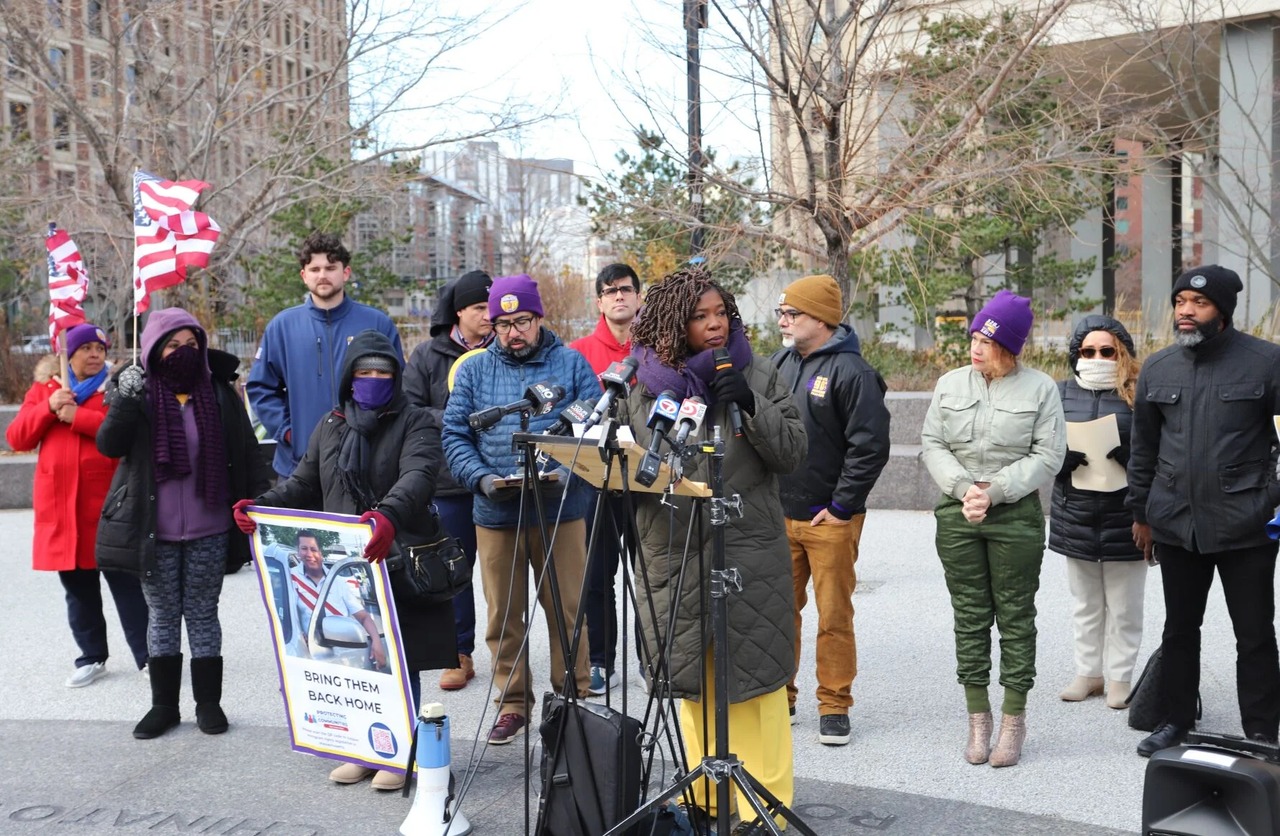
City councilors from Boston, Lawrence and Chelsea joined with advocates outside Boston City Hall to condemn federal immigration law enforcement action on Thursday, as the Trump administration unveiled a policy slashing the duration of work permits for asylum seekers.
Boston City Council President Ruthzee Louijeune drew a round of applause as she invoked the city’s Trust Act, which she said ensures “that our police officers are engaged in the work of local law enforcement and nothing else.” Advocates flocked to Beacon Hill last week to support similar statewide proposals (S 1681 / H 2580) to terminate agreements that enable local law enforcement to carry out the responsibilities of federal agents.
“We know the dangers of further termination of TPS lies very close for so many of our residents,” Louijeune said, referring to the Temporary Protected Status that protects immigrants from certain countries from being detained by the U.S. Department of Homeland Security.
“We are preparing with further protections on how we can protect our residents,” Louijeune continued at the rally that was organized by labor unions and community organizations.
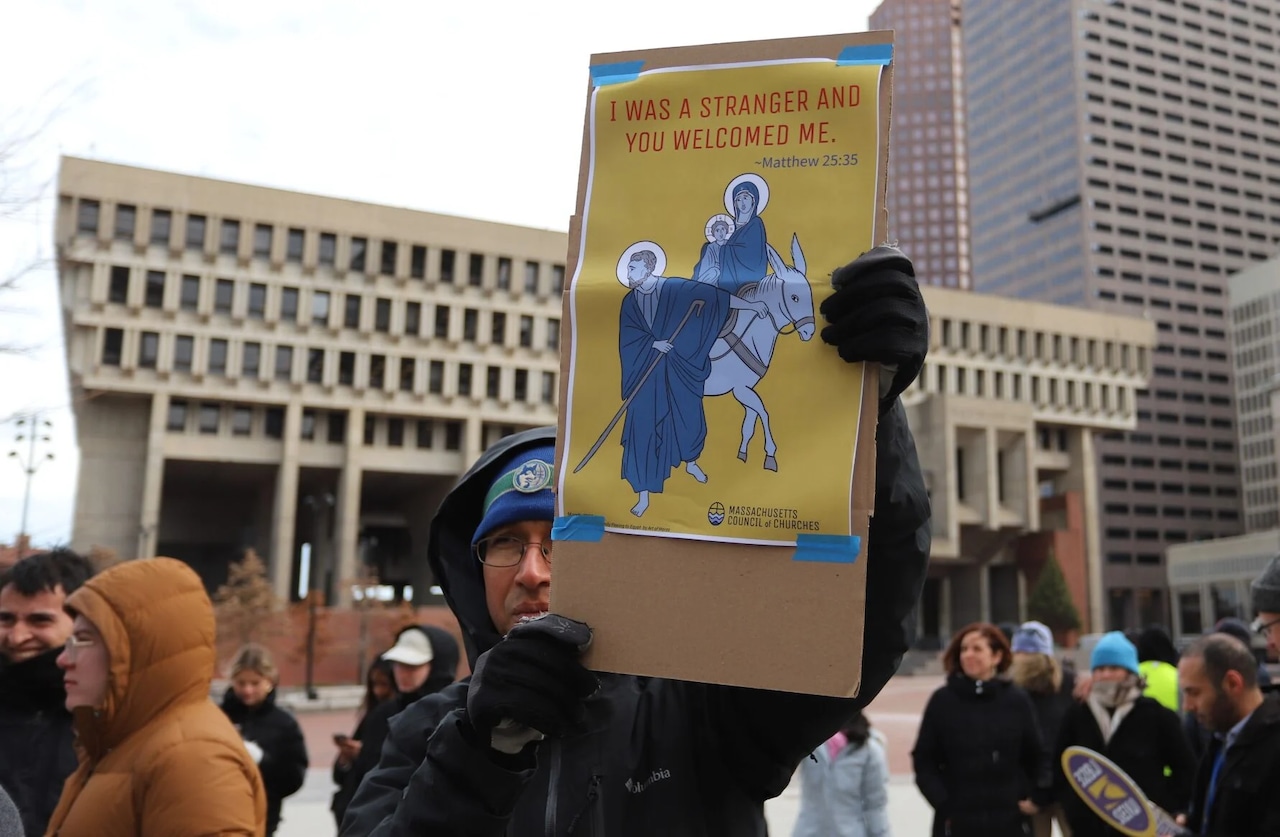 Advocates for immigrants gathered outside Boston City Hall on Thursday, Dec. 4, 2025 to condemn federal immigration enforcement action.Alison Kuznitz/State House News Service
The Trump administration has eliminated protections for hundreds of thousands of Haitians, Hondurans and Venezuelans, according to the American Immigration Council.
U.S. Citizenship and Immigration Services said Thursday it was cutting the “maximum validity period” for initial and renewed work permits from five years to 18 months for certain categories of individuals, including refugees and asylum seekers. USCIS Director Joseph Edlow said the change “will ensure that those seeking to work in the United States do not threaten public safety or promote harmful anti-American ideologies.”
Doris Landaverde, national co-coordinator for the National TPS Alliance, said Friday marks her 25-year anniversary of coming to the United States from El Salvador. For most of those years, Landaverde said she felt safe and did not experience the fear that immigrant communities are now facing.
“I don’t have a fear to continue fighting for our immigrant communities,” she said.