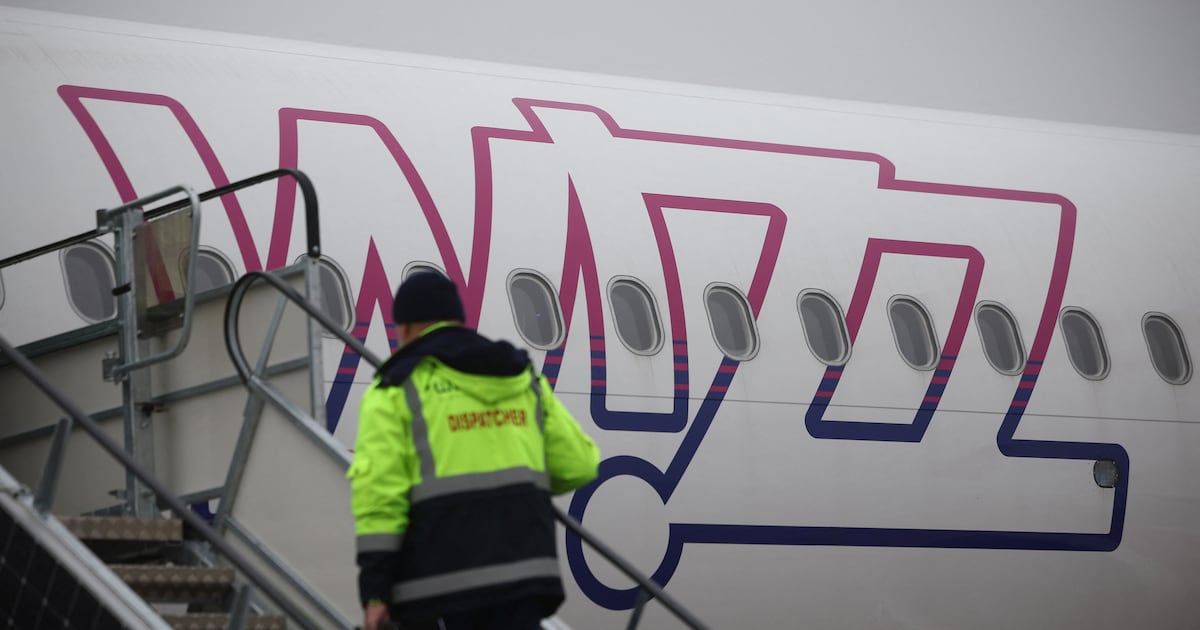
Wizz Air said it has avoided raising ticket prices for Tel Aviv flights, against a backdrop of Israel’s sky-high fares after foreign carriers suspended services during the Gaza war and left local airlines with little competition.
The Hungary-based ultra low-cost airline is in negotiations with transport authorities to open a base in Israel by April, but the plan has been greeted with objections from local airlines over increased competition.
Wizz Air is a “clear option” in the Israeli government’s wider attempts to address the country’s high cost of living, an airline spokesman told The National when asked about the strategy behind its new base.
The carrier resumed flights from Europe to Israel on August 8 and has since announced it will increase flight frequencies on some routes between Tel Aviv and European cities.
“We were one of the last European airlines to leave the country when the war started and we were the first ones to return. We have added significant capacities since our return,” the spokesman said.
“Unlike other [local] airlines, we did not raise our fares to take advantage of their situation, but Wizz kept on offering low fares … the government is keen on solving the cost of living crisis, including the cost of air tickets. Wizz Air is a clear option in this set-up.”
The airline, which has 36 bases in 19 countries, is unfazed by Israeli carriers’ opposition to its expansion plans.
“We love competition and we are up for it in Israel too. Wizz Air has been competing other airlines in all of the markets it has operated in,” the spokesman said. “We believe that competition makes the airline better. It keeps us on our toes and is also beneficial for the customers.”
The airline’s load factor has exceeded 90 per cent on average for its Tel Aviv flights, underscoring the demand, the spokesman said. This is amid the country’s continued fighting in Gaza and Lebanon, despite ceasefire agreements.
Wizz Air is targeting passenger groups including the diaspora, business travellers, outbound tourism from Israel and, eventually, inbound tourists.
“We have a number of new routes in our plans,” the spokesman said.
The airline spokesman said it is looking at several options for its new base. However, given that it operates flights at Ben Gurion International Airport, that “would seem to be a good choice”.
Wizz Air’s success in establishing an Israeli base would depend on factors including securing government incentives to offset high aviation costs, and navigating operational challenges, analysts have said.
Wizz Air did not disclose the incentives it is being offered or is seeking from the government to make an attractive business case for the base.
“Since negotiations are still ongoing between Israel and the local stakeholders, this would be too early to comment on,” the spokesman said.
Costs and security risks
The Israeli aviation market poses a tough challenge for foreign carriers who face high operation costs, steep security risks and mounting uncertainty due to geopolitical volatility, analysts have said.
“The local [cost] environment is the same for all airlines operating to and from Israel, however due to Wizz Air’s … ultra-low cost model, we have a cost advantage compared to other, especially legacy, airlines,” the spokesman said.
However, Wizz Air faces “substantial operating-cost headwinds”, Linus Bauer, founder of UAE boutique consultancy BAA & Partners, told The National.
“Israel’s airports carry relatively high fees – landing, ground handling, parking, air traffic control charges – compared with many low-cost-friendly airports,” he said.
In addition, from 2026, passenger taxes and other airport fees at Ben Gurion International Airport are scheduled to rise by about 14 per cent on average, he added.
Operations are further complicated by high security risks and geopolitical volatility.
“Political or security events – given Israel’s volatile security environment – could quickly upend operations,” Mr Bauer said.
Domestic carriers El Al, Arkia Airlines and Israir have argued that Wizz Air’s entry could destabilise the local market, undermine national resilience in times of crisis and lead to unfair competition.
“Domestic carriers’ argument about ‘national resilience’ should not be dismissed lightly; in the event of renewed conflict, foreign carriers might suspend operations, leaving Israel again reliant on domestic airlines,” Mr Bauer said.
Wizz Air said it makes its security decisions based on several independent government and private intel sources.
“The airline does not only evaluate specific intel from one specific Israeli or international government sources or private sources, but collects information from different sources and makes an educated decision according to the airline’s own risk assessment and internal policies,” its spokesman said.
“Safety and security of our crew members, passengers and aircraft can never be compromised.”
Success drivers
Wizz Air confirmed it will invest $1 billion in Israel over the next few years by stationing up to 10 aircraft permanently in the country. This would lead to 5,000 direct and indirect jobs, the spokesman said.
Even though the airline aims to start with a small footprint, scaling up will require extensive regulatory co-ordination on slot allocation, traffic rights, possibly domestic-route commitments such as Tel-Aviv–Eilat and perhaps “burdensome compliance” with local labour and security regimes, Mr Bauer said.
Ultimately, Wizz Air’s success with its base will depend its ability to manage costs carefully, secure favourable slot allocations and negotiate fee reductions or discounts with the airport authority, analysts say.
If Wizz can station local crews, rather than rotating pilots and cabin crew from Hungary, labour-cost savings may offset at least part of the security-related overheads, Mr Bauer said.
Nevertheless, “there is a real risk that ticket pricing pressure will be limited (or eroded over time) by the combination of high structural costs and potential regulatory or union resistance,” he added.
“If airports succeed in passing through increased taxes and surcharges (which seems likely given the announced fee hikes for 2026), the low-cost business model might be less sustainable.”