
Getty Images
Moneywise and Yahoo Finance LLC may earn commission or revenue through links in the content below.
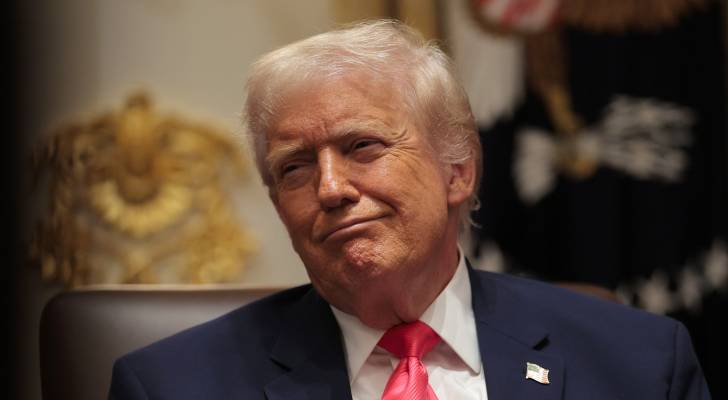
They say death and taxes are life’s only certainties — but according to U.S. President Donald Trump, a significant portion of the latter could be on the chopping block.
Speaking to U.S. military service members last week, Trump floated the idea of eliminating income taxes entirely, funded by what he described as massive new tariff revenues.
“Over the next couple of years, I think we’ll substantially be cutting and maybe cutting out completely, but we’ll be cutting income tax. Could be almost completely cutting it because the money we’re taking in is going to be so large,” he said (1).
It’s a bold proposal, especially given that income tax is the federal government’s single largest source of revenue.
In fiscal year 2025, the federal government collected $2.656 trillion in individual income taxes — about 50.7% of Uncle Sam’s total $5.235 trillion in receipts (2). By comparison, corporate income taxes brought in $452 billion and tariff revenue totaled just $195 billion.
Critics quickly pointed out the gap.
Economist Erica York of the Tax Foundation said the math simply doesn’t work — nor would Trump’s vision be easy to implement.
“Mathematically impossible, plus any income tax cuts would require Congress,” York wrote on X (3).
“To replace the roughly $2 trillion of revenue raised by the individual income tax with tariffs would require astronomically high tariff rates. And those rates would shrink imports, making it impossible to generate enough revenue to replace the income tax (4).”
It’s also worth noting that even with income tax revenue, the federal government still spent far more than it brought in: $5.235 trillion in total receipts versus $7.010 trillion in outlays, leaving a $1.775 trillion deficit in fiscal 2025.
While Trump’s proposal faces serious doubts, policy changes aren’t the only route to lowering tax bills. Here are two powerful assets that everyday investors can use to their advantage — the same ones the wealthy have leaned on for decades.
Scott Galloway, professor of marketing at New York University’s Stern School of Business, once said that if you’re trying to build wealth, you have “an obligation to pay as little tax as possible.”