
Listen to this article
Estimated 4 minutes
The audio version of this article is generated by text-to-speech, a technology based on artificial intelligence.
Christmas trees farms across Ontario haven’t been spared by the devastating impacts of climate change, but a lab out of the University of Waterloo (UW) is pushing to curb the effects.
UW’s Christmas Tree Lab, founded in 2022, collaborates with Christmas tree farms across the province in their research to foster a more sustainable and environmentally-friendly industry in the face of climate change, while offering education and advocacy materials.
The lab’s director, Kelsey Leonard, said yields at some of these farms are impacted by major climate events, everything from extreme heat and drought to what she describes as “erratic freeze-thaw cycles.”
“It kind of sounds strange, right? How can you have drought and flood and erratic freeze and thaw cycles, but because we just have such a biodiverse region from Windsor to Ottawa Valley, to up north and northern Ontario, we actually are in one growing season seeing all of these different types of events,” Leonard explains.
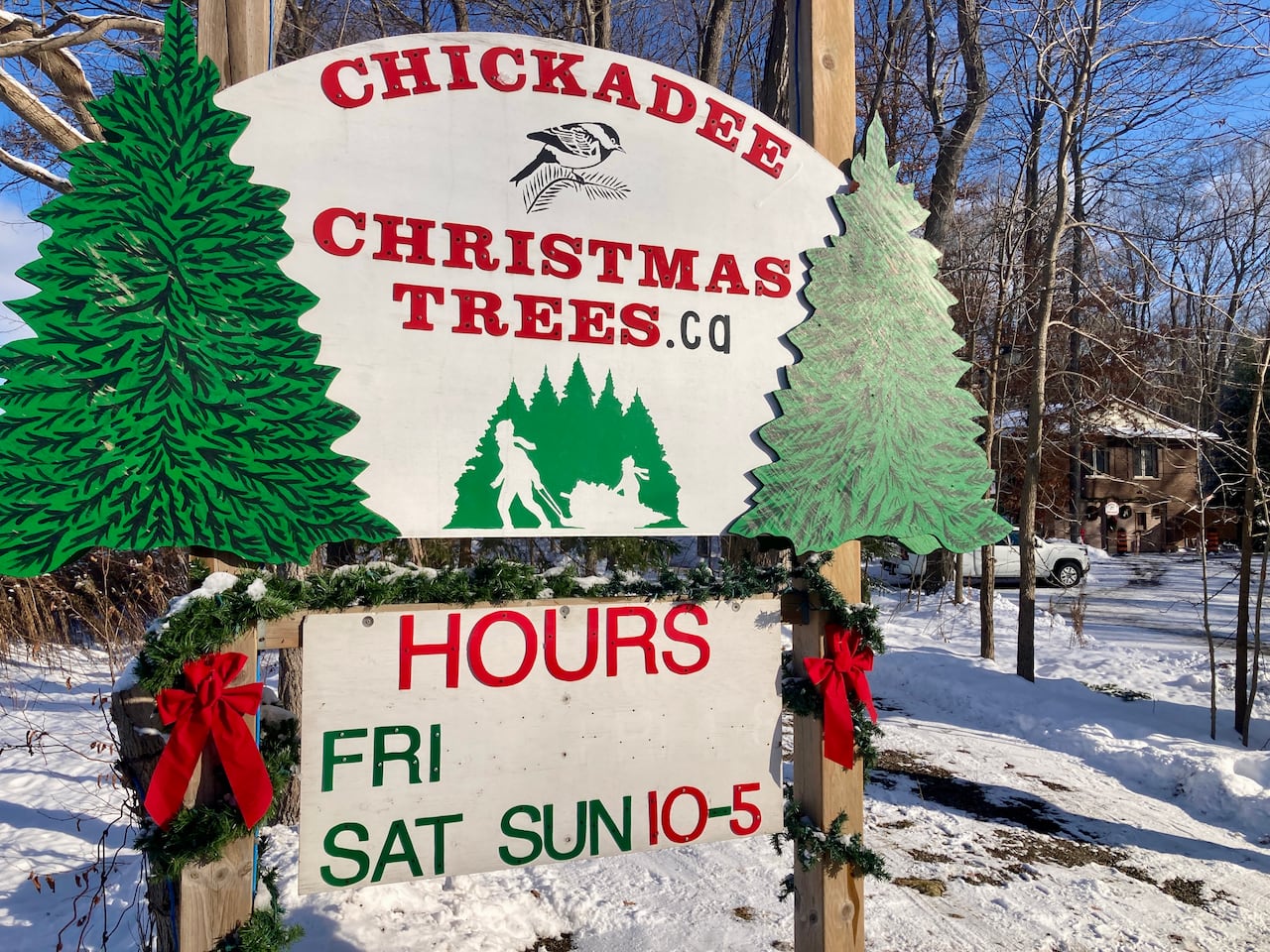
The owners of Chickadee Christmas Trees in Puslinch, Ont., say some trees take 13 years to grow to the right height for selling. (James Chaarani/CBC)
There are over 400 Christmas tree farms in Ontario, more than any other province in Canada, Leonard says. The trees they produce have much less of an impact on the environment than fake ones.
“It’s a climate-friendly choice,” Leonard says. “When we think about an artificial tree, they’re made from byproducts of fossil fuels, they’re often shipped long distances.”
For an artificial Christmas tree to have the same carbon footprint as a real one, it would need to be used for more than 20 years, according to the David Suzuki Foundation.
And Leonard says that this isn’t happening.
“They’re unfortunately becoming a fast fad fashion,” she explains. “People are turning out their artificial trees every two to three years.”
Climate related delays in growth
Climate has had such an impact that Leonard says what used to take a Christmas tree seven to 10 years to grow now takes eight to 12 — something that Joe Wareham with Chickadee Christmas Trees in Puslinch, Ont., has found on their farm.
“It’s taking longer now though with the hot, dry summers,” Wareham explains.
“The pines tend to grow a little bit faster. The spruces are kind of medium and the fir trees are the ones that usually take 12 years, 13 years to get a good height and good growth on them.”
Wareham says they deal with a number of other issues like frost sticking around later than usual and pests, but the major challenge they face is around extreme heat in the summer.

Joe Wareham and his wife Alison McCrindle own Chickadee Christmas Trees in Puslinch, Ont. (James Chaarani/CBC)
“You’ve got to have a huge amount of patience,” he says. “You got to be tough. You got to be able to work hard in the heat. If you don’t get rain you have to find out some way to irrigate your trees whether you do it by hand or you do it with some sort of mechanical means.”
Wareham says that along with several other growers they work with to supply their trees, they’re thinking of new ways to stay more sustainable and affordable, like experimenting with how they grow the trees. They also sell a variety of different types of Christmas trees — something that helps since each variant reacts to climate events differently.
“One of the things about Ontario growers — they’re really showing us how to be climate leaders,” says Leonard. “They’re thinking about biodiversity, they are also thinking about species diversity so we actually have a lot of resiliency already present in farms across Ontario.”