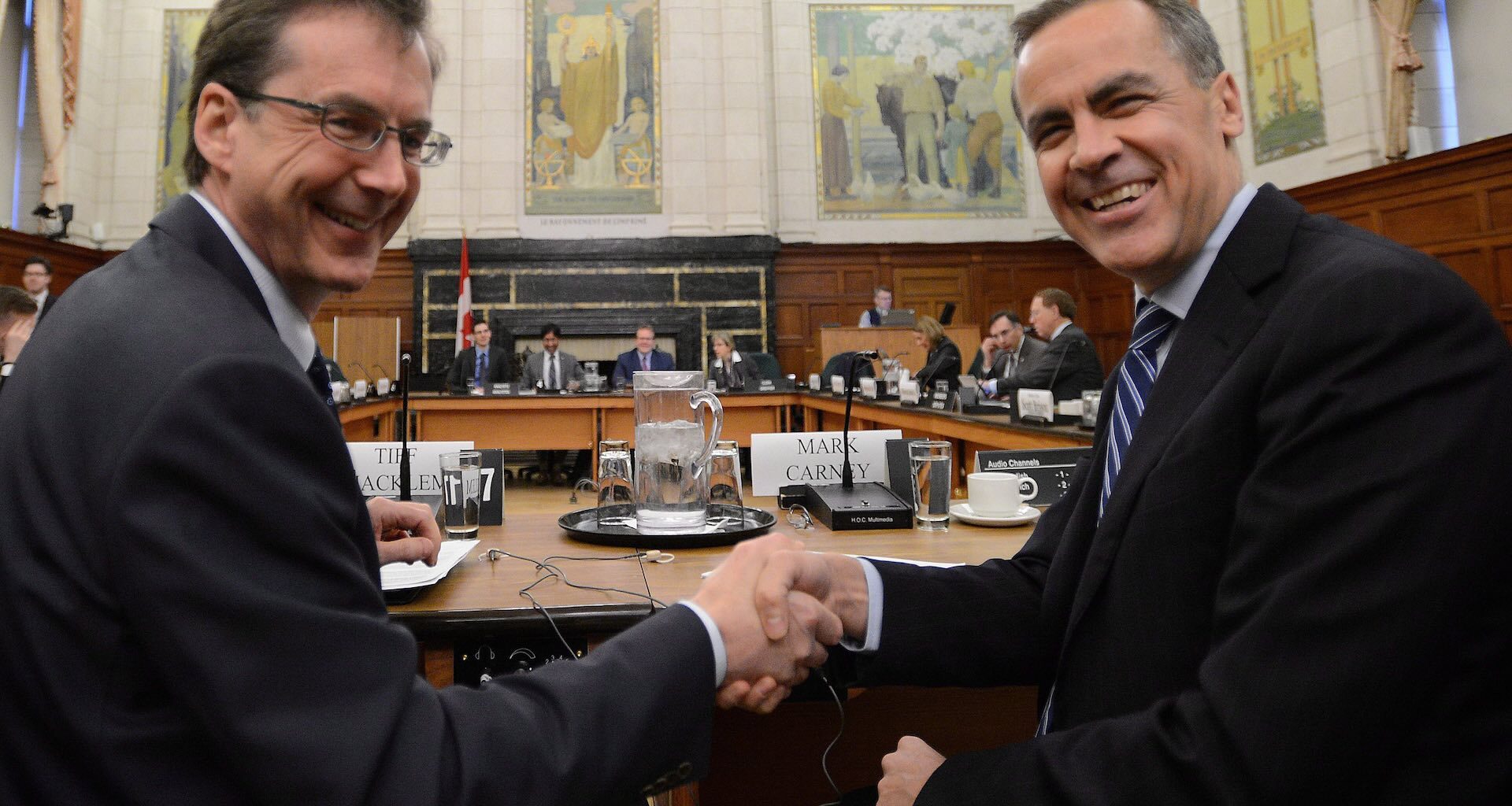
Bank of Canada governor Tiff Macklem’s most recent appearance at the House of Commons finance committee reminded me of something Mark Carney said in 2023, when the would-be prime minister and former Bank of England governor was between full-time jobs.
Carney was asked about the U.K.’s decision in 1997 to grant the Bank of England independence from the chancellor of the exchequer. That was late by international standards. Most everyone else had worked out decades ago that the best way to keep inflation low was to separate the interest rate cycle from the electoral calendar. But in Carney’s view, the U.K. has more than made up for it.
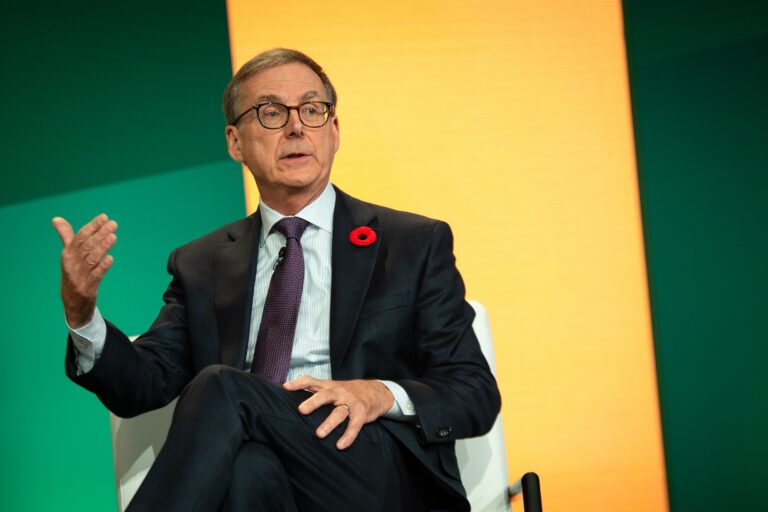

“I think the U.K. system for central banks is the best system,” Carney said on The Rest Is Politics podcast in November 2023.
Canada was once a trendsetter when it came to central bank independence. A spectacular clash between Bank of Canada governor James Coyne and John Diefenbaker’s majority government in the 1960s prompted Ottawa to codify who was responsible for what, and there have been no serious fights between the government and the central bank since.
There’s some worry about the state of central bank independence in Canada, though. Theo Argitis, the head of policy at the Business Council of Canada, wrote about it this summer and the C.D. Howe Institute published a report on the subject a couple of weeks ago. Argitis might be the wisest of us Bank of Canada watchers and no Canadian think tank puts more effort into monetary policy than C.D. Howe. Both think the Bank of Canada has become more vulnerable to political interference. Credible sources, so we should probably pay attention.
The Bank of Canada is no longer seen as a leader when it comes to independence, mostly because it’s been leapfrogged by others. But the concern has more to do with the tendency of Canada’s political class to mimic what it sees happening south of the border. Donald Trump has created a playbook for how an anti-establishment leader can upend democratic institutions. Trump has been publicly harassing Federal Reserve chair Jerome Powell since his first term as U.S. president. This year, he tried to remove one of Powell’s deputies by charging her with mortgage fraud and added one of his top economic advisers to the Fed’s board.
It’s hard to imagine anything like that happening here. Then again, Conservative Leader Pierre Poilievre promised to fire Macklem if he became prime minister and Ontario Premier Doug Ford has become a recurring critic of higher interest rates. The Bank of Canada is no longer off limits and it’s worth thinking about what that could mean.
“We all have an interest in maintaining a strong and stable macroeconomic environment, especially in an era of heightened uncertainty and policy experimentation,” Argitis wrote.
Carney’s view that the Brits do it best is interesting because he’s now in a position to overhaul the Bank of Canada in the Bank of England’s image. The government retains ultimate control over monetary policy by updating the central bank’s mandate every five years and the next update is scheduled for 2026.
The most obvious difference between the two institutions is that the Bank of England doubles as a financial regulator. Trying to replicate that structure in Canada would probably cause more trouble than a minority government can stand, but it makes you wonder if Carney might one day be tempted to knock down the country’s various regulatory silos. He used his first budget to assign oversight of open banking and stablecoins to the Bank of Canada, which he led between 2008 and 2013.
That’s idle speculation. There’s little guesswork required to deduce what the prime minister thinks about other vulnerabilities in Canada’s approach to controlling inflation and protecting the value of money. The Bank of England has been around since 1694, but that history isn’t what separates British monetary policy from its peers. “One of the things that really struck me [about] the differences between the Bank of Canada and the Bank of England was how robust the accountability mechanisms are in the U.K.,” Carney said on The Rest is Politics. “The quality of the treasury select committee; the interrogation, and I don’t mean that in a derogatory sense, at the treasury select committee was, candidly, much higher than it was in Canada.”
Carney is right about the House finance committee, Canada’s equivalent of the treasury select committee. One outfit or another has been paying me to watch its members question central bankers since 2000. Generally speaking, the quality of the interrogation has become progressively worse over time. When Macklem and senior deputy governor Carolyn Rogers testified last month, there were only a handful of questions about their recent rate cut and none about how they would handle their new regulatory responsibilities. “We haven’t talked a lot about monetary policy,” Macklem quipped near the end of this two-hour appearance.
The C.D. Howe paper has two recommendations: allowing the Bank of Canada to retain earnings to reduce the chance that it will ever again have to go cap-in-hand to the government for a bailout, and tweaking the Bank of Canada Act to require the finance minister to introduce any change to the Bank of Canada’s marching orders as a motion in the House of Commons.
Argitis had three suggestions he thinks would build trust: an extra effort to demonstrate how the government and central bank interact, especially since everyone knows the new prime minister will have well-informed thoughts about monetary policy; a parliamentary review of the post-pandemic inflation surge, which remains controversial; and more forthrightness from the Bank of Canada about its assessment of fiscal policy.
I like all those suggestions, but there’s one problem. With the exception of granting the Bank of Canada more control of how it manages its profits, they all assume that parliamentarians—and to a lesser extent, the media and the commentariat—are keen to do their part. Independence in a democracy requires accountability. The Bank of Canada can’t do all of that work by itself, but lately it’s had to. The prime minister saw the difference when he went to London, as he told The Rest Is Politics two years ago.
“You can be independent, but you have to be accountable,” Carney said.
Kevin Carmichael is The Logic’s economics columnist and editor-at-large. He has spent more than two decades covering economics, business and finance for outlets including Bloomberg News, The Globe and Mail and the Financial Post, where he also served as editor-in-chief.