China’s omission of the term “denuclearisation of the Korean peninsula” from a new policy paper suggests its “tacit acceptance” of North Korea as a nuclear-armed state, as Beijing gives priority to its strategic rivalry with Washington, according to analysts.
Late last month, China released a white paper on arms control, disarmament and non-proliferation, outlining its national defence and nuclear policies.
The document was an update of a 2005 white paper and contained a notable shift – within the paper’s overall “non-proliferation” clause, it did not refer to China’s traditional support for the peninsula’s denuclearisation.
Do you have questions about the biggest topics and trends from around the world? Get the answers with SCMP Knowledge, our new platform of curated content with explainers, FAQs, analyses and infographics brought to you by our award-winning team.
“With regard to the Korean peninsula issue, China adopts an impartial stance and adheres to the right approach of always working for the peace, stability and prosperity of the peninsula and the resolution of the Korean peninsula issue through political means,” it said.
“China calls on relevant parties to desist from an approach based on aggressive deterrence and coercion, restart dialogue and negotiations, and play a constructive role in resolving the Korean peninsula issue through political means and realising lasting peace and stability on the peninsula.”
However, in its 2005 arms control and non-proliferation white paper, Beijing said “China supports denuclearisation of the Korean peninsula”.
Similarly, in 2017, another white paper on China’s policies on Asia-Pacific security cooperation said Beijing was “committed to the denuclearisation of the [Korean] peninsula, its peace and stability, and settlement of the issue through dialogue and consultation”.
Zhao Tong, senior fellow at the Washington-based Carnegie Endowment for International Peace, said that in the past year and a half, Beijing had “clearly shifted away” from mentioning “denuclearisation” of the Korean peninsula in its official statements and policy documents.
“If Beijing can no longer bring itself to utter the phrase ‘denuclearisation of the Korean peninsula’, that is, in effect, tacit acceptance of a nuclear-armed North Korea,” Zhao said.
“Under repeated pressure from Pyongyang, Beijing now appears to have decided to accommodate North Korea’s demand to drop the nuclear issue, an issue that had repeatedly complicated bilateral relations in recent years.”
Beijing’s apparent policy shift comes as its ties with Pyongyang improve.
In September, North Korean leader Kim Jong-un attended China’s military parade in Beijing and held summits with Chinese President Xi Jinping and Russian President Vladimir Putin.
In their talks after the parade, Xi and Kim pledged to “strengthen strategic coordination in international and regional affairs to safeguard common interests”, according to Chinese state media.
It was a contrast from Xi’s last visit to Pyongyang in 2019, when he told Kim that China was willing to play a “positive and constructive role in achieving denuclearisation of the Korean peninsula and long-term stability in the region”.
Zhao said Beijing’s decision to not publicly invoke denuclearisation reflected a “broader recalibration” prioritising strategic competition with the United States.
But he said the approach risked “inevitably” weakening Beijing’s capacity to press Pyongyang on nuclear restraint.
“Beijing seems to have concluded that keeping North Korea close and preserving China’s geopolitical leverage on the peninsula matters more than cooperating with Washington to curb Pyongyang’s nuclear expansion,” Zhao said.
North Korea has advanced its nuclear programme in recent years, especially since Russia invaded Ukraine in 2022. Pyongyang has supplied Moscow with weapons and, more recently, troops in the armed conflict in exchange for Russian aid and weapons technology.
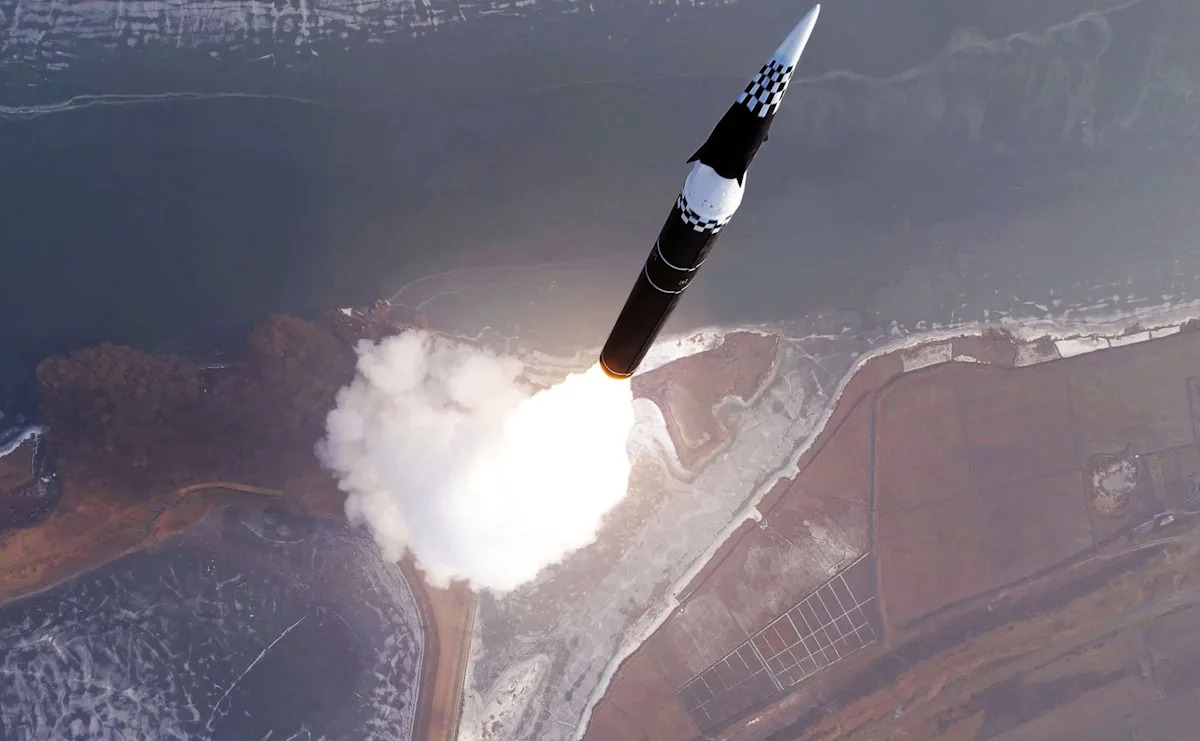
At a military parade in Pyongyang in October, North Korea rolled out its latest solid-fuelled Hwasong-20 intercontinental-range ballistic missiles (ICBMs), reportedly with technological help from Russia. The event was attended by Li Qiang, the first Chinese premier to visit the country in 16 years.
Meanwhile, Kim has repeatedly rejected US President Donald Trump and South Korean President Lee Jae-myung‘s proposals to resume denuclearisation dialogue, insisting that recognition of North Korea as a nuclear-armed state must be a condition of any talks.
Timothy Heath, a senior international defence researcher at the US-based Rand Corporation, said Beijing appeared to have adopted a “pragmatic approach” by accepting a nuclear-armed North Korea as a reality.
“China’s shift is probably driven in part by Russia’s active support for [North Korea’s] nuclear weapons programme,” Heath said.
Moscow’s support made it easier for Pyongyang to build its nuclear weapons inventory, he added, and “puts pressure on China to at least maintain a neutral stance on the issue to maintain stable ties with North Korea and Russia”.
Patrick Cronin, the Asia-Pacific security chair at the Washington-based think tank Hudson Institute, said China wanted to project itself as the “most principled defender of denuclearisation” on its own terms.
Cronin said China’s posture served as “a subtle protest” against the US’ strengthening of extended deterrence alongside South Korea and Japan, and as a way to “deflect growing international pressure to rein in Pyongyang’s expanding nuclear programme”.
Extended deterrence refers to the US policy of assuring its allies and partners of deterrence against attacks from adversaries by providing a security umbrella, including the use of nuclear arsenals.
Washington has used the policy for decades to deter allies such as South Korea and Japan from developing their own nuclear arsenals. The strategy has helped maintain a non-proliferation mechanism in the Asia-Pacific region, despite China and North Korea’s growing nuclear capabilities.
The new white paper said China “firmly opposes” nuclear sharing, extended deterrence and other arrangements that “undermine” the international nuclear non-proliferation mechanism. It also urged “relevant countries” to stop deploying nuclear weapons abroad.
Without identifying the US by name, the paper said a “certain country” sought “absolute strategic superiority” by constantly expanding its armaments, strengthening combat readiness and provoking bloc confrontation.
Heath said China’s “acquiescence” to North Korea as a nuclear-armed power meant there was a risk that America’s regional allies would seek protection from those weapons either through the US’ extended nuclear deterrence or by developing their own.
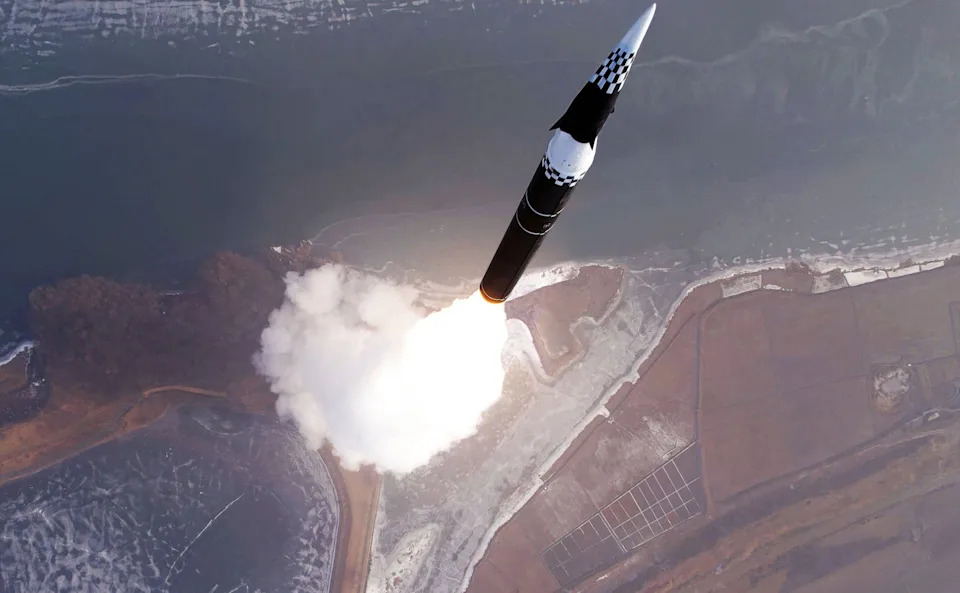
North Korea has made advances in its nuclear programme in recent years. Photo: KCNA alt=North Korea has made advances in its nuclear programme in recent years. Photo: KCNA>
Washington could respond by modernising and upgrading its nuclear weapons capabilities to protect America’s allies, which “may mean more US nuclear bombs in the Indo-Pacific region“, he said.
“China’s acceptance of North Korea as a nuclear-armed power may buy stability” in ties between Beijing and Pyongyang, Heath added, but it was likely to “worsen the overall security situation in Asia”.
Washington has also shifted away from its traditional approach to seeking a denuclearised Korean peninsula.
In October, the Trump administration granted South Korea approval to build its own nuclear-powered submarine and start updating their bilateral atomic energy pact.
It came after Lee said Seoul needed to improve submersibility in its naval fleet to track Chinese and North Korean submarines.
Washington’s blessing was seen as a pivot from its decades-long opposition to Seoul securing its own nuclear abilities out of the concern that nuclear-powered submarine technology could lead to the development of nuclear weapons.
Kang Jun-young, a professor of Chinese studies at Hankuk University of Foreign Studies in Seoul, called China’s new white paper an “indirect expression” of Beijing’s view that denuclearisation of the Korean peninsula would be “difficult” to achieve, considering both Koreas’ development of nuclear-powered submarines.
“From China’s perspective, on the one hand, the introduction of South Korean nuclear-powered submarines into the Korean peninsula, with US approval, is a sign of the influx of nuclear materials for military use,” Kang said.
“On the other hand, given North Korea’s existing illegal nuclear development and its claim that it is building nuclear-powered submarines, continuing to talk about the denuclearisation of the Korean peninsula may be unreasonable.”
The North Korean leader announced in 2021 that his country planned to build its own nuclear-powered submarines.
Despite scepticism about North Korea’s technological expertise, the plan appeared to be materialising in March when Kim visited a shipyard that, according to Pyongyang’s Korean Central News Agency, was building a “nuclear-powered strategic guided-missile submarine”.
Amid those advances, the US has put pressure on US allies to spend more on their own defence.
Elbridge Colby, US undersecretary of defence for policy, has said that “all options” should be on the table to ensure South Korea’s security, including its nuclear armament in the face of a nuclear build-up in North Korea and China.
Zhao said the US nuclear umbrella had long helped to contain proliferation pressures, which were now increasingly originating “from Washington’s own allies”.
“Yet Beijing’s competition-first orientation has amplified its suspicion that Washington is using extended deterrence as a pretext for expanding forward deployment of US nuclear capabilities in the region to constrain China,” Zhao added.
“The secrecy surrounding Beijing’s ultimate objectives – what end state it envisions and what military purpose a substantially larger arsenal is meant to serve – has put the United States on course to reverse decades of nuclear reductions.”
This article originally appeared in the South China Morning Post (SCMP), the most authoritative voice reporting on China and Asia for more than a century. For more SCMP stories, please explore the SCMP app or visit the SCMP’s Facebook and Twitter pages. Copyright © 2025 South China Morning Post Publishers Ltd. All rights reserved.
Copyright (c) 2025. South China Morning Post Publishers Ltd. All rights reserved.