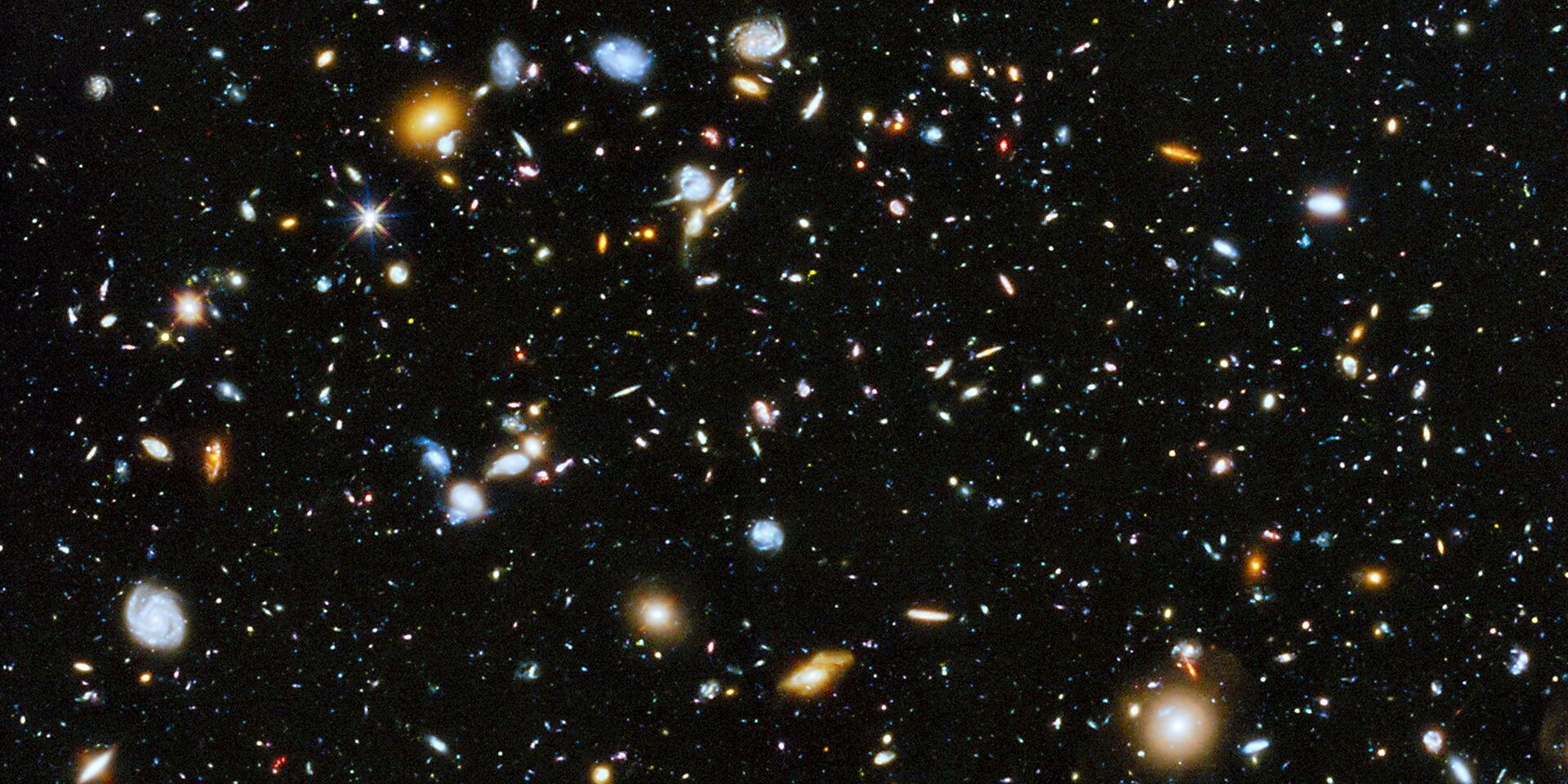
A new NASA-led study has issued a stark warning: light leaking from the fast-growing number of communications satellites could soon compromise the vast majority of images taken by some orbiting telescopes. The findings show that as megaconstellations multiply, once-pristine astronomical views risk becoming streaked with unwanted trails.
Lead researcher Alejandro Borlaff and colleagues examined how upcoming satellite deployments will interact with telescopes operating between roughly 450 km and 800 km in altitude. Although ground-based observatories have long grappled with satellite streaks, the team argues that “light contamination is a growing threat for space telescope operations.”
Hubble Among Telescopes Vulnerable To Interference
The analysis suggests that nearly 40 per cent of Hubble Space Telescope exposures could carry visible traces from passing spacecraft if planned satellite fleets are fully realised. For three future missions, NASA’s SPHEREx, ESA’s proposed ARRAKIHS telescope, and China’s Xuntian observatory, the projected impact is far more severe, with more than 96 per cent of images expected to be affected.
Simulations indicate that the number of satellites captured in a single exposure could reach an average of 2.14 for Hubble, 5.64 for SPHEREx, 69 for ARRAKIHS and 92 for Xuntian.
The scale of the coming shift is immense. Around 2,000 satellites orbited Earth in 2019; today that number is closer to 15,000. If companies proceed with all currently filed constellation plans, that figure could exceed half a million by the late 2030s.
Why Space Telescopes Are Not Immune
Earlier research revealed that 2.7 per cent of Hubble images taken between 2002 and 2021 contained at least one satellite trail. But with thousands more spacecraft now crowding low-Earth orbit, that fraction is likely to grow sharply.
The Nature study emphasises that the reflective surfaces of modern satellites remain highly visible even from orbit. The authors write: “We are witnessing the beginning of a new era of widespread industrial exploitation of low-Earth orbit,” adding that “contrary to popular belief, space telescopes are not immune to light contamination reflected by artificial satellites.”
Possible Mitigation Comes With New Trade-Offs
One potential fix involves keeping satellites at lower altitudes to reduce the amount of sunlight they reflect into space-based instruments. However, the researchers note that this approach could increase the rate at which satellites burn up on re-entry, thus raising environmental concerns, including possible effects on the ozone layer.
The team calls for coordinated international action, stating: “We propose a series of actions to minimise the impact of satellite constellations, allowing researchers to predict, model and correct unwanted satellite light pollution from science observations.”
Not All Telescopes Face The Same Risk
Despite the growing threat, not every observatory is equally exposed. The James Webb Space Telescope orbits the Sun at about 1.5 million km from Earth, far beyond the region crowded with satellite traffic.
But for scientific missions operating closer to home, the coming decade may bring increasingly cluttered skies, now extending into space itself.