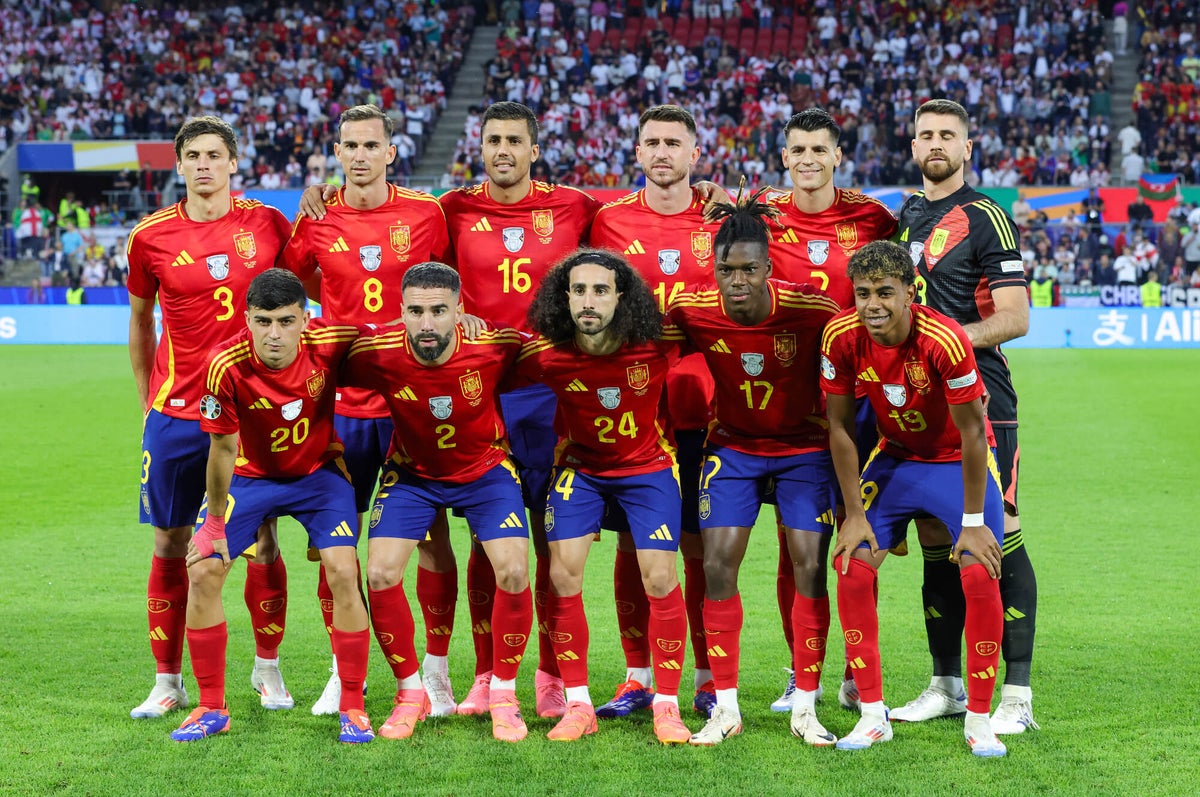
Spain has been drawn against Uruguay, Saudi Arabia and Cape Verde in Group H for the 2026 World Cup.
Luis de la Fuente’s side learned its opponents at Friday’s World Cup draw at the Kennedy Center in Washington, D.C.
Spain will start their campaign after Cape Verde on June 15, before facing Saudi Arabia six days later and concluding their group against Uruguay on June 26.
The venues and kick-off times were confirmed by FIFA on Saturday, with Cape Verde first up in Atlanta, before De la Fuente’s side face Saudi Arabia at the same venue six days later. Spain round off their group-stage campaign against Uruguay in Guadalajara.
Spain — seeded in Pot 1 — will be expected to advance from its group, especially with eight of 12 third-place teams progressing to the round of 32 in the World Cup’s new 48-team format.
Games in: Atlanta, Miami, Guadalajara, Mexico, Houston
The nation has, however, failed to progress through the group stage in two of its most recent seven tournaments, including in 2014, when Spain was the defending champion.
Despite being crowned European champion in 2008, 2012 and 2024, Spain has underperformed in the World Cup aside from its inaugural victory in 2010 — the only time since 1950 it progressed beyond the tournament’s quarter-final stage.
Spain is ranked first in the world by FIFA and has won 27 of its last 31 competitive matches, a run dating back to March 2023 that has seen it lose just once and included winning all seven matches on its way to winning Euro 2024.
Spain has already qualified for the 2030 World Cup, which they will co-host alongside Portugal and Morocco, a tournament in which Argentina, Uruguay and Paraguay will also host group-stage matches.
What to know about…Uruguay
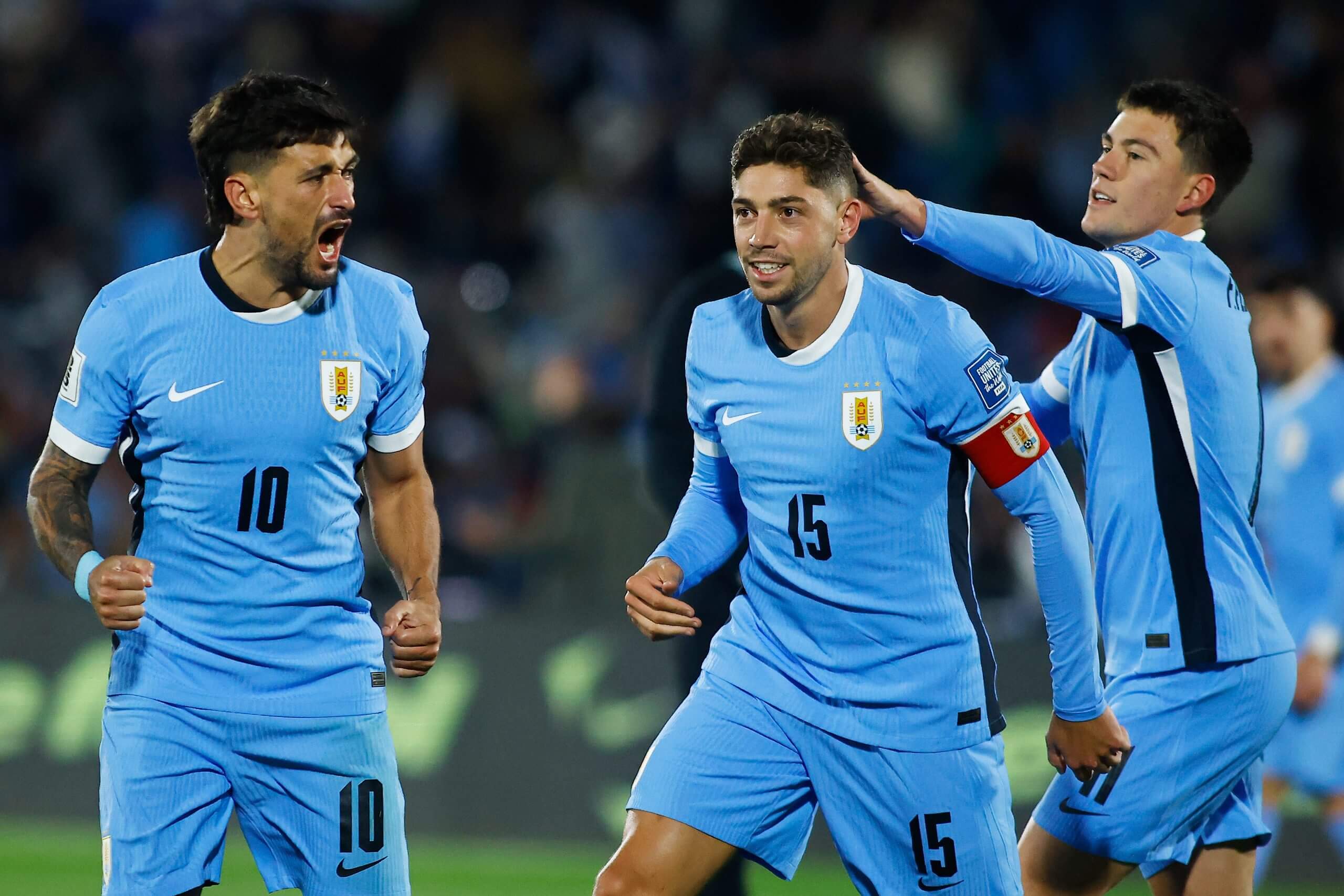
Ernesto Ryan/Getty Images
What is their World Cup pedigree?
Uruguay hosted, and won, the first World Cup in 1930. You do not get much more pedigree than that. They are also one of just six nations to lift the trophy twice, beating Brazil in the 1950 final in front of a world-record crowd at the Maracana.
That said, it has been a while since Uruguay were truly competitive on the world stage. Their best finish of the modern era came in 2010, when a controversial Luis Suarez handball against Ghana helped them progress to the semi-finals, but a bitterly disappointing group-stage exit in Qatar saw the legendary figures of Diego Godin, Edinson Cavani and Suarez bow out on a low.
How do they play?
Without the ball, Uruguay do not want to give you a second to think.
A tenacious midfield trio of Manuel Ugarte, Rodrigo Bentancur and Federico Valverde are happy to chase opponents up the pitch, while dominant defenders can also step up and snap at the heels of centre-forwards. When they do turn over the ball, the pace of their front three gives them a reliable escape route, with a number of intense attacking midfielders — Maximiliano Araujo, Giorgian de Arrascaeta, Brian Rodriguez — always quick to get up in support.
Even when they can control possession, movement is often drastic to get runners beyond the last defensive line. Expect to see crunching tackles, lung-busting runs, along with the exhaustion and exhilaration that comes with a Marcelo Bielsa team.
Who is their key player?
Few players are better suited to the manager’s all-action approach than Valverde, an astonishing athlete who brings power and creativity to his box-to-box midfield role.
The 27-year-old has played a number of roles across the years for Real Madrid — a willing channel runner at wing-back, a tempo-setter at the base of midfield, a box-crashing midfielder down the right — and brings some of that adaptability to the national team, a limitless engine helping him plug the gaps in midfield and keep the defensive shape in tact.
Valverde can pop up with a goal too, able to strike the ball sweetly from distance and exploit any spaces on the counter with the kind of forward momentum that is very difficult to stop. He is the organiser, talisman and very epitome of Bielsa’s Uruguay team, when it clicks.
Thom Harris
What to know about…Saudi Arabia
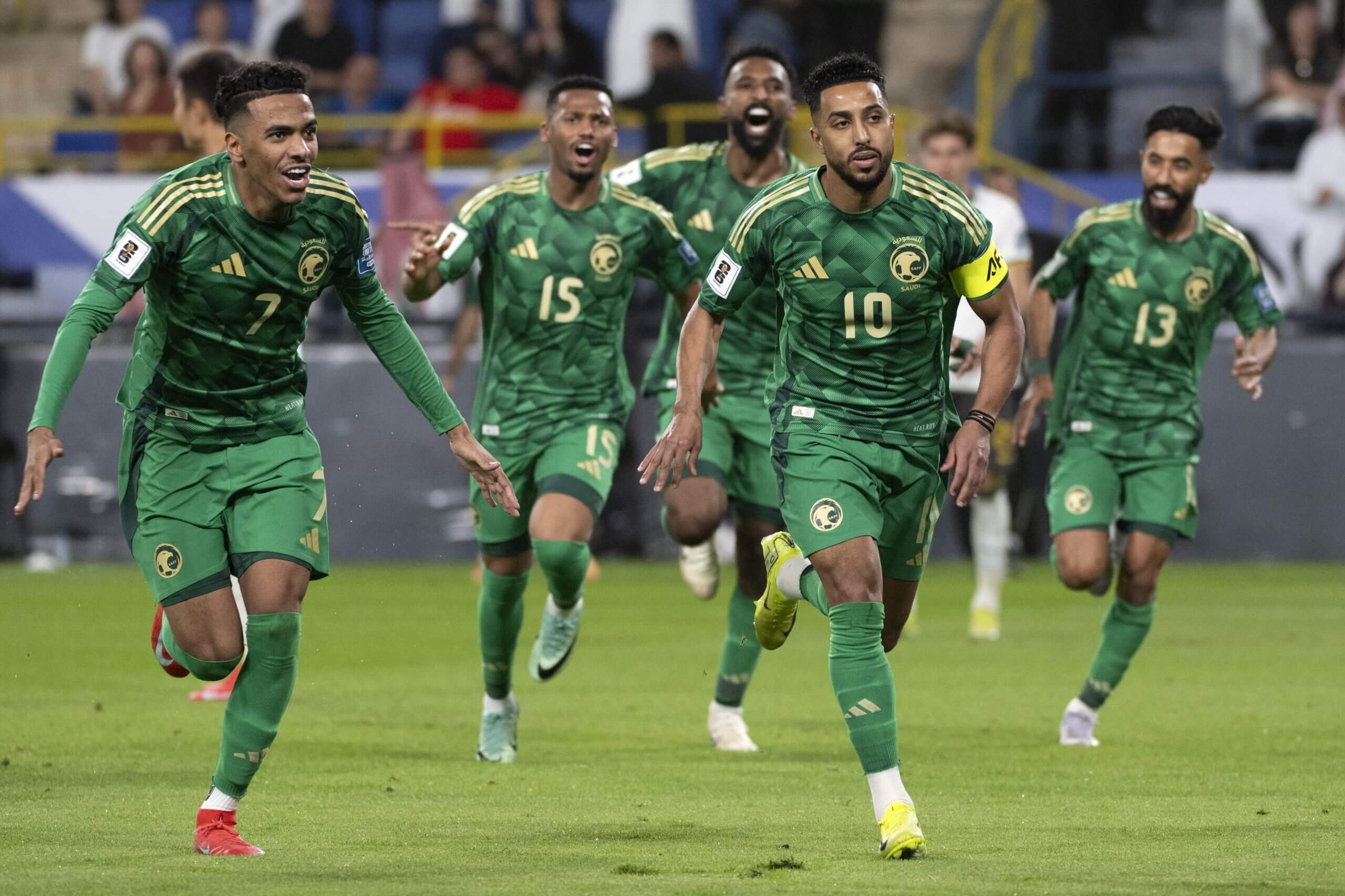
Ernesto Ryan/Getty Images
What is their World Cup pedigree?
The most established of the Gulf nations, Saudi Arabia have now reached seven of the past nine tournaments, having made their World Cup debut in the United States in 1994.
They have not reached the knockout stages since then — winning just two matches at the finals over the past 30 years — but delivered arguably the surprise of the 2022 tournament, when they defeated eventual winners Argentina 2-1 in their opening match.
However, they then lost to both Poland and Mexico to finish bottom of their group.
How do they play?
Almost always based in a 4-3-3 formation, Renard’s main focus has been defensive stability.
Both central midfielders generally sit deep and cover ground well, with much of the attacking game plan reliant on their wingers either beating their opposite number one-on-one, or crosses into the box.
Build-up play is direct rather than ornate, though rarely aerial, while Renard likes active full-backs who are metronomic up and down the wing.
Who is their key player?
Even at 34, Al Hilal winger Salem Al-Dawsari is still Saudi Arabia’s most important man. One of the finest players in the nation’s history, currently captaining the side, he scored the winning goal against Argentina in one of the shocks of the 2022 tournament.
An outstanding crosser of the ball who likes to cut inside from the left and shoot off his stronger right foot, he is by far the most likely to produce a game-changing moment.
Keep an eye out too for midfielder Saleh Abu Al-Shamat — who only made his debut in 2025 — a 23-year-old who has impressed with his energetic style, and is capable of opportunistic finishes himself.
Jacob Whitehead
What to know about…Cape Verde
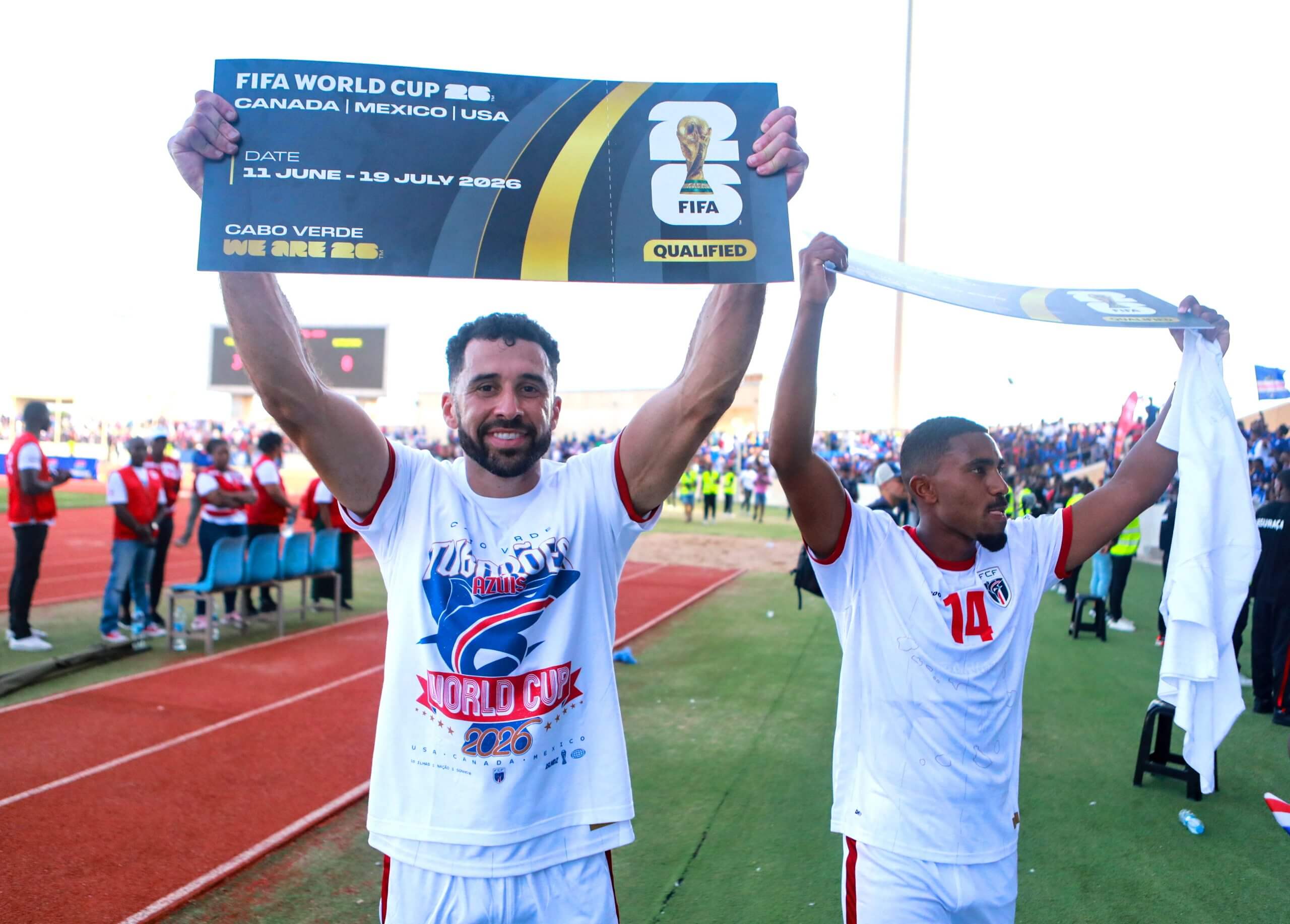
Cristiano Barbosa/Sportsfile via Getty Images
What is their World Cup pedigree?
Zero. This is not just the first time Cape Verde have qualified for the World Cup, it is the first time they have really come close. An independent nation only since 1976, they were not FIFA members until 1982 and first entered World Cup qualifying for the 2002 edition, only really having a vague sniff of qualification by coming second in their group to Nigeria in 2022. It is no wonder there were such joyous scenes when qualification was secured.
How do they play?
There is nothing especially remarkable from a tactical point of view about Cape Verde’s setup. They play a fairly standard 4-2-3-1 system, with a fast and direct attacking line that tends to switch positions. Plenty of width is provided from full-back, and they have a solid and experienced central defensive pairing of Irish-born Roberto ‘Pico’ Lopes and Diney Borges.
Who is their key player?
Goalkeeper and captain Vozinha is the emotional heart of the team. Columbus Crew right-back and 2024 MLS All-Star Steven Moreira might be the player with the most heft at club level, but the one to keep an eye on is centre-forward Dailon Livramento. Born and raised in Rotterdam and on loan at Portuguese second-tier side Casa Pia from Hellas Verona, the lithe and quick striker scored the winner against Cameroon and the opener against Eswatini, so is responsible for the two most important goals in Cape Verdean history.
Nick Miller
How will Spain feel about the draw?
Spain will be quite happy. They avoided the most dangerous teams in the other pots, and will be confident of a good start that can set them up for a long run in the tournament. De la Fuente appeared to be doing his best to hide a smile as the draw for Group H was completed.
Uruguay are, on paper, by far their most difficult opponents. They are also the best known, led by former Athletic Club coach Bielsa and with a squad featuring familiar faces from La Liga such as Real Madrid’s Valverde, Barcelona’s Ronald Araujo and Atletico Madrid’s Jose Maria Gimenez.
An initial look at the likely route through the knockout stages also suggests that Spain are likely to avoid Brazil, Argentina and Portugal until a potential final, so long as they win their group.
Uruguay has a reputation as a tough competitor and it has regularly reached World Cup final stages through recent tournaments. Spain’s record against their former colony in South America is very good, though: five wins, five draws and no defeats. Two of those meetings were at World Cup finals — a 2-2 in 1950 and a 0-0 draw in 1990.
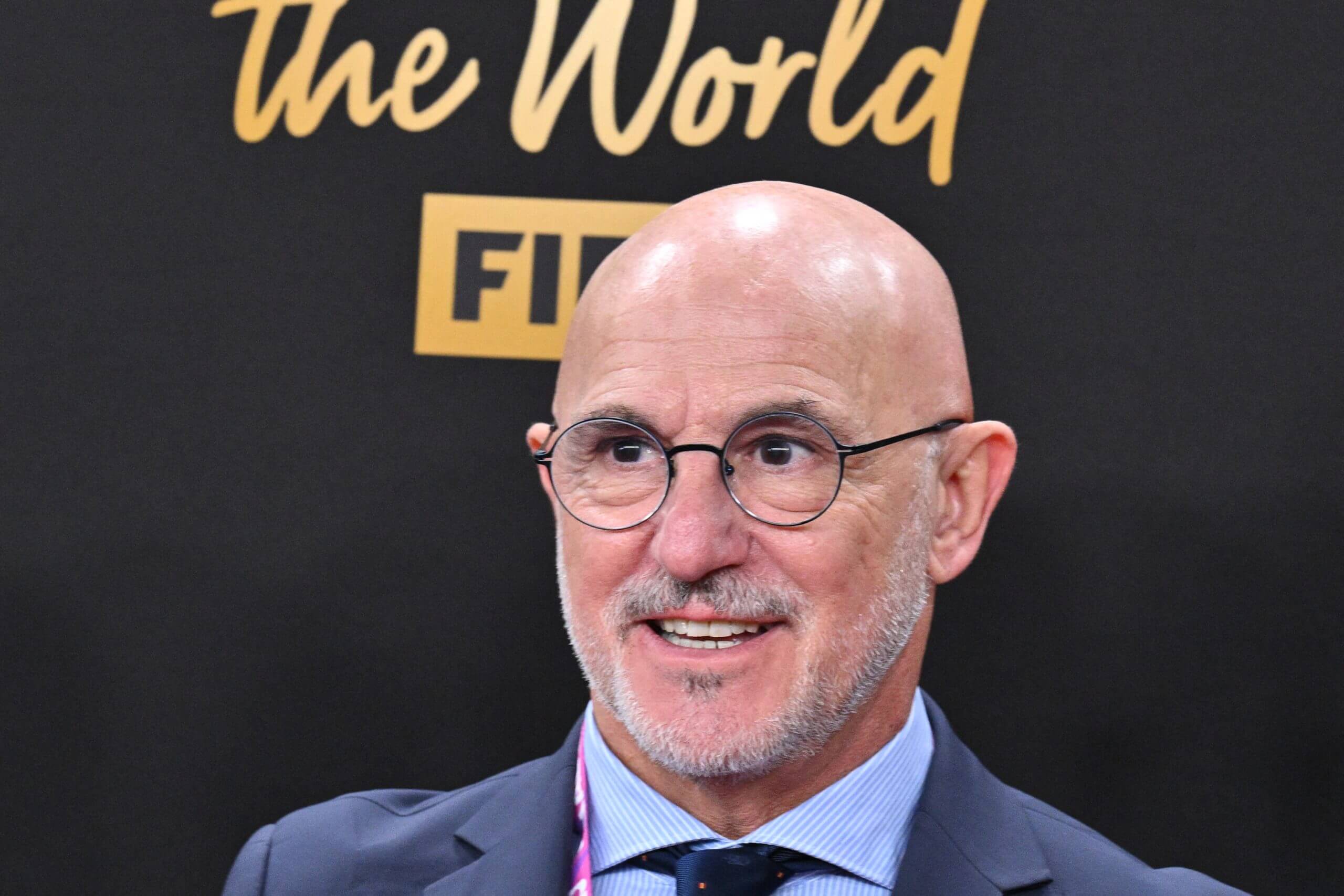
De La Fuente pictured at Friday’s draw (Roberto Schmidt/ AFP via Getty Images)
The current team under Argentine coach Bielsa is a potentially different threat to previous Uruguay sides, however. They are more likely to come out and attack, but this could suit Spain, excellent at cutting through opponents who leave any gaps in defence. Spain also beat Bielsa’s Chile in the 2010 World Cup group stages, on their way to winning that tournament.
Spain has a 100 per cent record in their three previous senior internationals against Saudi Arabia, including a 1-0 group stage victory at the World Cup of 2006, and a 5-0 friendly win in 2012.
The match against the Saudis is interesting for the ever growing financial links between Spanish and Saudi football. It will make for plenty to talk about at January’s Supercopa de Espana, which as usual these days is played in Jeddah. Both countries’ football associations will also be taking notes at next year’s tournament as future hosts of upcoming World Cups (Spain co-hosting in 2030, Saudi in 2034).
Spain has never played Cape Verde. The African country’s best known player in Spain would be former Manchester United and Rayo Vallecano winger Bebe. Now 35, he plays in the third division of Spanish football with Ibiza, but has not featured for his country since 2024.
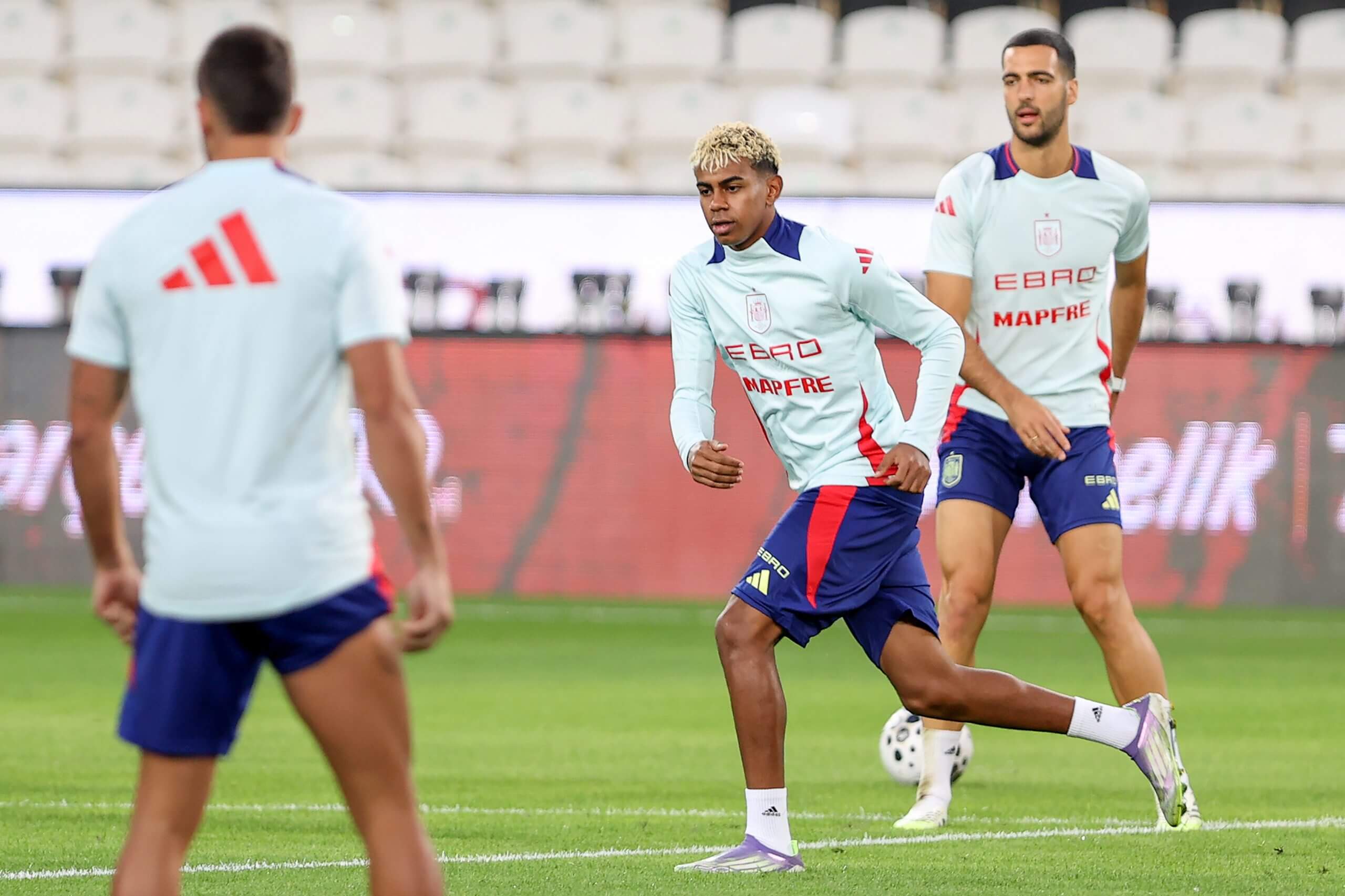
Lamine Yamal in Spain training in September (Serhat Cetinkaya/Anadolu via Getty Images)
Since beating England in the final to win the European Championship of 2024, Spain qualified for the World Cup as comfortable winners of their group. This was even more impressive given key players such as Rodri, Pedri, Lamine Yamal and Nico Williams were all injured at different stages of the campaign.
In November, they extended their unbeaten run in competitive matches to 31 games — a national team record.
The biggest shadow over the squad at the moment concerns superstar Yamal, and continuing tensions over managing his fitness with Barcelona. On international duty in September, he aggravated a previous groin problem, which upset his club coach Hansi Flick. The 18-year-old was then withdrawn from the squad during the subsequent two international breaks, leaving De la Fuente not completely happy either.
Another concern is whether Manchester City midfielder Rodri can get back to full fitness ahead of next year’s finals. There is also intrigue at centre-forward, where Euro 2024 captain Alvaro Morata has dropped out of contention. Real Sociedad’s Mikel Oyarzabal stepped up with six goals and four assists in the six World Cup qualifiers.
Key to manager De La Fuente’s success has been the close relationships he built when coaching different generations of the current team at youth level. He managed Spain’s under-19s, under-21s and under-23s before being appointed coach of the senior men’s team, replacing Luis Enrique after the World Cup of 2022.
Perhaps even the 64-year-old Basque was surprised when he got the job, but he has made excellent progress, winning the 2023 UEFA Nations League as well as the Euros last year.
His public image in Spain was hit when he applauded former federation president Luis Rubiales soon after his unrequited kiss of player Jenni Hermoso after Spain won the 2023 Women’s World Cup in Australia.
However, while Rubiales was quickly removed from his position, and was found guilty of sexual assault by a Spanish court in March, De La Fuente managed to ride out the storm, and is under contract with the Spanish FA until 2028.
Spain’s biggest date ahead of next summer’s tournament is the ‘Finalissima’ game they are due to play as 2024 European champions against that year’s Copa America winners, Argentina. The high profile exhibition game was supposed to take place in the summer, but the heavy club and international calendar made this impossible.
It is now expected to be played in Qatar on March 27 — but this has yet to be confirmed.
Dermot Corrigan
When are Spain’s fixtures?
Monday, June 15: Spain vs Cape Verde (12pm ET, 9am PT, 5pm BST) — Mercedes-Benz Stadium, Atlanta
Sunday, June 21: Spain vs Saudi Arabia (12pm ET, 9am PT, 5pm BST) — Mercedes-Benz Stadium, Atlanta
Friday, June 26: Uruguay vs Spain (8pm ET, 5pm ET, 1am BST+1) — Estadio Akron, Guadalajara
The group-stage schedule was unveiled in Washington DC on Saturday, pitting Spain in Atlanta’s 75,000-seat Mercedes-Benz Stadium for their opening two fixtures, both kicking off at noon ET.
The European champions will open their tournament against debutants Cape Verde on June 15, before facing Saudi Arabia in the same venue in their second group game on June 21. Spain will round off the group stage against Uruguay at Estadio Akron in Guadalajara, Mexico.
The final version of the game schedule will then be confirmed in March, once the inter-confederation playoffs and European playoffs have been completed and the final 48 tournament teams confirmed.