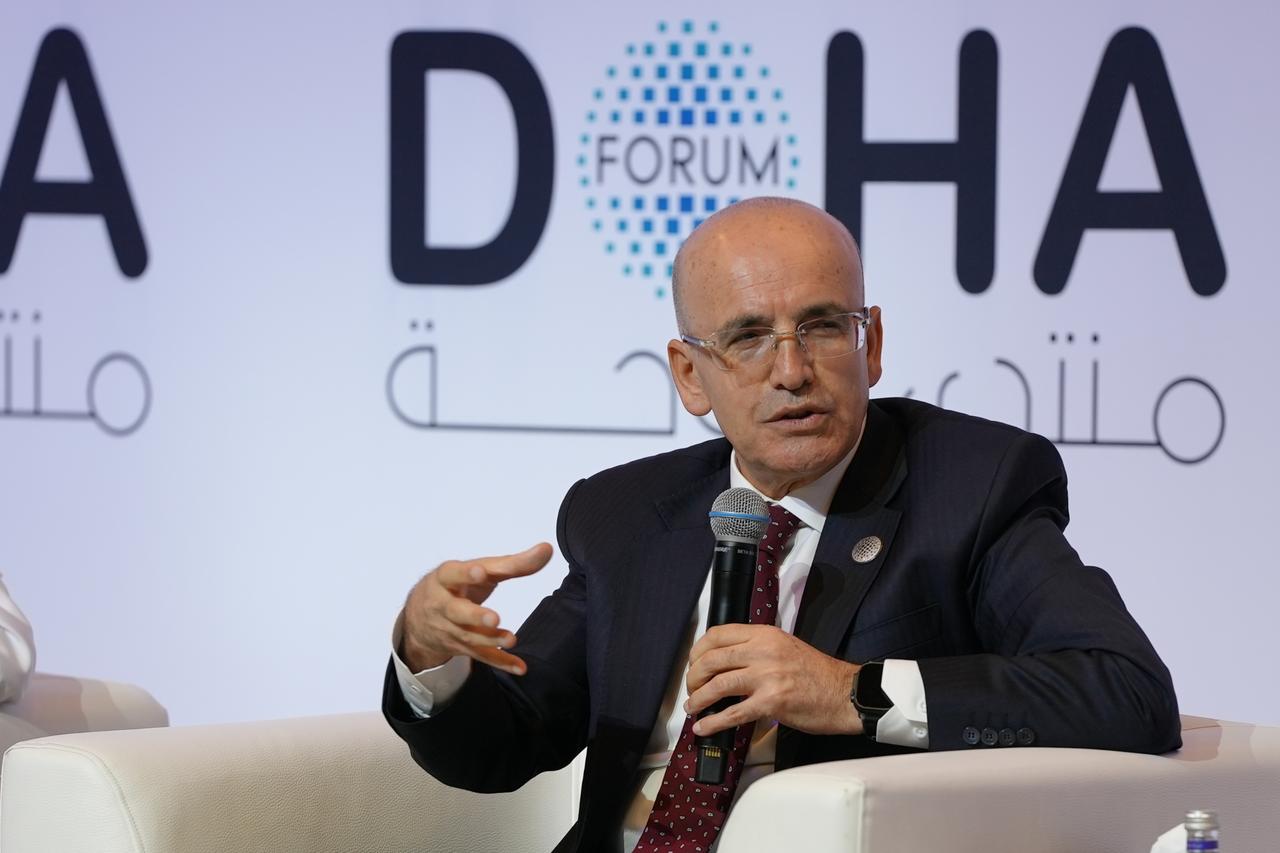
Türkiye is increasingly concerned about the indirect effects of global tariff tensions, particularly between the United States and China, and is calling for stronger regional integration as a safeguard against growing trade fragmentation, Treasury and Finance Minister Mehmet Simsek said on Saturday at the 2025 Doha Forum.
Speaking on a panel titled “Shockwaves and Safety Nets: Rethinking Trade in an Age of Disruption,” Simsek emphasized that while Türkiye is not directly involved in tariff disputes, the ripple effects of U.S.-China trade tensions pose a tangible risk to its economy, adding that the shift in global trade routes, especially in Asia, shows how such tensions affect supply chains and production geography.
“We are more concerned about the indirect effects of tariffs and non-tariff barriers than about tariffs themselves,” Simsek said, noting that Türkiye maintains a constructive dialogue with Chinese officials to mitigate these risks.
More to Read
Türkiye pushes for connectivity, free trade in region
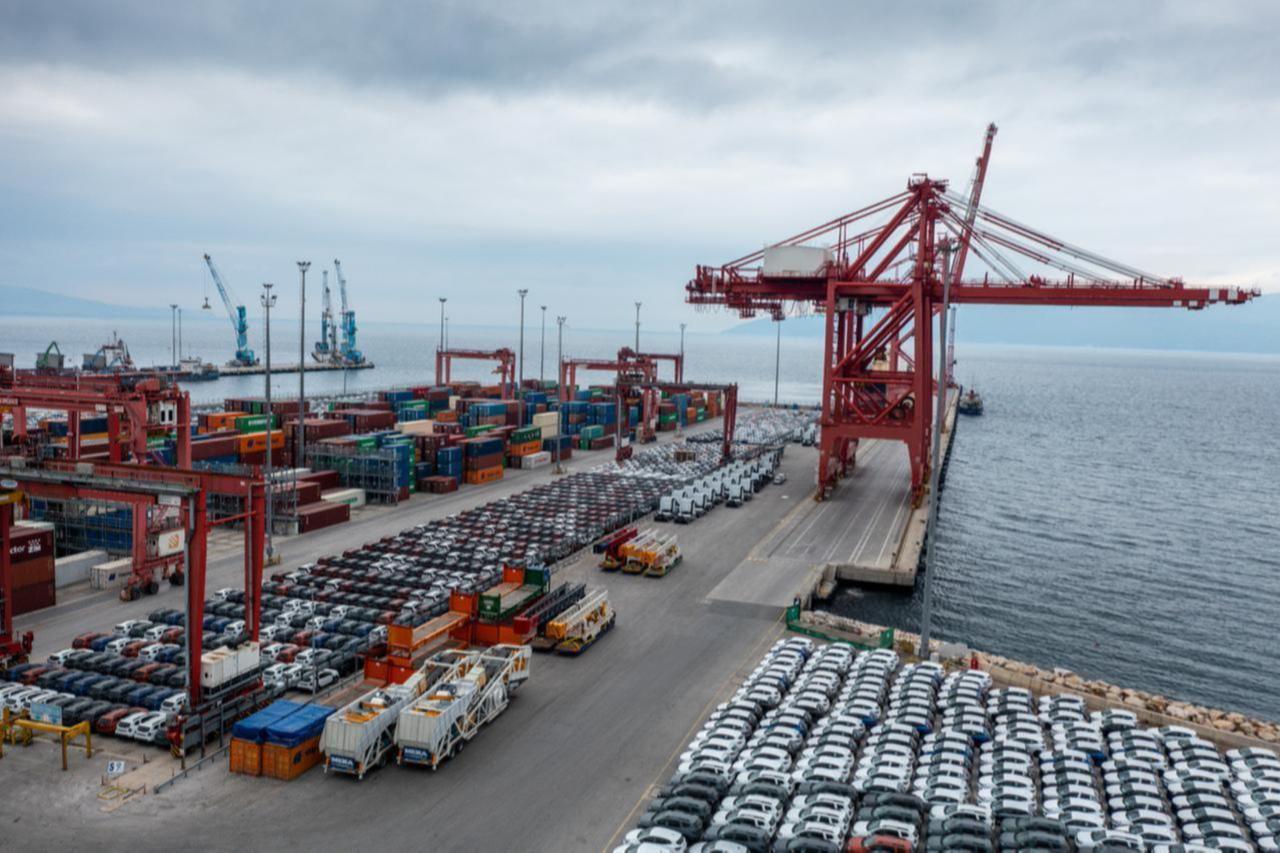
To counter the effects of global trade fragmentation, Türkiye is accelerating efforts to expand regional trade partnerships and infrastructure.
Simsek announced that Türkiye is seeking a free trade agreement with the Gulf Cooperation Council (GCC) and is promoting the Development Road Project initiative to connect the Gulf to Türkiye via high-speed rail and motorways, aiming to enhance Türkiye’s connectivity to global trade routes extending from Beijing to London.
Simsek said Türkiye has the infrastructure to support this vision and will work to persuade regional partners to invest in the initiative.
“We prefer rules-based trade,” Simsek stated, framing regional integration as a direct response to the challenges posed by fragmented global trade. “Connectivity, regional integration, industrial policy, and service exports will move forward in tandem,” he emphasized.
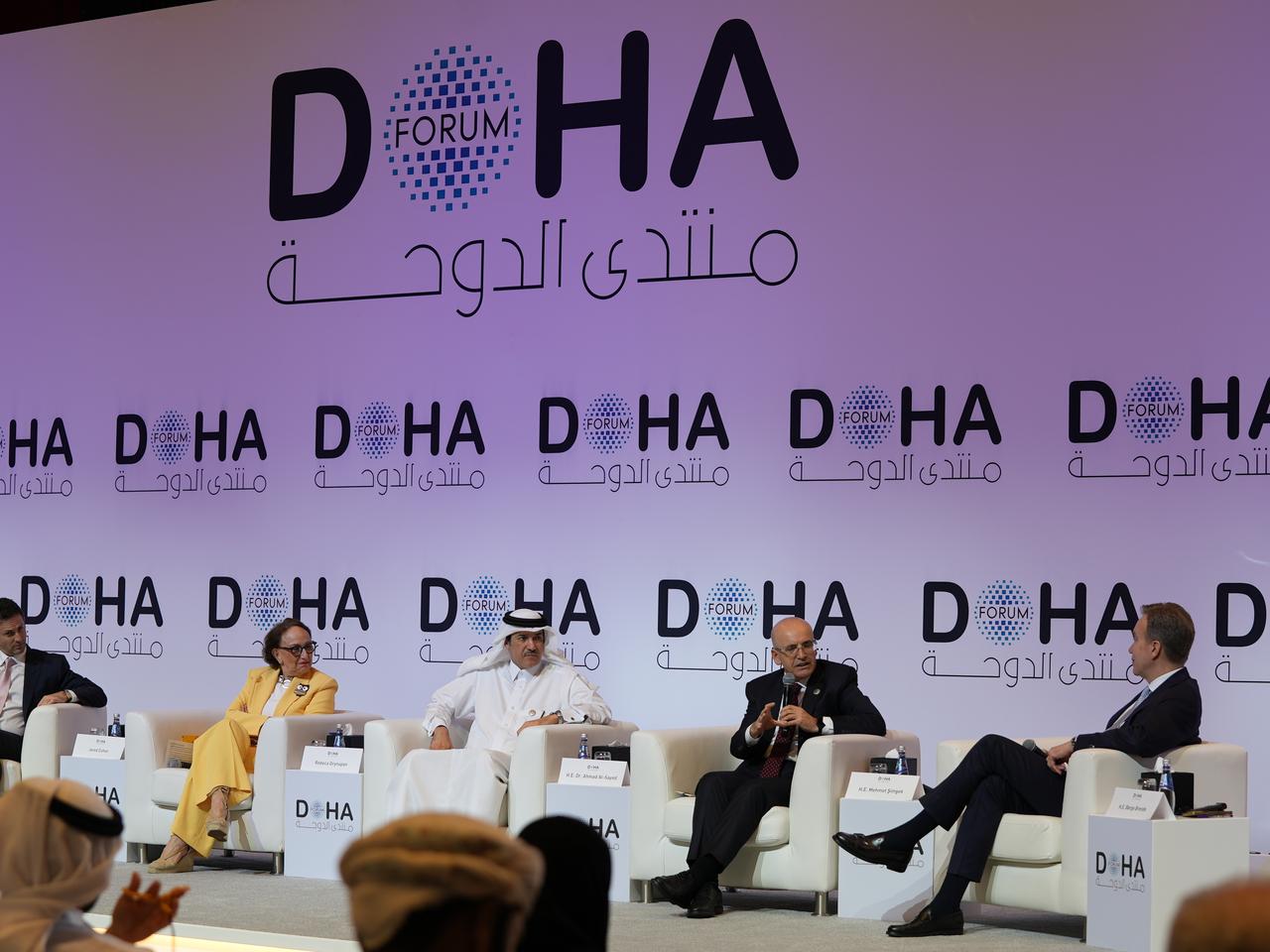

Türkiye’s Minister of Treasury and Finance Mehmet Simsek speaks at the panel titled “Shock Waves and Safety Nets: Rethinking Trade in an Age of Disruption” during the Doha Forum 2025 in Doha, Qatar, December 6, 2025. (AA Photo)
Economic indicators improve, structural reforms loom
Simsek also outlined recent gains in Türkiye’s economy, describing a narrowing budget deficit—now around 3% of gross domestic product (GDP)—and a drop in the public debt ratio to 24% of GDP.
Türkiye’s foreign reserves have increased by $120 billion over the past two and a half years, while the volume of foreign exchange-protected deposits has fallen by $140 billion, reducing exposure to potential currency shocks.
He acknowledged that growth, currently hovering between 3% and 4%, remains below Türkiye’s long-term average of 5.5%. However, he characterized this as manageable, especially given single-digit unemployment and falling inflation. Consumer price inflation has dropped from over 70% to 31% and is expected to reach single-digit levels over time.
To lock in these gains, President Recep Tayyip Erdogan has declared 2026 the “year of structural reforms,” a move Simsek said is crucial to ensuring long-term stability.
Türkiye eyes digital services as next growth engine
Simsek noted that Türkiye is already among the world’s top 20 exporters of services and aims to expand its position as a regional hub for digital services exports. Maintaining a services surplus—driven largely by tourism and IT—is a core element of this strategy.
Türkiye’s services surplus reached $48.75 billion in the first nine months of 2025 as of September and $62.58 billion on an annualized basis, according to the Turkish central bank’s balance of payments data.
He emphasized that logistics investments, smart fiscal policies, and fast-response mechanisms will be key to addressing disruptions affecting labor-intensive sectors.
“Türkiye is the world’s 14th-largest manufacturing base, and production geographies are shifting,” he said. “We are focusing on how best to support segments affected by this transformation.”
Finally, Simsek stressed the need to boost productivity as the most realistic strategy for long-term prosperity, especially as demographic trends turn less favorable for labor growth and many advanced economies remain burdened with high debt.
“Raising productivity requires reallocating resources toward more efficient sectors and investing in technology,” he said. “Demography no longer favors the global economy; the path forward is through smarter use of labor and capital.”
The Doha Forum is an annual international conference held in Qatar’s capital, bringing together global leaders, policymakers, experts, and civil society to address pressing challenges through dialogue and cooperation.
The 2025 edition, held under the theme “Justice in Action: Beyond Promises to Progress,” gathered over 6,000 participants from over 150 countries, aiming to turn a discussion into concrete policy solutions.

December 07, 2025 11:39 AM GMT+03:00