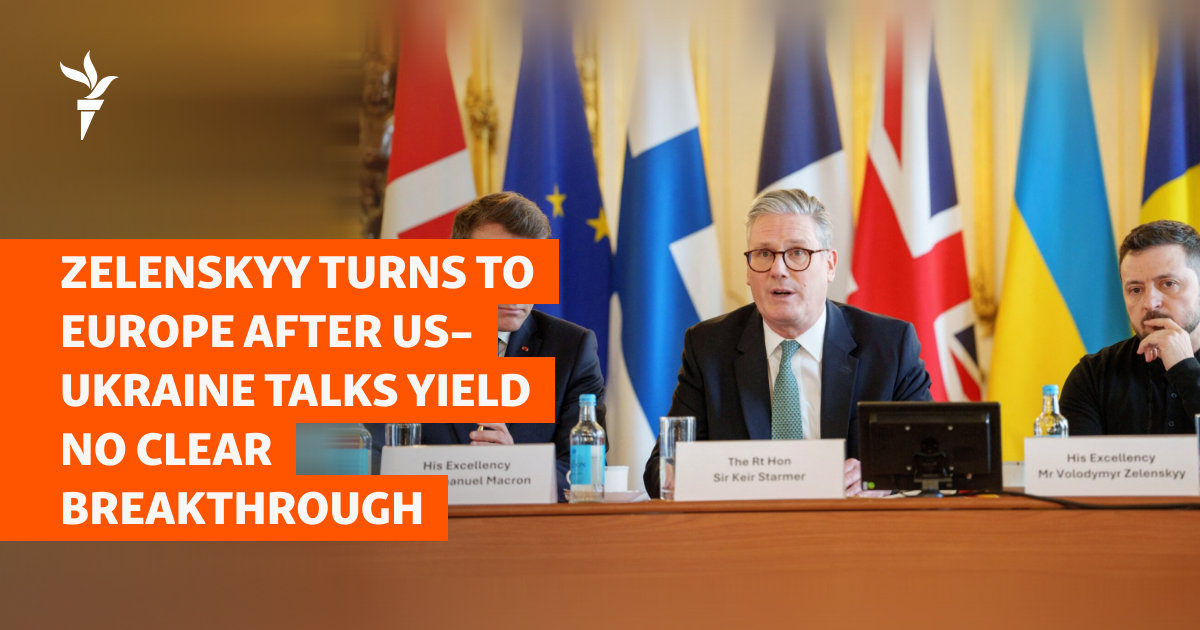
Three days of negotiations between Ukrainian and US officials in Miami ended with a positive tone, but produced no evident breakthrough, as Ukrainian President Volodymyr Zelenskyy prepares to meet European leaders for peace talks on December 8.
Hours after Zelenskyy said he had a “very constructive” phone call with the US negotiating team — led by special envoy Steve Witkoff and US President Donald Trump’s son-in-law Jared Kushner — Russia continued its overnight air strikes on key Ukrainian infrastructure as winter temperatures continue to fall.
The mayor of the central Ukrainian city of Kremenchuk, which is a key industrial hub home to one of Ukraine’s biggest oil refineries, said that his city suffered a “massive” attack that caused power and water damage. No deaths have been confirmed so far. Russian strikes also hit the eastern Ukrainian city of Slovyansk, injuring seven people and damaging multiple buildings.
Overnight strikes have continued even as efforts to negotiate an end to the war have intensified, with Russia saying it shot down 77 Ukrainian drones in several locations overnight.
Following the talks in Florida, Zelenskyy said on Telegram that “Ukraine is committed to continuing to work honestly with the American side to bring about real peace,” adding that the parties agreed on the next steps and a format for talks, without disclosing further details.
Zelenskyy will next turn to European allies when he visits London on December 8 to discuss the peace process with British Prime Minister Keir Starmer, French President Emmanuel Macron, and German Chancellor Friedrich Merz.
“Ukraine can count on our unwavering support. That is the whole point of the efforts we have undertaken as part of the Coalition of the Willing,” Macron said on X on December 6 ahead of the meeting.
Talks Continue For US-Led Efforts To End Ukraine War
The French president said the group would “take stock” of peace negotiations. Europe has pushed back against early versions of the US-led peace plan and has sought to win support from Washington for its own proposals.
Macron, Merz, Starmer, and Zelenskyy took part in a virtual meeting of the “coalition of the willing” about two weeks ago, where they discussed plans to put a European peacekeeping force in Ukraine in the event of a cease-fire.
The recent flurry of diplomacy around ending the war was sparked when a US 28-point peace plan was leaked to the media in November. That original proposal appeared to heavily favor Russia, although it has since undergone several changes to take Kyiv’s concerns more into account. The most recent version of the proposal has not been shared publicly.
The White House has pushed Kyiv and Moscow to agree to a plan to end the war, but there has been little sign of headway, despite both sides engaging with the US-led process.
“We will continue these efforts alongside the Americans to provide Ukraine with security guarantees, without which there can be no robust and lasting peace,” Macron continued in his post.
“Russia is locked into an escalatory approach and is not seeking peace,” he said, adding, “We must continue to put pressure on Russia to force it to make peace.”
Earlier, a US summary of the first two days of talks released on December 5 said that “both parties agreed that real progress toward any agreement depends on Russia’s readiness to show serious commitment to long-term peace, including steps toward de-escalation and cessation of killings.”
Territory and security guarantees are long-standing sticking points for any possible deal.
Ukraine maintains that a just end to the war would include reliable security guarantees and would not force it to surrender more territory to Russia.
The Miami talks were preceded by a visit to Moscow by Kushner and Witkoff.
Trump said on December 3 that the US delegation had a “very good meeting” with Russian President Vladimir Putin, and that they believed he “would like to see the war ended” — although the talks failed to yield a breakthrough.