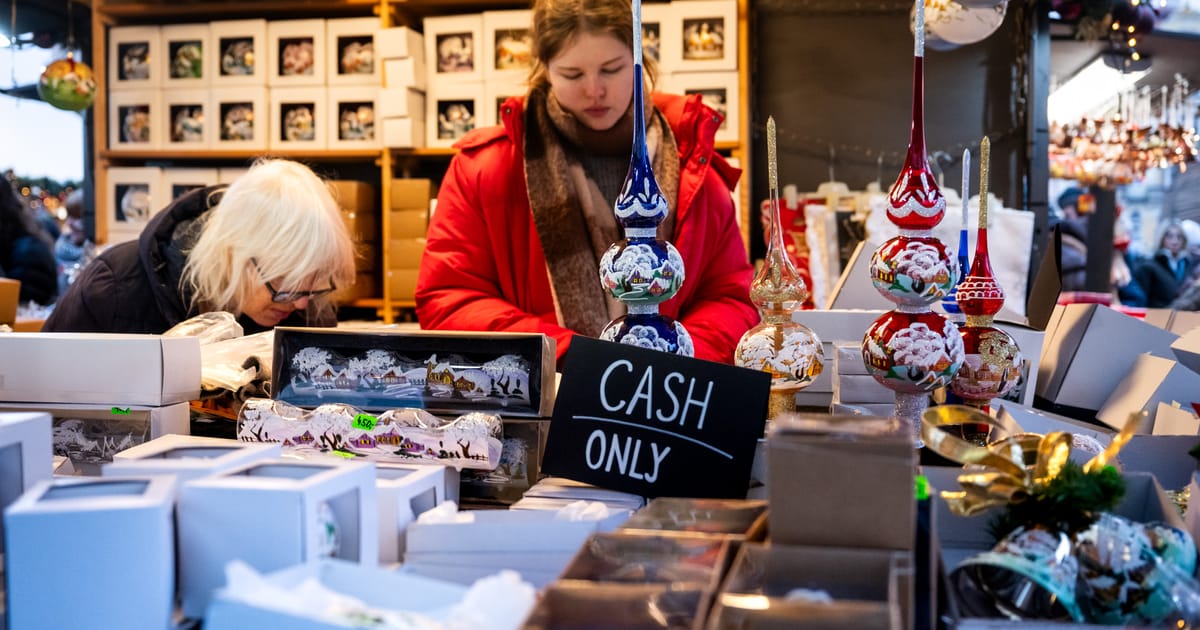
As Advent lights appear across the country and Christmas approaches, Czech towns and cities fill with markets, music and familiar traditions. Yet according to census data and decades of surveys, Czechia remains one of the least church-going nations in Europe. Only a small share of the population attends religious services regularly, and around 80 percent say they seldom or never go at all.

Adam Šindelář|Photo: Tomáš Roček, Czech Radio
To understand this apparent contradiction, Czechast spoke with Adam Šindelář, religion editor at Czech Radio. One of the first things Šindelář points out is that the emotional pull of the season is rooted in cultural memory and the human search for light during winter:
“It has something to do with cultural memory, so with tradition. And I think even in the winter, like, days are getting dark, and so people are looking for something warm, something light to have in their lives.”
But when it comes to organised religion, history plays a different role. Šindelář explains that for many Czechs, institutional churches remain associated with political pressure experienced centuries ago:
“I think because we had a forced reculturalization under the Habsburgs, and so religion was also associated with a political pressure. So I think this all kind of shaped Czechs’ identity around dislike of institutional churches.”

Photo: Miroslav Tichák, Czech Radio
And why didn’t church attendance rebound after 1989, when freedom returned and religious life could flourish openly again? According to Šindelář, the institutions themselves struggled to find a meaningful role in modern society:
“I think that churches were not very good in establishing their role in the new society. In the last, like, 35 years of the free Czech Republic, or before Czechoslovakia, I think that they were not very able to… take a lot of space in people’s lives.”
Together, these factors help explain why Czechia can be both deeply attached to Christmas and profoundly secular at the same time. The full conversation is available in the latest episode of Czechast.