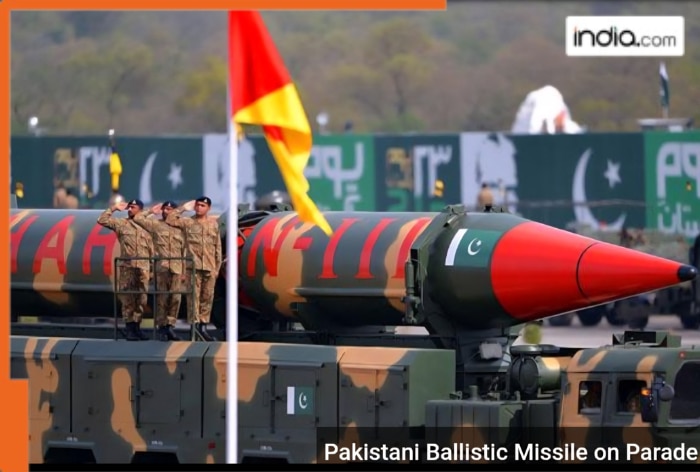
Imagine sending one missile into the sky, but instead of carrying just one warhead, it carries multiple ones – like a mother ship releasing several smaller attack vehicles.

Published: December 7, 2025 6:40 PM IST
Pakistan missile
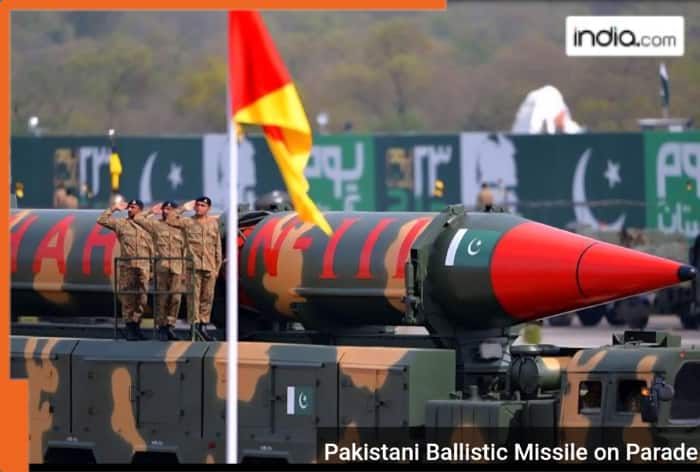
We’ve been hearing a lot about Pakistan and China lately, especially after Operation Sindoor. But there’s something else brewing across the border that deserves our attention – Pakistan’s Ababeel ballistic missile. According to military analyst Jaidev Jamwal, Pakistan tested this weapon in August 2025, right after Operation Sindoor. So what exactly is Ababeel, and should we be worried?
Imagine sending one missile into the sky, but instead of carrying just one warhead, it carries multiple ones – like a mother ship releasing several smaller attack vehicles. That’s what MIRV technology is all about. MIRV stands for Multiple Independently Targetable Re-entry Vehicles. Think of it like this: you launch one big rocket, but it can drop off four, five, or even eight smaller missiles at different locations. Each of these can re-enter the atmosphere and hit a separate target. This is what makes Ababeel particularly dangerous.
The missile can travel up to 2,200 kilometers, which means it can reach deep into Indian territory. It moves at eighteen times the speed of sound – that’s around 22,000 kilometers per hour! At such incredible speeds, traditional missile defense systems struggle to react quickly enough. Pakistan designed Ababeel specifically to defeat advanced defense systems like India’s S-400. Depending on the weight of warheads, Ababeel can carry three heavy warheads of 500 kg each, five medium ones of 300 kg each, or eight lighter ones of 185 kg each. The lighter the payload, the more warheads it can carry.
Pakistan first tested Ababeel publicly in January 2017, claiming success. Another test happened in October 2023, which they again called successful. However, the August 2025 test in Balochistan apparently didn’t go as planned. This raises questions about whether the technology is truly ready for deployment. If it was working perfectly, why didn’t Pakistan use it during recent tensions?
But here’s the real question everyone’s asking – can India defend itself against such a threat? The answer is yes, though it requires a multi-layered approach. India has already deployed the Russian S-400 Triumf system, nicknamed “Sudarshan Chakra,” which successfully intercepted Pakistani missiles during the May 2025 conflict. The S-400 can track and neutralize up to thirty aerial targets simultaneously at ranges up to 400 kilometers. During recent hostilities, it protected cities like Jammu, Pathankot, and Amritsar from coordinated attacks.
However, the S-400 alone isn’t enough. India is also developing its indigenous Ballistic Missile Defence system with two layers. The Prithvi Air Defence intercepts incoming missiles at high altitudes between 50 to 80 kilometers above Earth. The Advanced Air Defence system handles lower altitude interceptions up to 30 kilometers. Additionally, the Prithvi Defence Vehicle can intercept missiles at even higher altitudes, ranging from 50 to 180 kilometers. This multi-tiered approach ensures that even if some MIRV warheads slip through one layer, others can catch them.
India also possesses the BrahMos supersonic cruise missile, which travels at speeds that make it extremely difficult to intercept. The combination of offensive weapons like BrahMos and defensive systems like S-400 and indigenous BMD creates a comprehensive security umbrella. Moreover, India is acquiring more S-400 batteries and developing advanced radar systems that can detect stealth aircraft and missiles.
The key challenge with MIRV technology is that while each S-400 interceptor carries one warhead, a MIRV missile releases multiple warheads. Experts acknowledge that overwhelming the system with sheer numbers is theoretically possible. However, India’s layered defense approach, combining S-400 with indigenous systems and satellite surveillance, significantly reduces this risk. The defense network uses sophisticated radars, computers, and communication systems spread across the country, all working together in real-time.
So while Ababeel does represent a security challenge, India has prepared multiple countermeasures. The continuous development and testing of both offensive and defensive capabilities ensures that India maintains a credible deterrent. As technology evolves on both sides, the focus remains on ensuring peace through strength while hoping diplomatic solutions prevail over military confrontation.
———– E.O.M
(Girish Linganna is an award-winning science communicator and a Defence, Aerospace & Geopolitical Analyst. He is the Managing Director of ADD Engineering Components India Pvt. Ltd., a subsidiary of ADD Engineering GmbH, Germany.)