The EU’s circular economy action plan includes initiatives that address the entire life cycle of products, targeting their design, sustainable consumption, and preventing waste. According to monitoring data in Member States, achievements to date include increases in recycling rates and reduced quantities of materials reaching landfill1, with circular models leading to the development of new capabilities along the value chain. Data also shows a positive correlation between circular economy indicators and economic growth2.
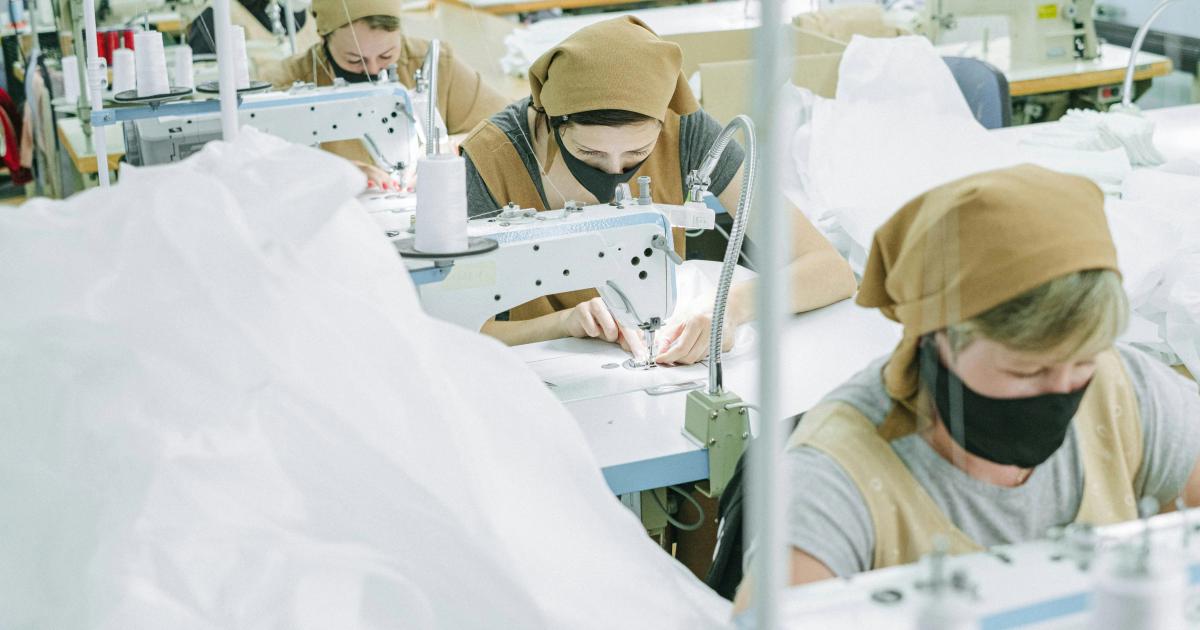
The EU strategy for sustainable and circular textiles highlights a need for policy interventions to reduce waste and overconsumption in this sector. Several policies will impact circularity in the textiles sector, including the 2018 revision of the Waste Framework Directive, a provision of which requires textiles to be collected separately from 2025. However, future policies may have unforeseen and unintended impacts. While textile policies are under development, this study aims to increase understanding of their possible effects – positive or negative – to inform decision-making in EU circular economy and waste management regulation.
Researchers from Denmark and Spain interviewed 11 participants from a range of backgrounds including European institutions, industrial organisations, academia and research organisations. They also conducted an online survey focusing on the potential unintended effects of hypothetical textile waste policies. The researchers sought expressions of interest from over 200 stakeholders from the policymaking domain, private business and industry, and civil society representatives in each EU Member State. Of these, 73 individuals participated, including from the textile industry, consumer organisations, waste management organisations and NGOs.
Participants distinguished first-order and second-order effects, where first-order describes the direct effects of a policy, such as a landfill ban reducing the amount of waste going to landfill, and second-order describes the indirect effects, such as increased illegal dumping of waste due to a landfill ban. The interviews and survey elicited a roughly equal number of first-order and second-order effects.
Unintended first-order effects identified from the in-depth interviews were mostly due to incomplete achievement of the policy objectives, perhaps due to resource constraints for policy development, leading to limited policy design or implementation. Sometimes policies do not seem to go far enough: for example, taxes on low-cost clothing may be internalised by ‘big players’, note the respondents, and therefore might have little effect on overconsumption.
Interviewees also highlighted limited transparency on the recycled nature of imported materials. Meanwhile, limited demand for recycled fibres leads to a risk of downcycling and disposal. Re-use and recycling of textile products is usually preferable, and promoted by the Waste Framework Directive and waste hierarchy; however, promotion of recycling may appear to take priority in the public mindset over prevention of waste in the first place (through lower consumption).
The interviewed stakeholders perceived that, without appropriate legislation, there is a risk that second-order effects could potentially manifest in various ways. These possible effects were split into four categories by the researchers:
Import-export and value chain dynamics: legislation affecting waste status and imposing minimum shares of recycled content may have implications on import-export of products. For example, limiting certain waste treatment options (e.g. landfilling) combined with recycling obligations in the EU could increase waste exports and cause negative effects in destination countries.Exploitation of legislation loopholes: exploitation of loopholes may undermine efforts to cut waste levels. This may take the form of changing product attributes that lie outside of the new policy and which provide an opportunity to comply with any new legislation, although not aligned to the spirit of it.Price alterations affecting household consumption patterns and business strategies: price alterations can moderate consumerism but can also exacerbate social disparities, imposing an unfair financial burden on low income households. There is also the risk of shifting unsustainable business practices to other locations.Socio-political and fiscal responses: a circular economy policy may be successful from an environmental perspective, but could trigger unwanted social reactions. For example, limiting consumer convenience may reduce public acceptance and policy compliance.
To improve assessments of unintended policy effects, the researchers suggest that the following tools should be reinforced or expanded during policy processes:
Increase stakeholder engagement before the start of the impact assessment
While stakeholders are already consulted at different stages of the policymaking process (e.g., inception, draft proposals, adoption) at the national and supranational levels, enhancing transparency and taking a participatory approach to updating environmental norms is essential for detecting loopholes, say the researchers. Increased collaboration between industry and regulatory bodies can be effective in overcoming technical compliance challenges, help regulators understand the ‘on-the-ground’ implications of policies, and build a sense of engagement and ownership in consensus building. Waste treatment experts and consumers could also be engaged at an early stage, before the modelling phase of policy development, although this requires resources and time, the researchers acknowledge.
Combine micro- and macro-modelling tools
Macro-economic modelling3 that integrates life cycle assessment (LCA) and costing could quantify unintended socio-economic effects, say the researchers. However, the integration of LCA with macro-economic models is not yet common practice, and issues with the granularity of information inputs and outputs at the interface of both model scales must be addressed.
Add bolder scenarios to the impact assessment and investigate effects on third countries
Some policy experts interviewed suggested the need for increased consideration of Europe’s resilience in the face of unexpected circumstances, even if deemed unrealistic (for instance, societal lockdown or war in Europe). A wide evidence base covering both the Global South and marginalised communities in the Global North would also be beneficial.
Include behavioural and social components in the impact assessment to increase understanding of social responses
Second-order effects involve a behavioural component by definition, say the researchers. Studies have already identified different influencing factors in waste management by consumers, including internal (e.g., environmental values, beliefs and attitudes) and external (e.g., laws and regulation, social norms, financial incentives) motivators. A mix of interventions – such as regulations, economic incentives and communication – is likely necessary to ensure citizens sort their waste correctly, and to moderate demand. Using a ‘behavioural science lens’ can aid policy development.
The researchers acknowledge that a full analysis of specific textile waste policies proposed by the European Commission was not possible due to their ongoing development and scarcity of relevant data. Future research could focus on bridging the gap between capturing second-order effects and including these insights in impact assessments, they propose.
Footnotes: D’Inverno, G., Carosi, L. and Romano, G., 2024. Meeting the challenges of the waste hierarchy: A performance evaluation of EU countries. Ecological Indicators, 160, p.111641.Radivojević, V., Rađenović, T. and Dimovski, J., 2024. The Role of Circular Economy in Driving Economic Growth: Evidence from EU Countries. SAGE Open, 14(4), p.21582440241240624.The researchers give as examples the models E3MI, GEMI3 and Fidelio.Reference:
Solis, M. Leonidas Milios, L, Davide Tonini, D., Foss Hansen, S., Scheutz, C. & Huygens, D. (2025) An empirical exploration of the unintended effects of circular economy policies in the European Union: The case of textiles. Sustainable Production and Consumption, Volume 54 (452-465) ISSN 2352-5509,
https://doi.org/10.1016/j.spc.2025.01.021.
To cite this article/service:
“Science for Environment Policy”: European Commission DG Environment News Alert Service, edited by the Science Communication Unit, The University of the West of England, Bristol.