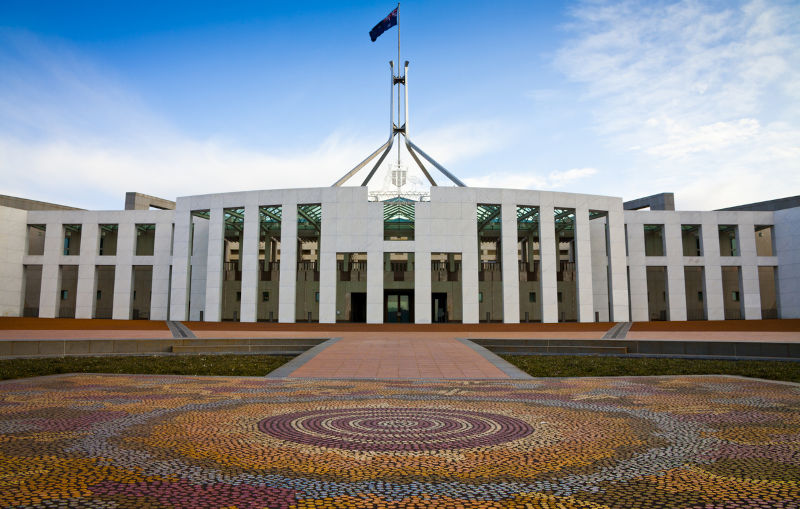
Public trust in Australian politics is wearing dangerously thin. Restoring it will require clear standards, real accountability and decisions that can be traced, justified and owned.
Public trust is the most fragile asset of any democracy. In Australia, that trust has been eroded not only by scandal and corruption but by a pervasive sense of drift: promised reforms that stall, integrity frameworks that are weakened or ignored, and a political class too often perceived to operate beyond the disciplines expected of citizens and the public servants who serve them.
Restoring trust requires more than episodic fixes or rhetorical commitment. It demands a coherent, principled and enduring standard of governance – rooted in history, compatible with democratic accountability and Westminster traditions, and applied uniformly across local, state and federal institutions.
Good government is neither mysterious nor ideological. It is measurable, replicable and, crucially, visible. Recent reforms such as the
Public Governance, Performance and Accountability Act and the National Anti‑Corruption Commission provide important foundations. Yet public expectation is for more than institutional architecture. A baying crowd of sans‑culottes demands practice: transparency that is substantive rather than decorative; responsibility that is personal rather than diffused; and decision‑making that withstands scrutiny long after the political moment has passed. There is a widening gap between these expectations and lived experience, as seen in Robodebt.
History offers useful instruction. Ambrogio Lorenzetti’s fourteenth‑century frescoes in Siena portray civic virtue as the foundation of public life: justice at the centre of authority, supported by prudence, temperance, compassion, wisdom and service to the common good. Siena’s post‑plague transformation – where oligarchic collapse gave way to broader coalitions, fiscal reform and a shared obligation to the public interest – reminds us that reform must be structural and sustained, not ornamental.
The modern analogue is the UK’s
Nolan Principles of Public Life: selflessness, integrity, objectivity, accountability, openness, honesty and leadership. Many Australian frameworks echo these values in spirit, but too rarely are they embedded with the force and clarity required. Attempts to formalise such principles into parliamentary and ministerial codes have often been dismissed as politically risky: concessions to scrutiny rather than commitments to accountability. Political risk aversion only prolongs the reforms Australians expect.
OECD guidance reinforces the same foundation: transparent decision‑making, responsible financial stewardship, high‑quality integrity systems and robust multi‑level governance. Australia can meet these expectations, but only if consistent standards are applied uniformly across every tier of government. Fragmented integrity systems may satisfy constitutional separation, but they fail the public test of clarity. Our administrative history is littered with inquiries hampered by undocumented authority, ambiguous responsibility and opaque ministerial intervention. The lesson is not new; it is urgent.
A straightforward, high‑impact reform would be to require attribution for every consequential decision: record who made it, under what delegated authority and according to which legislative power.
Clear attribution protects officials, strengthens accountability, simplifies investigative review and aligns practice with international norms. It also closes the loopholes that allow executive influence to be exercised informally through private direction – often accompanied by sotto voce threats about officials’ career prospects – and undocumented instruction. For too long we have tolerated a system in which political will can be exercised without trace, memory or ownership.
Resistance to stronger governance frameworks is often framed as political self‑harm or as touching a politically ruinous “third rail” – the claim that reform exposes governments to criticism or to opponents who will not reciprocate but will instead seize the issue to launch a smear campaign.
This is a false economy. Transparency is not a partisan liability; it is a democratic obligation. Parties that aspire to long‑term stewardship must privilege trust over convenience. The greater threat lies not in transparency but in its absence: corrosive cynicism, electoral disengagement and a polity in which citizens assume that all actors are equally unaccountable.
The Australian Labor Party, governing across multiple jurisdictions, has an opportunity to embed consistent ethical standards without the charge of preaching from opposition.
Adoption of the Nolan Principles across all Labor governments would be a modest but meaningful start – signalling seriousness rather than symbolism. Beyond that, harmonised record keeping, strengthened ministerial codes, mandatory publication of consequential decisions and national consistency in crisis governance would form a practical, durable and institution‑building reform agenda. Australia deserves nothing less.