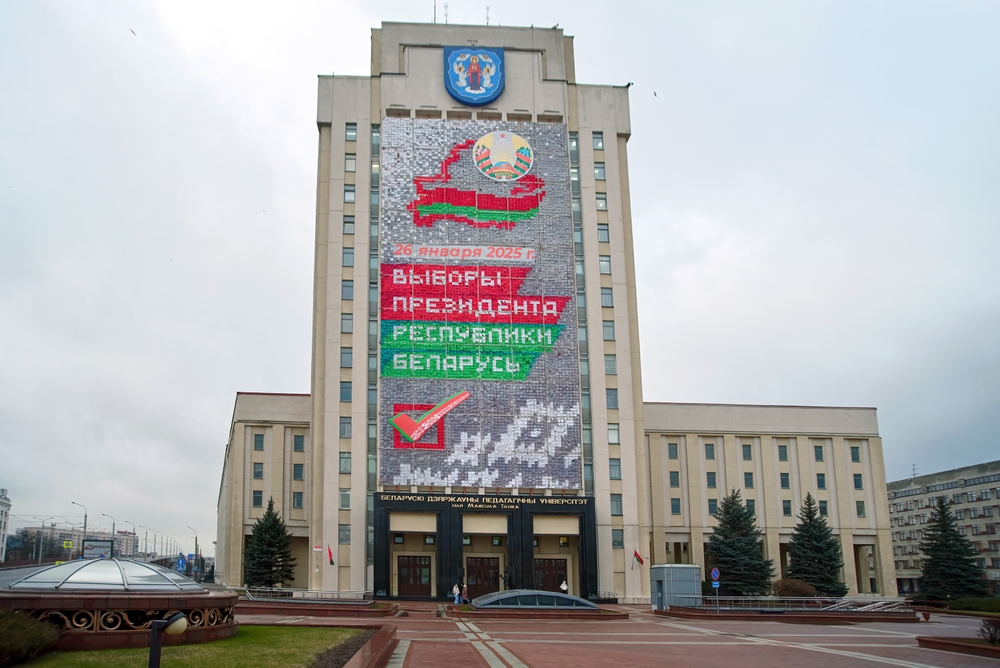
Five years after the 2020 protests, Belarus has entered a phase of authoritarian consolidation, further entrenching its overtly dictatorial character and deepening its dependence on Russia. Real power remains concentrated in the hands of the entrenched ruling elite, which has redoubled its efforts in the realms of propaganda, historical policy, and state ideology.
December 7, 2025 –
Maxim Rust
– 
AnalysisIssue 6 2025Magazine
This year marks five years since the 2020 protests in Belarus, once seen as a potential turning point in the country’s history. Instead, Alyaksandr Lukashenka’s regime not only survived but consolidated its control, learning key lessons from the mass unrest. Its endurance has rested on escalating repression, the loyalty of the security apparatus, and crucial Russian support – decisive in stabilizing the regime after 2020. Cohesion within the elite has also sustained this stability, though fractures could emerge amid economic crisis or Belarus’s direct involvement in the war in Ukraine. The regime’s resilience has further relied on the economy’s adaptability and renewed propaganda that reshapes historical narratives.
From a realist perspective, the years 2020–25 form a distinct electoral cycle: from the contested 2020 presidential vote to the “presidential elections in name only” which took place in January 2025. Viewing this period as a closed cycle reveals the evolutionary, not revolutionary, character of the regime’s transformation. The 2025 campaign was intended to complete this process – to finalize Lukashenka’s political consolidation. Its aim was to dot the i’s and cross the t’s of Lukashenka’s political consolidation.

This article is for members only
Join the New Eastern Europe community to unlock this article — plus enjoy full access to premium content, our digital archive, newsletter insights, and podcast updates.
Already a member? Sign in to read the full article.