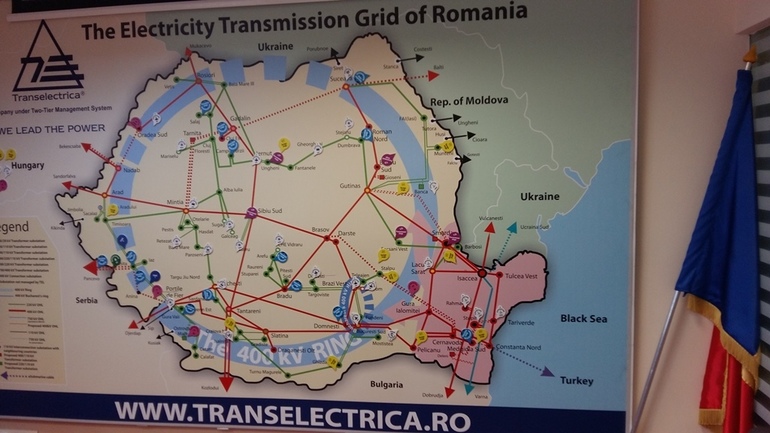
Romania has significantly increased energy exports to Moldova, which in turn supplies further to Ukraine, after Russian attacks on December 5-6 knocked out a major power plant in the Ukrainian energy system. Cross-border flows are at capacity, and Chisinau has requested emergency aid to avoid overloads, reports the publication Profit.ro.
At 8:30 a.m., Romania was exporting over 1.300 MW to the Republic of Moldova, mainly through the 400 kV Isaccea-Vulcănești line, but also through the 110 kV Huși-Cioara, Stânca-Costești and Țuțora-Ungheni connections, Transelectrica data shows. This high level of export is possible thanks to the consistent production from hydroelectric power plants and wind farms, which together provided more than half of the energy generated at national level.
At the same time, according to Moldelectrica, the Republic of Moldova was exporting almost 1.000 MW to Ukraine, continuing the flow pattern started after the attacks on Ukrainian energy infrastructure. Chisinau imports massively from Romania and transmits most of the energy to Kiev, where the deficit is severe.
“Following the attacks on the Ukrainian energy system, an important energy group was disconnected in the region related to the Republic of Moldova, and the interconnection lines are loaded close to the limit. Following the exceeding of the planned flow, Moldelectrica requested emergency assistance from Romania, as a precaution for the next few hours. This will maintain the safe operation of the electric power system and prevent possible overloads,” Moldelectrica said.
Emergency energy is not free. Emergency aid is billed at higher prices than those in the spot market.
In the past, massive outages have affected the Republic of Moldova, such as in November 2022, when Chisinau and other localities were left in the dark following strikes on the Ukrainian grid. Since 2022, the energy systems of Moldova and Ukraine have been operating in sync with the European grid, with the final decoupling from Russia and Belarus being decided immediately after the Russian invasion.