Facebook
Twitter
LinkedIn
Pinterest
Reddit
Email
Print
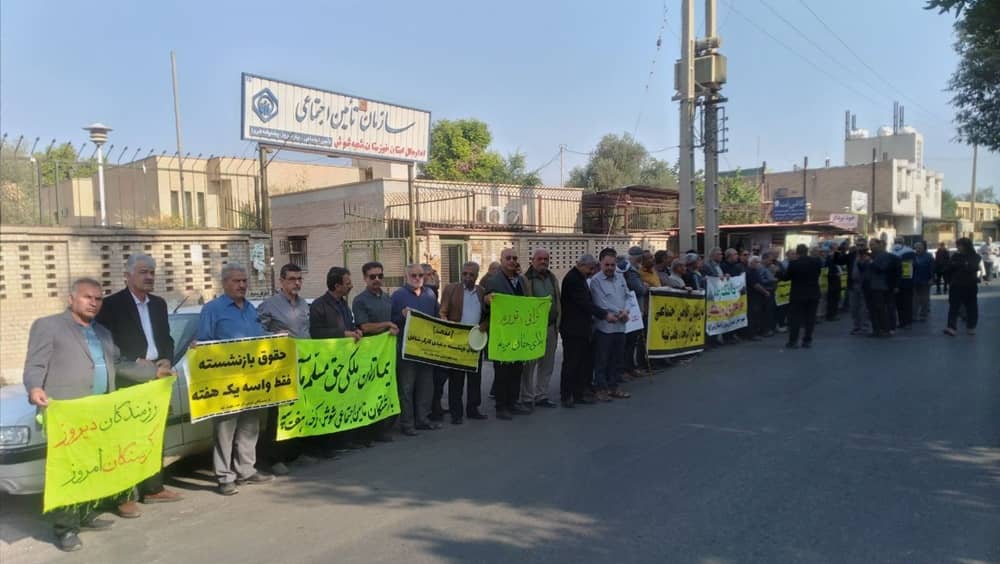 Retirees in Shush, southern Iran, held a protest rally on December 7, 2025
On December 7, 2025, known as “Student Day” in Iran, the clerical regime faced a convergence of dissent that stretched far beyond university campuses. While students in Tehran defied administrative suppression, retirees and rural communities across the country staged rallies protesting economic collapse and government plunder. From the capital to the southern city of Shush and the central province of Isfahan, the message was unified: the source of the nation’s misery lies within the regime itself.
Defiance at the University
At Allameh Tabataba’i University in Tehran, students organized an independent “Free Tribune” to mark the occasion. In an attempt to disrupt the gathering, university authorities blasted religious dirges over loudspeakers. However, the students ignored the noise, continuing their speeches and chanting, “Student freedom, Society freedom.”
Simultaneously, the Faculty of Literature released a statement condemning the recent wave of death sentences and heavy prison terms handed down to their peers. The statement declared that the university remains “the house of questioning,” vowing that the voices of imprisoned students would not be forgotten behind prison walls.
December 7—Tehran, Iran
Marking Student Day, students at Allameh Tabataba’i University rallied demanding freedom and rights, stressing that student struggles reflect society’s broader fight for liberty. They chanted: “Freedom for students, freedom for society.”#IranProtests pic.twitter.com/wuNsgFVplQ
— People’s Mojahedin Organization of Iran (PMOI/MEK) (@Mojahedineng) December 7, 2025
“The Enemy Is Right Here”
Coinciding with the student protests, retirees from the Social Security Organization and the steel industry held their fourth consecutive day of rallies in cities including Tehran, Ahvaz, Rasht, Kerman, and Shush.
In Isfahan, steel retirees marched to the Governor’s office. Their slogans directly challenged the regime’s foreign policy narrative. “Our enemy is right here; they lie saying it’s America,” the crowd chanted, alongside cries of “Death to this slavery.”
In Shush, protesters gathered outside the local Social Security office, stating, “Neither parliament nor government cares about us.” They warned that with empty tables, they would not cease their protests until their rights were met.
December 7—Ahvaz, southwest Iran
Social Security Organization retirees rallied against injustice, poverty, and soaring prices of basic goods. “We won’t live under oppression,” the protesters chanted.#IranProtests pic.twitter.com/aaY3OpPTiM
— People’s Mojahedin Organization of Iran (PMOI/MEK) (@Mojahedineng) December 7, 2025
Environmental Plunder in Esfarayen
The unrest extended to rural communities fighting for survival against state-backed exploitation. In the village of Ruyin, Esfarayen, residents gathered to protest the seizure of 3.5 hectares of natural resources and mountainsides by a regime-affiliated investor.
Villagers warned that the project threatens their water supply and agricultural livelihood. “Mountain means water, water means life,” they chanted, describing the land seizure as a “silent crime against Iran” and a massacre of nature committed by those claiming to develop the country.
December 7—Ruyin, Esfarayen, northeast Iran
Residents rallied at the district office against the transfer of 3.5 hectares of their mountains to an investor. They demand the contract be canceled, warning it threatens local water and livelihoods.#IranProtests pic.twitter.com/bbBD1oKlz8
— People’s Mojahedin Organization of Iran (PMOI/MEK) (@Mojahedineng) December 7, 2025
An Economy in Freefall
The driving force behind these diverse protests is an economy that has left 70 to 80 percent of the population—primarily workers and retirees—struggling for basic survival. Inflation has spiraled out of control, rendering recent wage negotiations meaningless.
Reports indicate that a worker’s salary of 20 million tomans, even with all benefits included, now covers only 10 days of living expenses. Basic staples like bread, eggs, and tomatoes have seen unregulated price hikes. The crisis has profound social implications, with statistics showing that 13 million Iranians over the age of 35 remain unmarried, largely due to financial inability to start a family.
The events of December 7 demonstrate that the divide between the Iranian people and the ruling regime is unbridgeable. Whether it is students refusing to be silenced by state propaganda, retirees rejecting the regime’s “anti-American” excuses for their poverty, or villagers defending their land from corrupt investors, the Iranian people have identified the root cause of their suffering. As the economic crisis deepens, these isolated streams of protest are increasingly merging into a singular, national demand for regime change.