Investigators in Spain are examining whether the country’s first African swine fever outbreak in more than 30 years began with a leak from one of the high‑security laboratories authorised to handle the virus.
Spain has deployed troops, tightened border checks and ordered a cull of wild boar in an effort to contain the virus, detected in the municipality of Bellaterra on the outskirts of Barcelona. Thirty thousand pigs from 39 farms in the affected area may be culled.
Officials initially speculated that the virus had started to circulate after a wild boar ate contaminated food from outside Spain, possibly a half‑eaten sandwich tossed from a lorry.
“The probability that the origin was cold meat, a sandwich or a contaminated product that arrived by road, is high because a lot of hauliers pass through Bellaterra,” Òscar Ordeig, the Catalonian agriculture minister, told local radio last week. “That hasn’t been confirmed, but it’s a hypothesis.”

If the virus spreads to domestic herds, it would be catastrophic, said the agriculture ministry
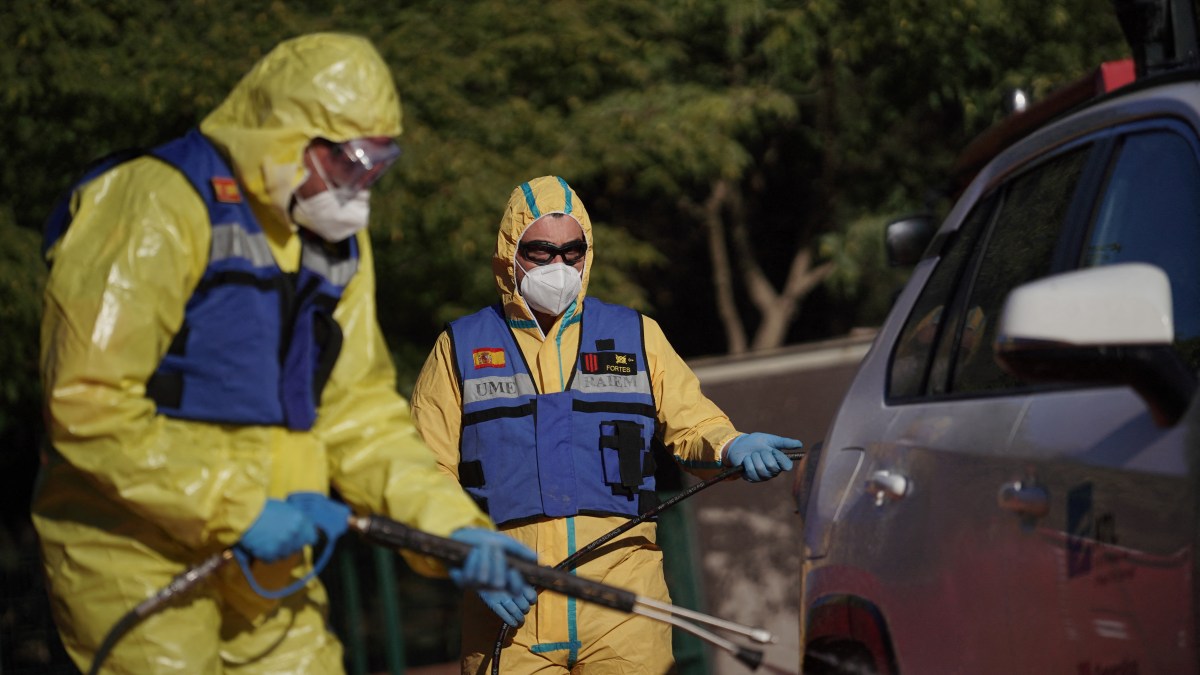
JAIME REINA/AFP/GETTY IMAGES
Jaume Bernis, of the COAG farmers’ union, said: “We have the most bio-secure farms in Europe … but we are paying the price for a wild boar that ate a sandwich.”
However, an agriculture ministry report notes that the strain of the virus is unusual in Europe and closely matches variants used in experimental work, according to La Vanguardia newspaper. The first wild boar carcass linked to the outbreak was found only a few hundred metres from a research centre.
The Catalan government has ordered an audit of all facilities that have worked with the pathogen and insisted that all hypotheses, from discarded sandwiches to a laboratory escape, remain open.
At least nine infected wild boar have been confirmed in the surrounding woodland and more carcasses are being assessed. The agriculture ministry has warned that a spread into domestic herds would be catastrophic.
The regional authorities have promised to cut booming wild boar populations by intensifying culls, restricting access to feeding grounds and deploying extra rangers, as well as army patrols in affected areas.
Spain is the world’s third‑largest exporter of pork and roughly a third of its markets have imposed some form of curb since the international authorities were notified of the first cases.
The UK initially ordered all fresh pork and certain derived products from Spain to be held at border posts before shifting to more targeted checks on consignments from restricted areas, which has nudged up the price of Spanish cured hams before Christmas.
African swine fever, though often lethal to pigs, does not infect humans and cannot be transmitted through properly handled meat. However, Spanish producers fear that economic restrictions may last for a year or more, as required by trading rules, even if the virus never crosses into a single commercial farm.