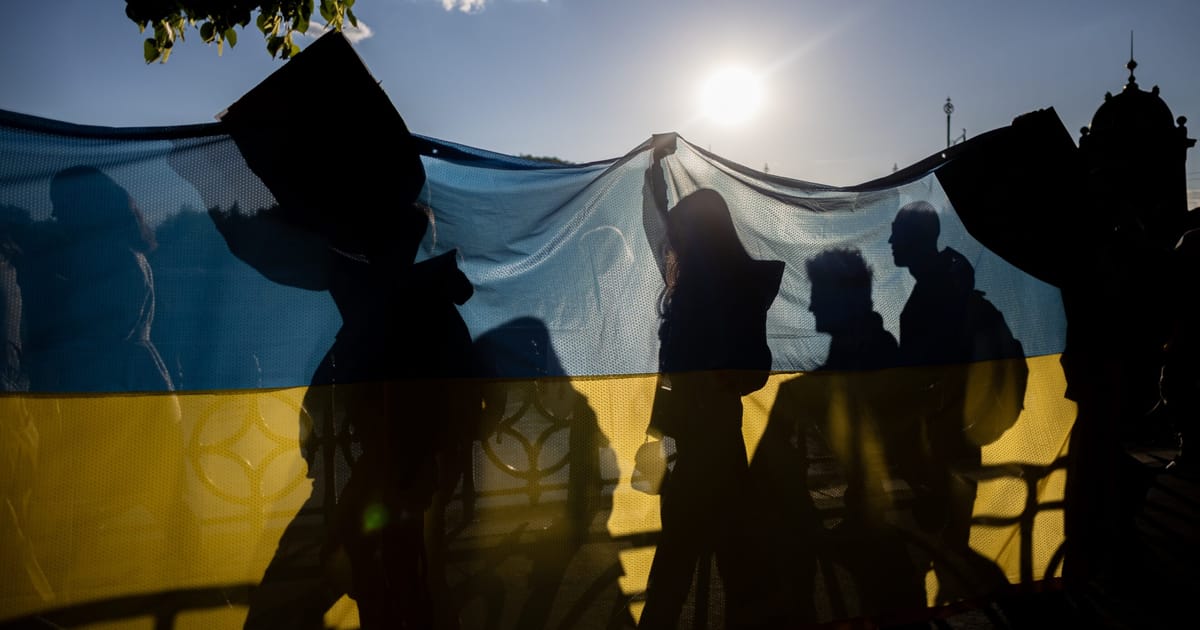
And dominating everything is security — though it’s less a “coalition of the willing” and more a “coalition of the surrounded.” Or, as one German security official, granted anonymity to speak freely, explained: “If the Americans are now acting as mediators between Russia and Europe, they no longer see themselves as partners within NATO.”
In practical terms, the U.S. is still the driving force behind the alliance, notionally at least. As another German military figure, also granted anonymity to express their views, put it: “The harsh truth is that Europe’s readiness level to combat any Russian aggression doesn’t yet exist. Until that time, we are reliant on the U.S. to act as a backstop.”
But that penny should have dropped last February, when U.S. Vice President JD Vance dropped his various bombshells at the Munich Security Conference, attacking European democracies, praising the far-right Alternative for Germany party and serving notice that the U.S. no longer felt beholden to past allegiances. The real surprise is that anyone’s been surprised by the Trump administration’s actions since then.
Even now, some are continuing to cling to the hope that this isn’t the united view in Washington, and that others within the administration still wield a certain influence. This isn’t how security planners in Germany or the U.K. see things, but it seems many politicians — and much of the public — are yet to be convinced of just how serious the situation has become.
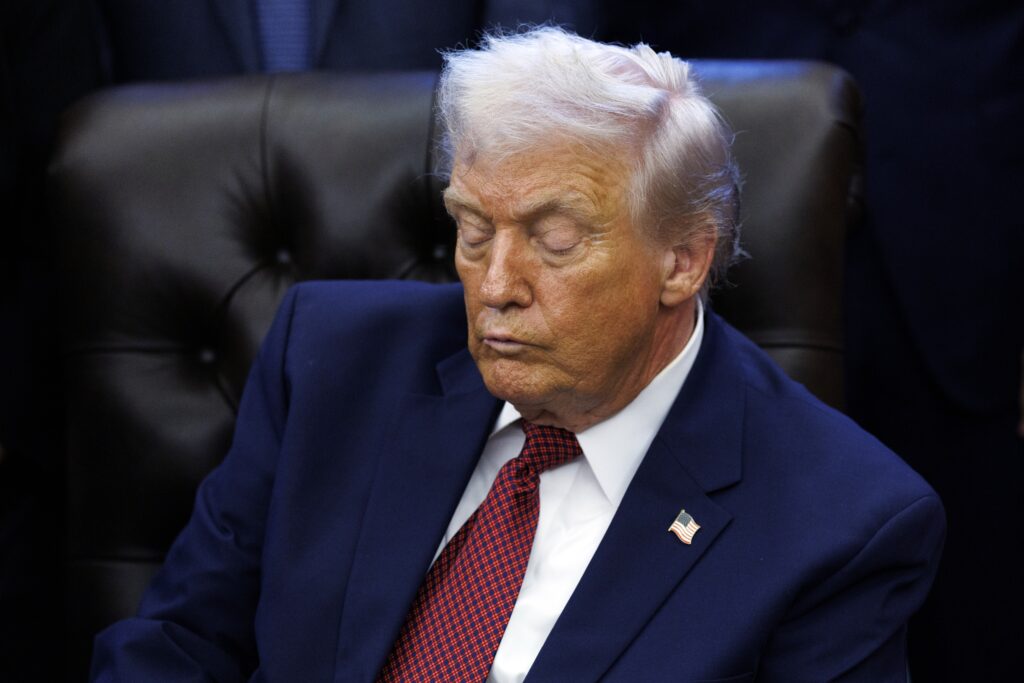 One minute U.S. President Donald Trump’s acting like his Russian counterpart Vladimir Putin’s emissary, the next he’s giving Ukrainian President Volodymyr Zelenskyy a reasonable hearing. | Pool Photo by Will Oliver via EPA
Their alarm will have been reinforced by the second Trump administration’s first National Security Strategy. Published only a few days ago, it condemns many of the liberal values underpinning European democracy, while praising the nativist, nationalist rhetoric of the far-right — and implicitly of Putin.
Previously, the dominant narrative around Europe was about German reluctance, whether brought about by postwar guilt and pacificism or complacency. But while that has been replaced by a new determination, exactly how deeply is it entrenched?