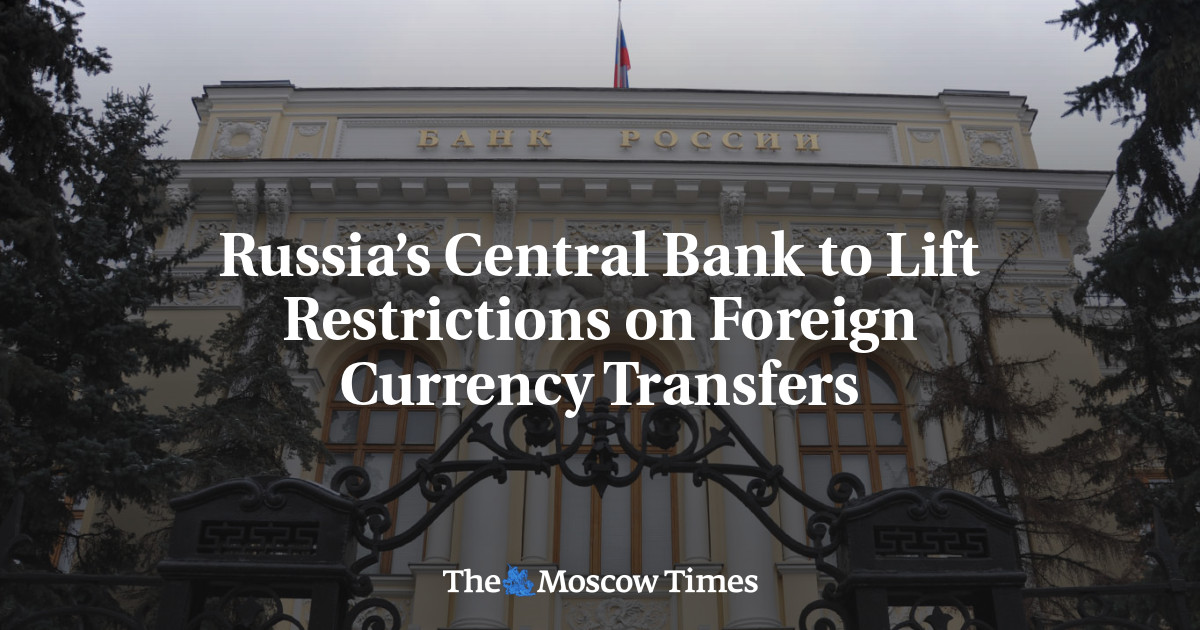
Russia’s Central Bank announced Friday that it will lift limits on money transfers abroad for Russians and non-residents from “friendly” countries starting next week, more than four months ahead of schedule.
The restrictions, meant as an emergency measure, were introduced in the early days of the full-scale invasion of Ukraine to shield Russia’s financial system from the impact of Western sanctions, a collapsing ruble and a rapid outflow of capital.
Under the previous rules, individuals could transfer up to $1 million per month through banks and $10,000 per month via money transfer systems. The limits were set to remain in place until March 31, 2026.
Transfers by Russians and non-residents of “friendly” countries will be unrestricted starting Dec. 8, the Central Bank said.
Citizens and legal entities from “unfriendly” countries — those that have sanctioned Russia over the war in Ukraine — will continue to face money transfer restrictions until at least June 7, 2026.
Banks in “unfriendly” countries can still carry out ruble-denominated transfers using correspondent accounts in Russian lending institutions.
Russia’s Central Bank said that the remaining limits do not apply to Russian-controlled foreign companies or foreign investors using special accounts established during the wartime capital controls, known as Type-I investment accounts.