(Illustration by American Red Cross/Illustration courtesy of Joanna Mae Marshallsay)
From War Relief to Lasting Partnership
(Illustration courtesy of Joanna Mae Marshallsay)
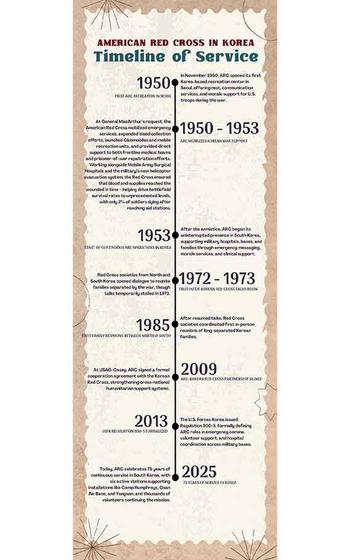
Seventy-five years ago, the American Red Cross (ARC) arrived in war-torn Korea to deliver emergency aid, reunite separated families, and uplift the spirits of service members within the United Nations Command during the Korean War. What began as a response to a crisis has blossomed into a powerful legacy of compassion, care, and unwavering service.
The ARC’s story in Korea actually began even earlier. During World War II, Korea was under the U.S. military government following liberation from Japanese rule. After World War II, the ARC provided humanitarian support and laid the groundwork for future operations. When governance transitioned to the Republic of Korea and conflict erupted in 1950, the ARC swiftly expanded its services, supporting U.S. and United Nations service members, organizing blood programs, and aiding civilians caught in the crossfire. Since then, for 75 years under Korean administration, the ARC has stood beside service members, families, and communities through every generation of change.
In the 1950s and 60s, ARC volunteers, affectionately known as Donut Dollies, crisscrossed the peninsula on dirt roads, carrying coffee, donuts, and news from home to isolated military personnel. They weren’t just delivering snacks; they were delivering connection. For many in uniform, far from family, the Donut Dollies became sisters, neighbors, and reminders that they were not forgotten.
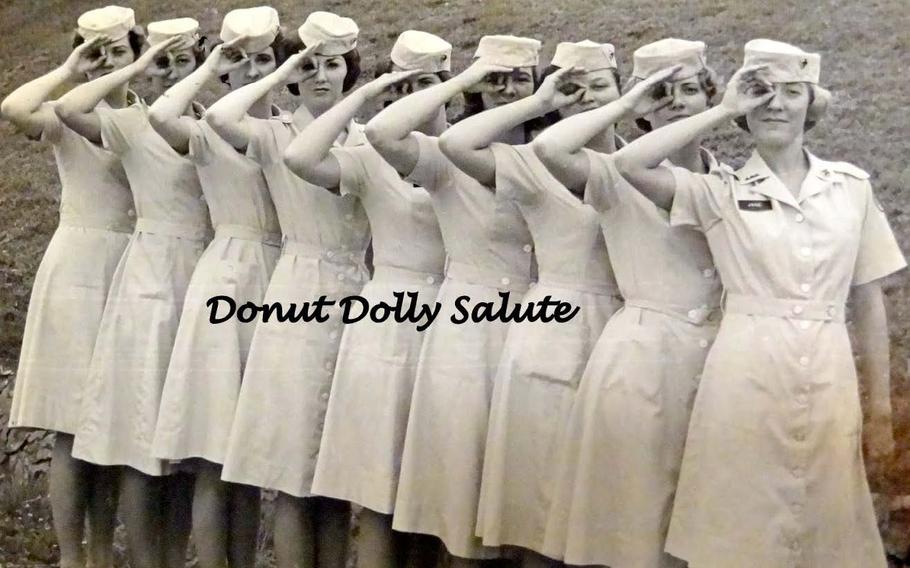
The “Donut Dolly salute” – though never official, it became a signature gesture of camaraderie and gratitude among American Red Cross workers and the troops they served. (Photo courtesy of Carolyn Chandler)
The Donut Dollies: Comfort and Connection During the Korean War
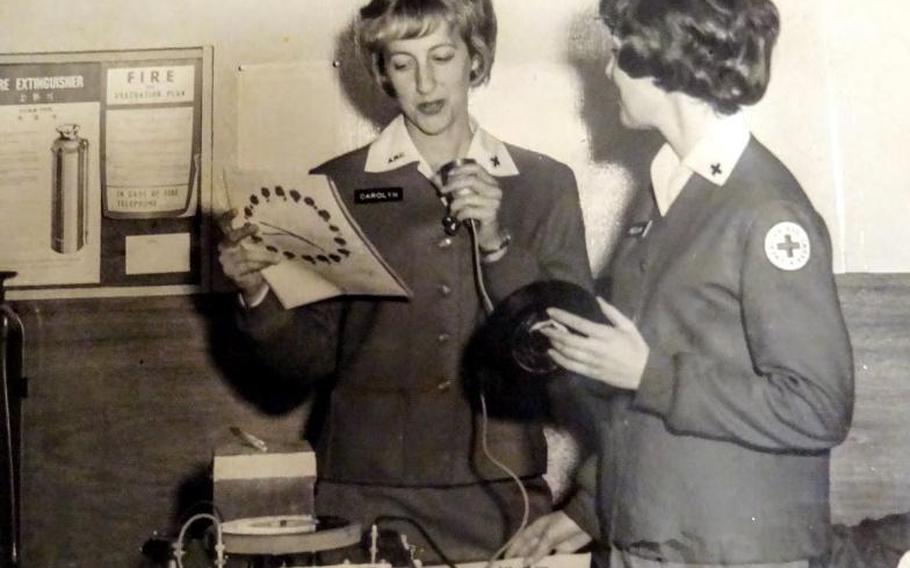
Carolyn and Nella are coordinating a music program in Korea. (Photo courtesy of Carolyn Chandler)
The Donut Dollie spirit itself stretches back even further, to World War II, when young women drove Clubmobiles across Europe, serving coffee and donuts to weary soldiers. In Korea, the Red Cross formalized this tradition through the Supplemental Recreational Activities Overseas (SRAO) program, where women created trivia games, history lessons, and morale-boosting activities. The program reached its peak in Vietnam (1965–1973) with more than 600 women deployed. Though the Donut Dollie program formally ended in 1973, their legacy lives on as a symbol of comfort, resilience, and human connection in the face of hardship.
A Legacy Built on Service: Then and Now
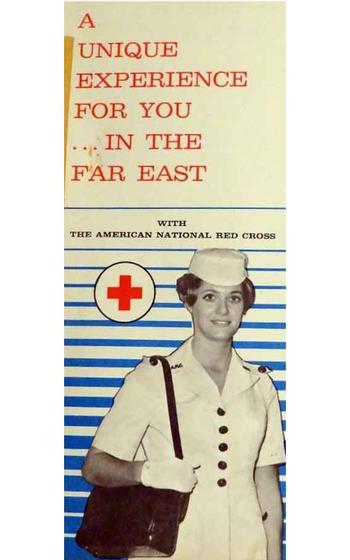
American Red Cross recruitment flyer, 1963. (Photo courtesy of Carolyn Chadler.)
The ARC has been part of life in Korea for 75 years, adapting its mission from the battlefields of the Korean War to the hospital corridors of today’s military bases. What unites every era is the same heartbeat of service: the ability to bring comfort, connection, and compassion when people need it most.
In 1963, Carolyn Chandler stepped off a plane onto Korean soil still healing from war. Dirt roads wound through villages, adobe houses baked under the sun, and Seoul was just beginning to take shape as a modern city. Chandler was one of the “Donut Dollies,” bringing an essence of home to Korea.
Each morning, she climbed into the back of a truck alongside Korean drivers and bakers. Together, they stacked trays of donuts that rattled as they drove over bumpy roads toward missile sites and isolated units. Soldiers would gather as soon as the truck pulled in. Carolyn recalls her conversations with troops “I wasn’t Carolyn then. I was the sister, the next-door neighbor, the girlfriend back home. I had suddenly become a touch of America for that young man,” she said. Her team worked alongside other volunteers, including medical professionals. Carolyn shared that one nurse put it best at the time:
“We treat the physical wounds, but you treat the morale and bring a touch of home.”
Cultural Exchange and Connection Across Borders
The work was creative and demanding. Carolyn and her peers designed recreational programs for troops from scratch. Making trivia games scribbled onto flip charts and history lessons crafted for young soldiers who knew little about the country where they served.
But beyond the programs, what lingered most were moments of cultural exchange. Carolyn remembered sharing a picnic with her Korean drivers and bakers: the Americans laid out hot dogs, the Koreans brought bulgogi and rice. In the end, the Koreans devoured the hot dogs while the Donut Dollies savored the bulgogi, laughing at how naturally they had swapped tastes of home.
Sometimes history itself crossed their path. When news broke of President John F. Kennedy’s assassination, Carolyn joined other volunteers traveling to Seoul for
memorial events. Along the road, Koreans lined the streets in silent mourning, their gestures of sympathy offering comfort to grieving Americans. It was a moment that etched itself into her memory, a reminder of the deep bonds forged between nations. Now in her eighties, Carolyn reflects on why these stories must be told.
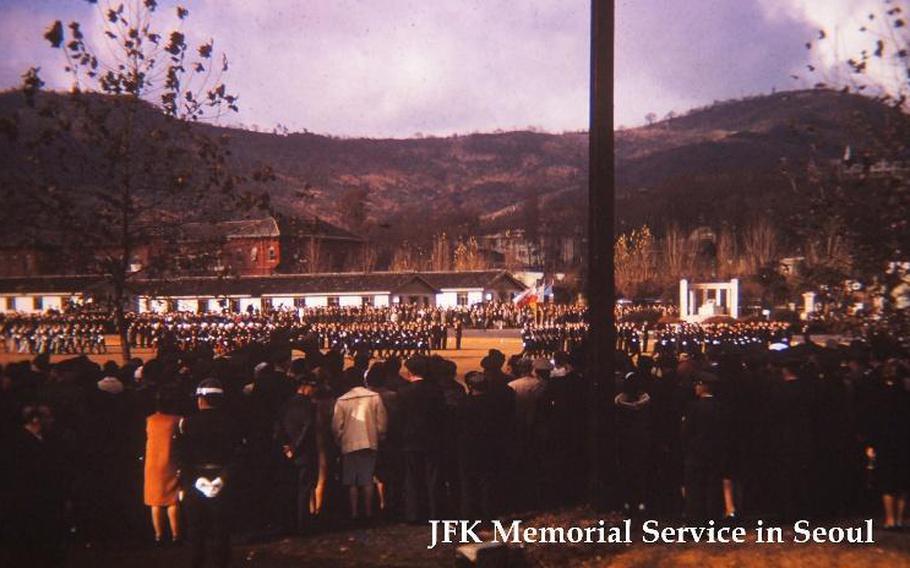
JFK Memorial in Seoul, South Korea. (Photo courtesy of Carolyn Chandler)
Continuing the Mission: Modern Volunteers Carry the Torch
Today, that spirit of voluntarism lives on in different areas in Korea, particularly in the hospital wings of Camp Humphreys, where nurses like Victoria Simionescu-Bloom, Grace Yi, and Seonha Kim carry the torch in new ways.
For Victoria Simionescu-Bloom, moving to Korea meant stepping away from her paid career, but it also opened the door to rediscovering purpose. “Joining the Red Cross has been the single most clarifying decision I have made,” she said. She began as a CPR and First Aid instructor before joining the Occupational Health Clinic at Brian D. Allgood Army Community Hospital, where she now works alongside soldiers, contractors, and civilians to promote preventive medicine and resilience.
Grace Yi, another Red Cross nurse volunteer, saw volunteering as a chance to finally act on a long-held desire to give back. Since 2024, she has lent her skills to school medical screenings and blood drives, but her favorite initiative has been “Random Snacks of Kindness” for hospital staff. These short snack visits broke the monotony of long shifts and reminded hospital staff that someone cared. Grace now also supports the operating room team as a circulator nurse, moving with quiet precision to keep procedures running smoothly.
Meanwhile, in the fast-paced Emergency Department, Seonha Kim blends her nursing expertise with her Korean heritage to bridge gaps in care. She often finds herself assisting Korean-speaking patients who struggle to explain their symptoms to English-speaking providers. By listening carefully and relaying their concerns, she not only improves the quality of their care but also reassures them in moments of fear and uncertainty. “Acting as that bridge helps not only improve the quality of care they receive but also reassures them that they are being supported,” Seonha explained.
All three nurses agree that the ARC fills critical gaps in the military bases in Korea. From shortages in medical staffing to the emotional toll of living far from home, volunteers provide continuity, compassion, and skilled hands where they are needed most. Grace Yi reflects on this role as “upholding the mission of serving the community with empathy and dedication.” Simionescu-Bloom calls it being “Called to serve all.” While Seonha Kim chose another word: “Devotion. The Red Cross is always there… Ready to step in when help is needed most.”
Supporting Military Families and Communities Across Korea
Beyond the hospital walls, the ARC stations in Korea play an equally vital role in community life. Six stations across the peninsula support military families through emergency communication services, resiliency programs, and deployment support. ARC volunteers organize school health screenings, blood drives, CPR and First Aid classes, and family workshops that strengthen readiness and connection. Programs like animal visitation, mindful movement classes, and youth clubs provide emotional relief for families navigating the stresses of deployment and life overseas. These events help remind families that they are seen, supported, and never alone.
The Enduring Spirit of Service
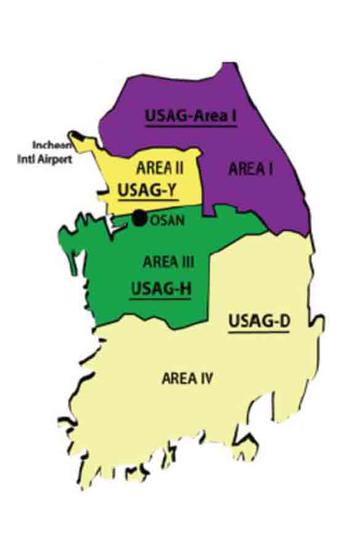
South Korea map (Map courtesy of the Eighth Army/Source: https://8tharmy.korea.army.mil/site/newcomers/korea-army-garrisons.asp)
Today, ARC continues to stand strong at military installations across South Korea, inspiring service members, their families, and communities through the dedication of volunteers. From battlefield support to hospital corridors, and from the Korean War to the COVID-19 pandemic, the ARC embodies a spirit of service that heals, connects, and empowers.
As a nurse and current ARC volunteer, I see that legacy every day. Whether supporting hospital staff, serving military families, or helping in community programs, I feel connected to those who came before me: nurses, Donut Dollies, and volunteers who showed up in moments of need with courage and compassion. Their stories remind me that our work is part of something much larger: a tradition of service that stretches back decades, yet still finds meaning in each life touched today.
A Tradition That Endures
From Carolyn Chandler’s days on dusty roads with boxes of donuts to today’s volunteers teaching CPR, circulating in operating rooms, bridging language barriers in the ER, and running programs for schools and families, the ARC in Korea has stood beside military communities for generations. The names, faces, and uniforms may change, but the mission remains the same: to care, connect, and serve. Or, as Chandler reminded, the heart of service is simple: “Embrace your time so you don’t regret it later.”
75 Years Strong and Still Serving
For seventy-five years, the ARC in Korea has stood as a bridge between nations, generations, and hearts. From the dusty roads of the 1950s to the bustling bases of today, its volunteers have shown what it means to serve with compassion and courage. Their work has carried comfort to the wounded, connection to the lonely, and hope to those far from home.
As the ARC celebrates this milestone, its story is still being written by every volunteer who teaches a class, comforts a patient, or offers a helping hand in a moment of need. Whether you’ve just arrived on the peninsula or have called Korea home for years, there’s a place for you in this tradition of service.
Join the legacy. Volunteer with the ARC and be part of the next 75 years of service and solidarity in Korea.
About the Author
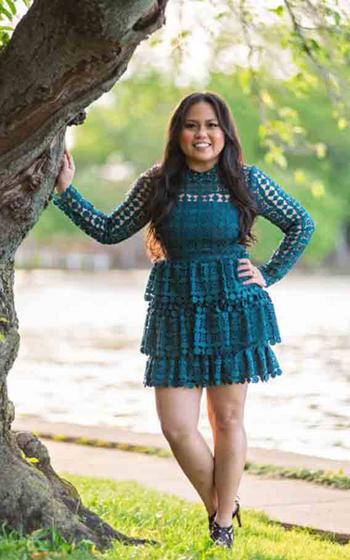
Joanna Mae Marshallsay (Photo courtesy of Joanna Mae Marshallsay)
Joanna Mae Marshallsay is an Air Force wife and nurse leader stationed at Camp Humphreys, South Korea. With a Master’s in Nursing Administration, she volunteers with the American Red Cross and Brian D. Allgood Army Community Hospital, and serves as a board member in Rootline Community Initiative, continuing her dedication to service and community care. Recognized by WJLA ABC7 News and the Gyeonggi Province Government for her philanthropic and cultural contributions, she shares her love for travel, food, and expat life on social media. Follow here at: @annaojoanna and @jojo_and_andrew_eat
Sources
Descendants of Korean War. (n.d.). The American Red Cross in Korea, 1950 – 1953. Retrieved from http://descendantsofkoreanwar.org/the-american-red-cross-in-korea/
Korean Broadcasting System (KBS). (n.d.). Korea Moment [in English]. Retrieved from https://rki.kbs.co.kr/service/contents_view.htm?lang=e&menu_cate=history&id=&board_seq=275254&page=3&board_code=koreamoment
Red Cross. (n.d.-a). The Korean War and the American Red Cross [PDF]. American National Red Cross. Retrieved from https://www.redcross.org/content/dam/redcross/National/history-korean-war.pdf
Red Cross. (n.d.-b). A Brief History of the American Red Cross [PDF]. American National Red Cross. Retrieved from https://www.redcross.org/content/dam/redcross/National/history-full-history.pdf
U.S. Forces Korea. (2013, June 26). USFK Regulation 930-5: American Red Cross Program and Personnel in Korea [PDF]. Retrieved from https://www.usfk.mil/Portals/105/Documents/Publications/Regulations/USFK-Reg-930-5-American-Red-Cross-Program-and-Personnel-in-Korea.pdf
U.S. National Archives and Records Administration. (n.d.). Reference Information Paper 103: The Korean War — A U.S. Army Perspective [PDF]. Retrieved from https://www.archives.gov/files/publications/ref-info-papers/rip103.pdf
U.S. Department of State / UPA‐CIS. (n.d.). South Korea, 1950–1957 [PDF]. Retrieved from https://www.lexisnexis.com/documents/academic/upa_cis/2778_SFKorea19501957.pdf
U.S. Army (The Torture Database). (n.d.). Army Regulation 930-5: American National Red Cross Service Program and Army Utilization [PDF]. Retrieved from https://www.thetorturedatabase.org/document/army-regulation-930-5-american-national-red-cross-service-programandarmyutilizationsearch_args=page%3D2%26filters%3Dtds_cck_field_doc_release_date%3A%5B20041231T00%3A00%3A00Z+TO+20050101T00%3A00%3A00Z%5D%26release_date_from%3D12%2F31%2F2004%26release_date_to%3D12%2F31%2F2004%26advsearch%3D1&search_url=search%2Fapachesolr_search
8th U.S. Army / U.S. Army in Korea. (n.d.). U.S. Army Garrisons in Korea. Retrieved from https://8tharmy.korea.army.mil/site/newcomers/korea-army-garrisons.asp