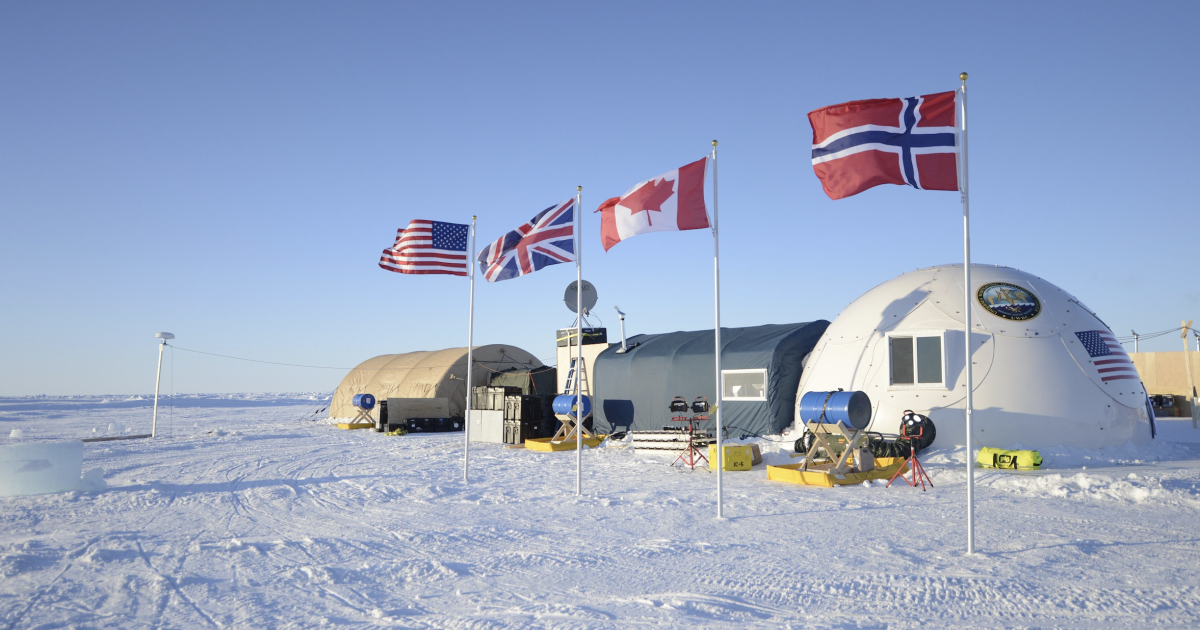
“The Arctic, especially for Alaska and U.S. High North interests, is likely to be part of wide-ranging requirements involving U.S. national defense, energy efforts, and geopolitical interest,” he continued.
Engagement beyond North American Arctic
Still, the omission raises questions about U.S. posture outside the North American Arctic – the Nordic and Russian Arctic zones — which may fall outside the narrower hemispheric interpretation. As Pincus noted, “other parts of the Arctic may not be of particular interest to this administration.”
“The emphasis on the Western Hemisphere underscores what has long been true about the Arctic: there are major differences between the North American Arctic (in the Western Hemisphere), and the Russian Arctic, and the Northern European/Nordic Arctic,” Pincus concluded.
Furthermore, one area where U.S. engagement may be lacking posture could be Antarctica.
No withdrawal
“Should Washington also seek to do this in Antarctica – this will be a more challenging task as the west has had its eyes shut to entrenched Chinese power across the unowned continent,” Buchanan asked.
While the 2025 NSS drops a standalone Arctic chapter, it does not necessarily signal U.S. withdrawal from the region but rather a reframing.
The renewed icebreaker build-up and the ICE Pact, together with a hemispheric-first strategic outlook, suggest Washington intends to maintain robust engagement in the North American Arctic, even as its focus (for now) appears to narrow.