
Photo: Michal Sladký, Czech Radio
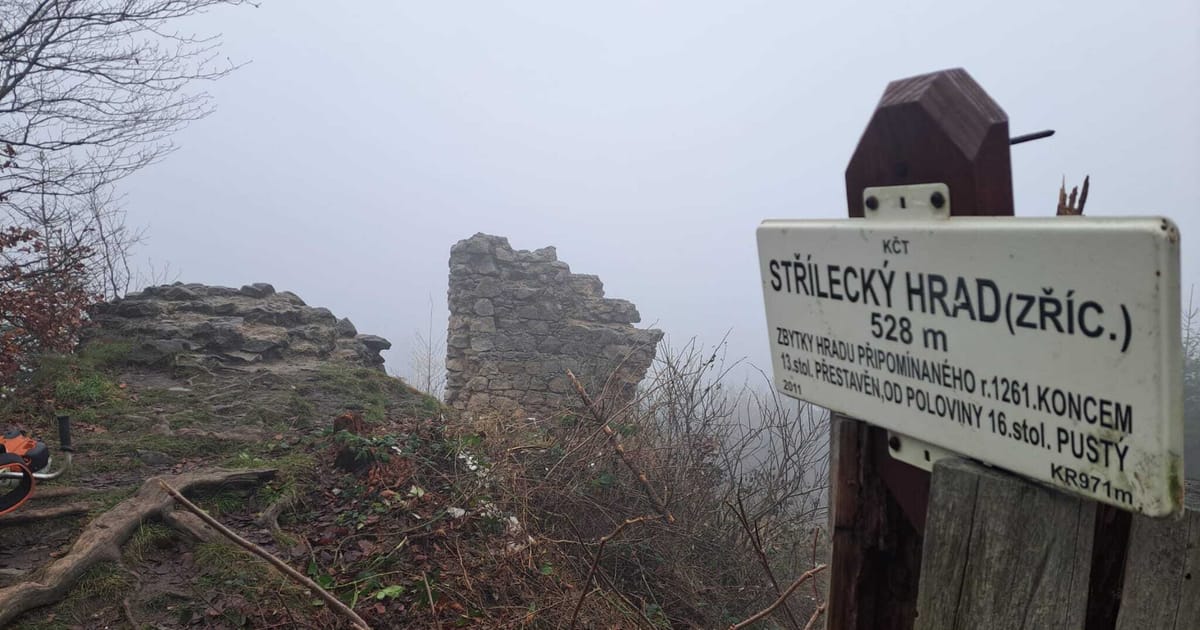
Around twenty volunteers are busy cleaning up the surroundings of the Střílky Castle ruins in the Kroměříž region. The entire area must be freed of overgrowth so that experts can explore it with modern technology. The first mention of Střílky dates from the thirteenth century. It was a fortified stronghold guarding trade routes. Today the castle is in ruins, many of the walls have been dismantled and much of the base structure lies buried underground.

Photo: Michal Sladký, Czech Radio
Researchers plan to use ground-penetrating radar and drones equipped with LIDAR sensors capable of creating an accurate 3D model of the structure and surrounding terrain. The project’s initiator and founder of the Facebook group Chřiby, Tomáš Pjevič explains.
“Through the survey, we can uncover a bit more of the castle’s original form, because it survived only as a ruin and has been abandoned since the fifteenth century. During the Thirty Years’ War, it was demolished on the emperor’s orders so that Swedish troops wouldn’t find shelter there,” he says.

Photo: Michal Sladký, Czech Radio
Only three-meter-high remnants of the castle tower have survived to this day. However, until around 1979, massive stone walls still stood on the site—walls that were later torn down by forest workers and possibly individuals who wanted the stones for their own building activities, a great historical loss, given the fact that the ruins have been declared a cultural monument.

Photo: Michal Sladký, Czech Radio
Using a ground-penetrating radar and drones, experts aim to determine the exact layout of the fortress and uncover possible underground spaces. Pjevič says he has one secret hope –that the research may bring to light a chapel that has been buried for centuries.
“This was one of the largest castles in the Chřiby region, and no major archaeological research has been carried out here yet. Using unique georadar techniques, we’d like to reveal more of the original fortification’s layout. It should be possible to map the underground cellars. It is not like we are expecting to find chests of gold or silver coins. Our biggest hope is that we will be able to determine where the castle chapel might have stood—it’s mentioned in old documents. It would be a major success if we managed to locate it,” Pjevič says.

Photo: Michal Sladký, Czech Radio
Unearthing a chapel that may have lain buried for half a millennium would be a fantastic discovery that would undoubtedly shed new light on the castle’s history.
The research itself will be carried out in the coming days by a team from the Faculty of Sciences at Palacký University in Olomouc. Detailed results could be ready within a matter of weeks.