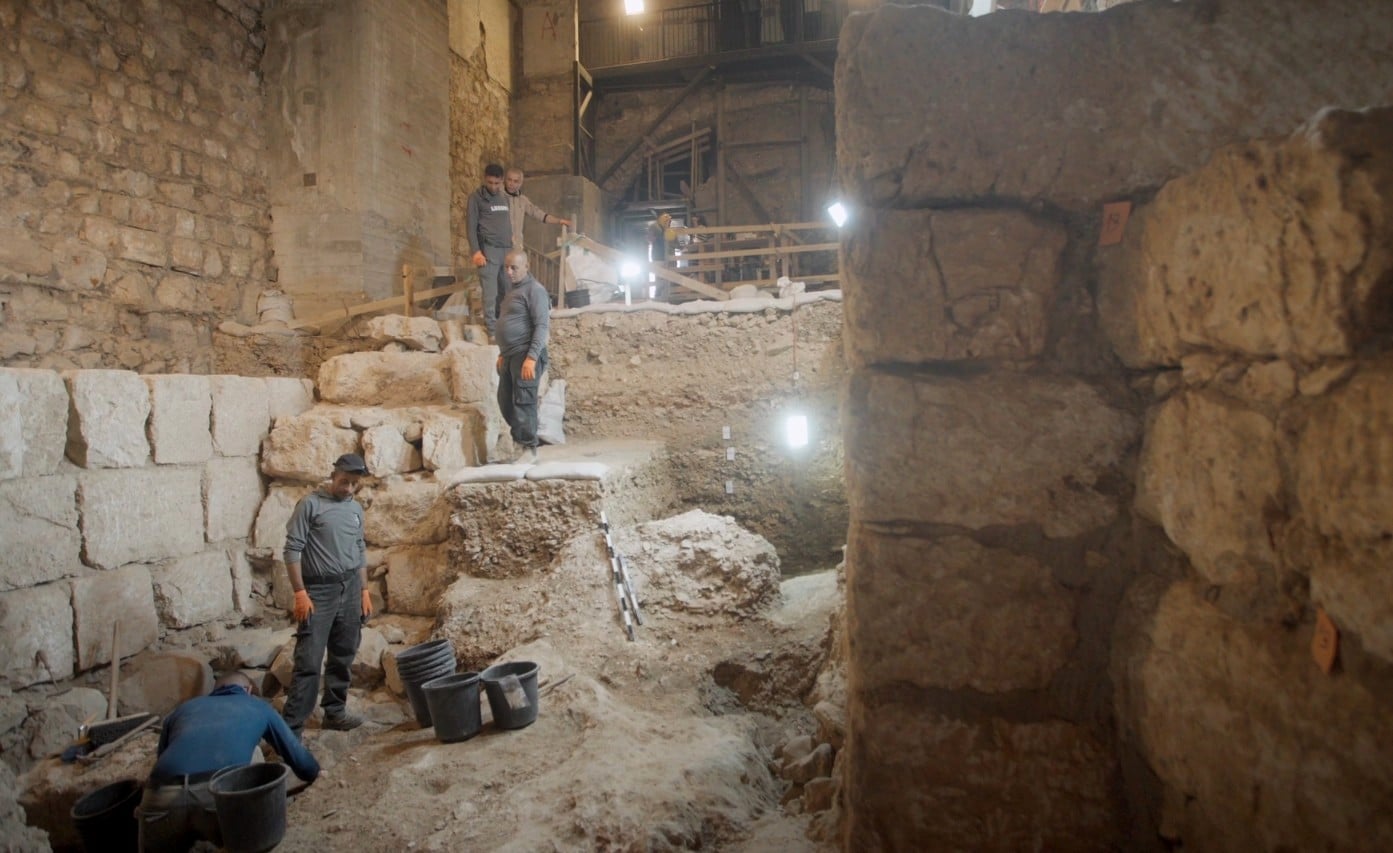
New research sheds light on the millennia-old mystery of why Jerusalemites from 2,100 years ago carefully dismantled a large fortification wall — more massive than the current walls of the Old City — and buried the spot under a kingly palace.
An impressive section of Jerusalem’s fortification wall from the second century BCE has been uncovered on the grounds of the Tower of David complex in the Old City, the Israel Antiquities Authority (IAA) and the Tower of David Jerusalem Museum announced on Monday. The remains, over 40 meters (about 130 feet) long and about five meters (16 feet) wide, were found in the area known as the Kishle complex, which during the British Mandate was used as a prison, including for members of the Jewish underground.
Around 134 BCE, three decades after the Hanukkah story and establishment of the Hasmonean dynasty, Jerusalem was attacked again by another Greek king named Antiochus, who bore the same name as the Hanukkah villain. According to the first-century CE Roman-Jewish historian Flavius Josephus, to save Jerusalem, the Hasmonean leader John Hyrcanus I agreed to destroy the city’s fortifications and pay Antiochus VII Sidetes 3,000 talents of gold that he withdrew from King David’s sepulchre.
“He broke down the fortifications that encompassed the city. And upon these conditions Antiochus broke up the siege, and departed,” Josephus writes in the 13th book of “The Antiquities of the Jews.” (8:3)
Josephus’s narrative offers a possible explanation for the historical destruction of the remains of the wall revealed in the excavation, Dr. Amit Re’em, IAA excavation co-director and chief archaeologist for the Jerusalem District, told The Times of Israel.
Get The Times of Israel’s Daily Edition
by email and never miss our top stories
By signing up, you agree to the terms
“What we saw in the excavation, and this is really interesting, is that the wall, this massive fortification, was deliberately destroyed to the ground, to the base of the wall,” Re’em said in a telephone interview. “Only the stump of the wall survived. This was no random destruction, not the aftermath of some kind of huge battle or of time passing. So the big question is who did it?”
In the 1980s, hundreds of catapult stones, arrowheads, slingstones, and lead bullets were found in an excavation in an area adjacent to the wall, which researchers interpreted as evidence of Antiochus VII’s siege.
Re’em and his team offered another possible interpretation for the intentional destruction of the wall. Since the section they uncovered stood exactly where King Herod would build his palace around a century after Hyrcanus ruled over Jerusalem, it is possible he ordered the wall to be torn down.
“We know that the private royal palace of King Herod stood in the area of today’s Jaffa Gate, the Tower of David, and the Armenian Quarter, as is well described in the writings of Josephus,” Re’em said.
“Our wall was deliberately buried deep inside the foundations of Herod’s palace, and the question is, [if it still stood] why couldn’t King Herod use this massive wall as part of his palace or his city wall?” he added. “I think the solution might be that King Herod in those days wanted to deliver a message to the Jewish public: no more Jewish kings, no more Hasmonean dynasty. I’m here.”
Herod, who ruled over Judea as a client king of the Roman Empire, descended from Idumaean converts to Judaism on his father’s side, while his mother was an Arab of likely Nabatean origin.
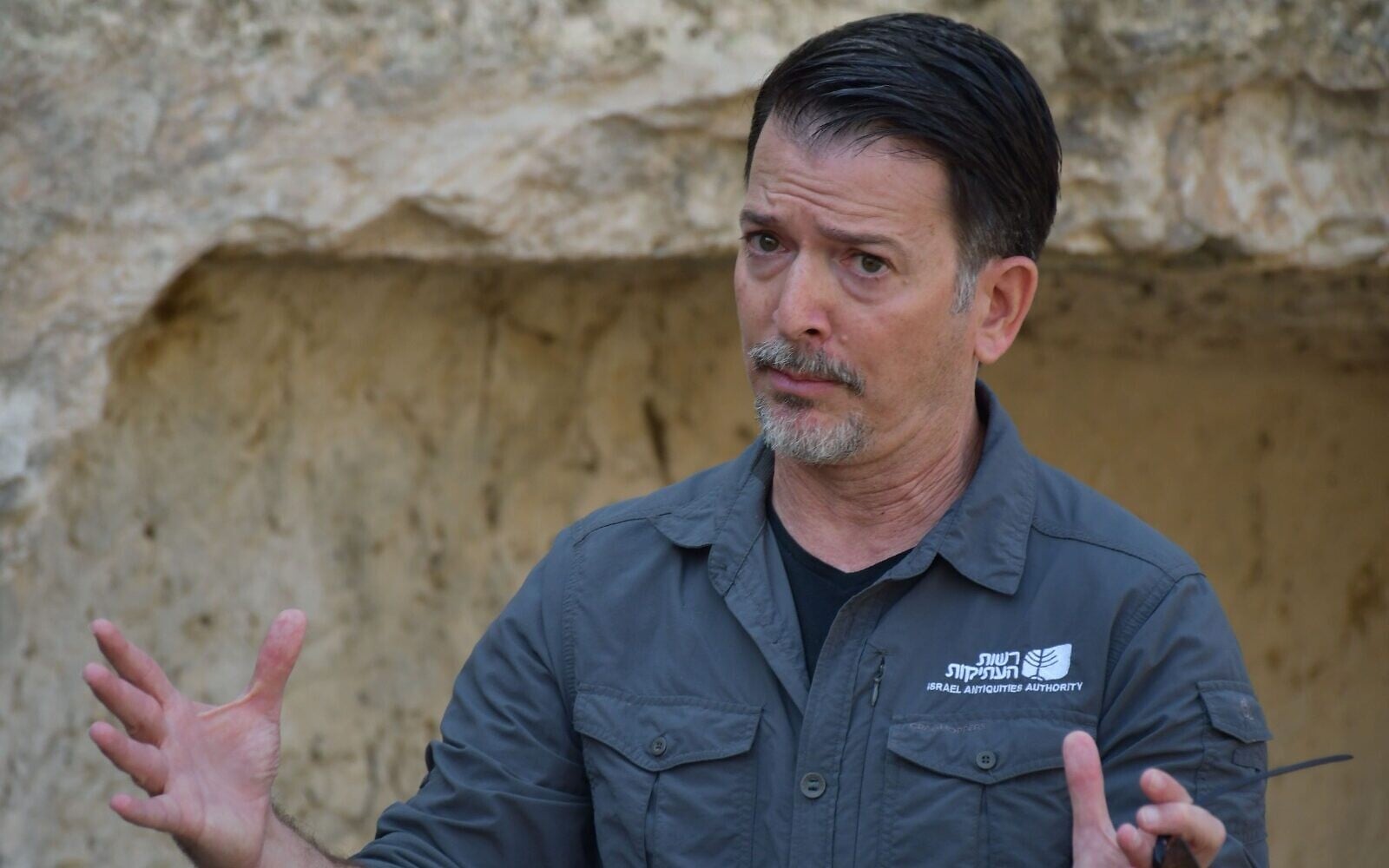
Israel Antiquities Authority archaeologist Dr. Amit Re’em. (Emil Aladjem, Israel Antiquities Authority)
According to Re’em, the archaeologists dated the wall to the Hasmonean period based on the archaeological context.
“First of all, the wall is made of very typical stones that are well seen in Hasmonean buildings in Jerusalem and all over Israel, and the building technique is also typical [of this period],” he said. “In addition, we have small finds like ceramics and coins from the Hasmonean period that relate to this wall. Another argument is the stratigraphy of the find: The wall is locked under Herod’s Palace, which means it predates it, and above remains from the First Temple period [1200-586 BCE].”
At the same time, the researchers were unable to obtain suitable samples for radiocarbon dating.
Often, organic remains such as seeds, straw, or similar materials that allow for dating walls or buildings are found trapped in the mortar or cement used to build the structures. However, Re’em explained that the Hasmonean wall was erected using a dry technique, without cement or mortar.
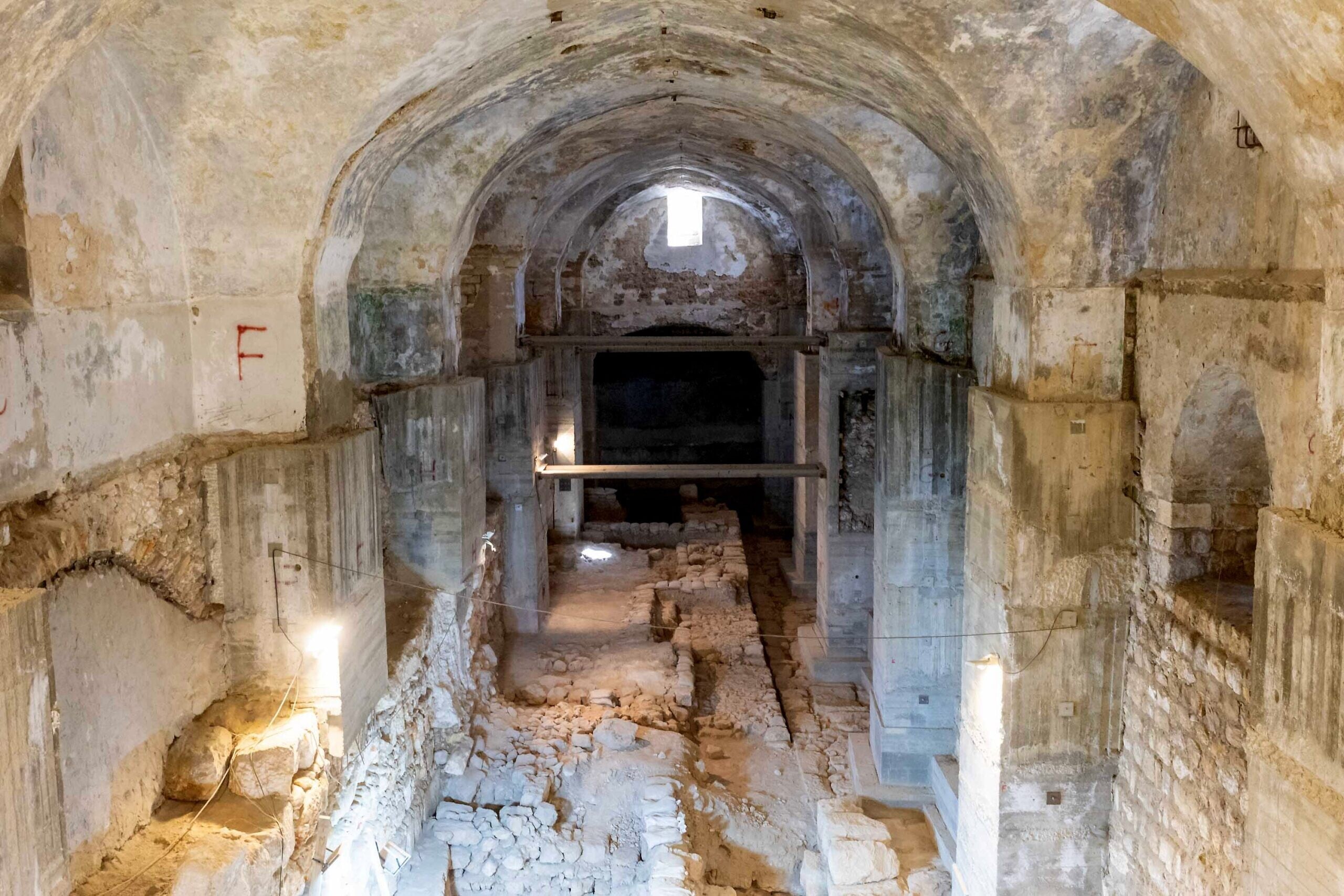
Archaeologists uncover a section of the Jerusalem wall built in Hasmonean times (second century BCE) in the complex of the Tower of David Jerusalem Museum in the Old City, in a discovery announced on December 8, 2025. (Dor Pazuelo/Tower of David Jerusalem Museum)
Re’em believed that, given the structure’s size, the wall must have been built when the Hasmonean dynasty was already well established, not earlier than around 140 BCE.
“Josephus described this fortification very accurately, with its towers and gates,” he said. “A width of five meters [16.5 feet] is really enormous, and we believe the original height of the wall might have been higher than the current Ottoman wall.”
While other parts of the Hasmonean wall had been previously uncovered in the city, the new find is especially significant in light of its size and state of preservation, and also because it allowed archaeologists to see the full width of the structure, according to Re’em.
“In most parts, only the outer face of the wall is exposed, but here we found the inner part, which is very interesting for research,” he noted.
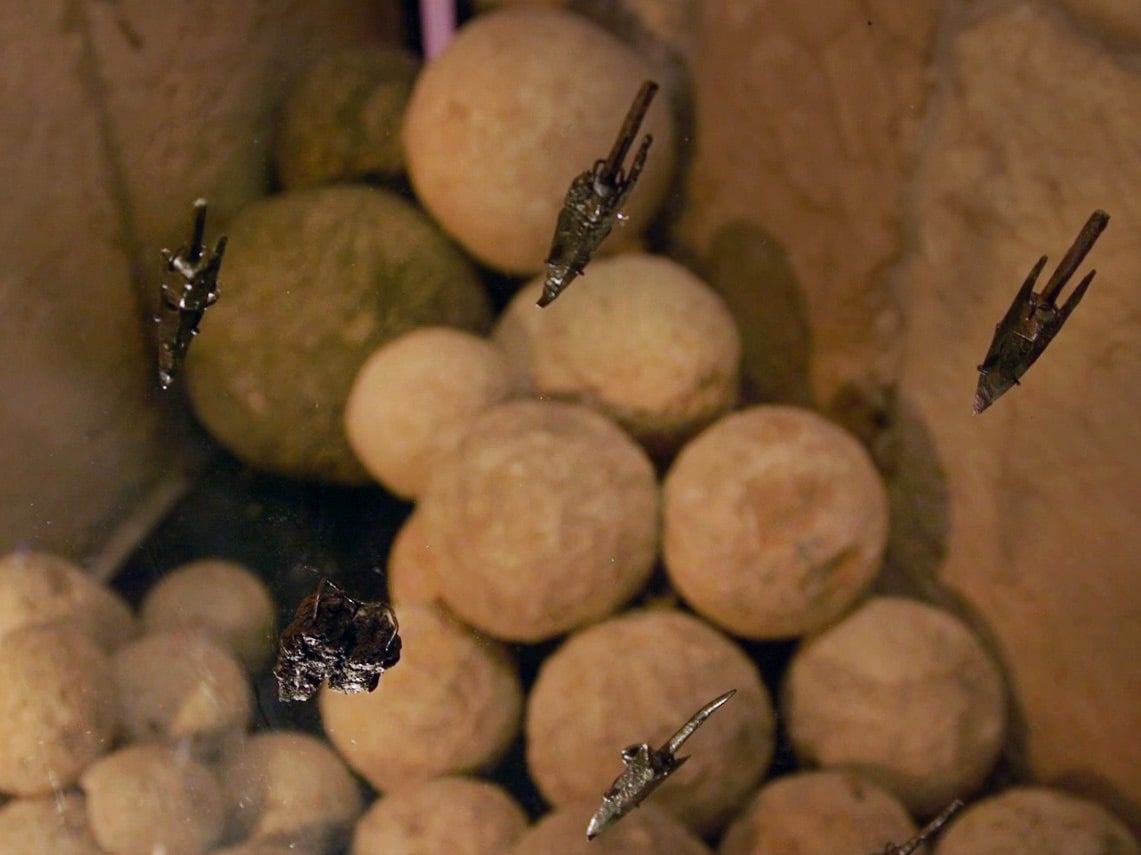
Hasmonean-period arrowheads and catapult stones on display at the Tower of David Jerusalem Museum. (Emil Aladjem, Israel Antiquities Authority)
During the excavation, the archaeologists also uncovered a section of an older wall, which they believe dates back to the First Temple Period.
“For this wall, we are conducting radiocarbon dating; the research is still in progress,” Re’em said.
The excavation was conducted as the Tower of David Museum prepared to open the Kishle complex as its new Schulich Wing of Archaeology, Art, and Innovation.
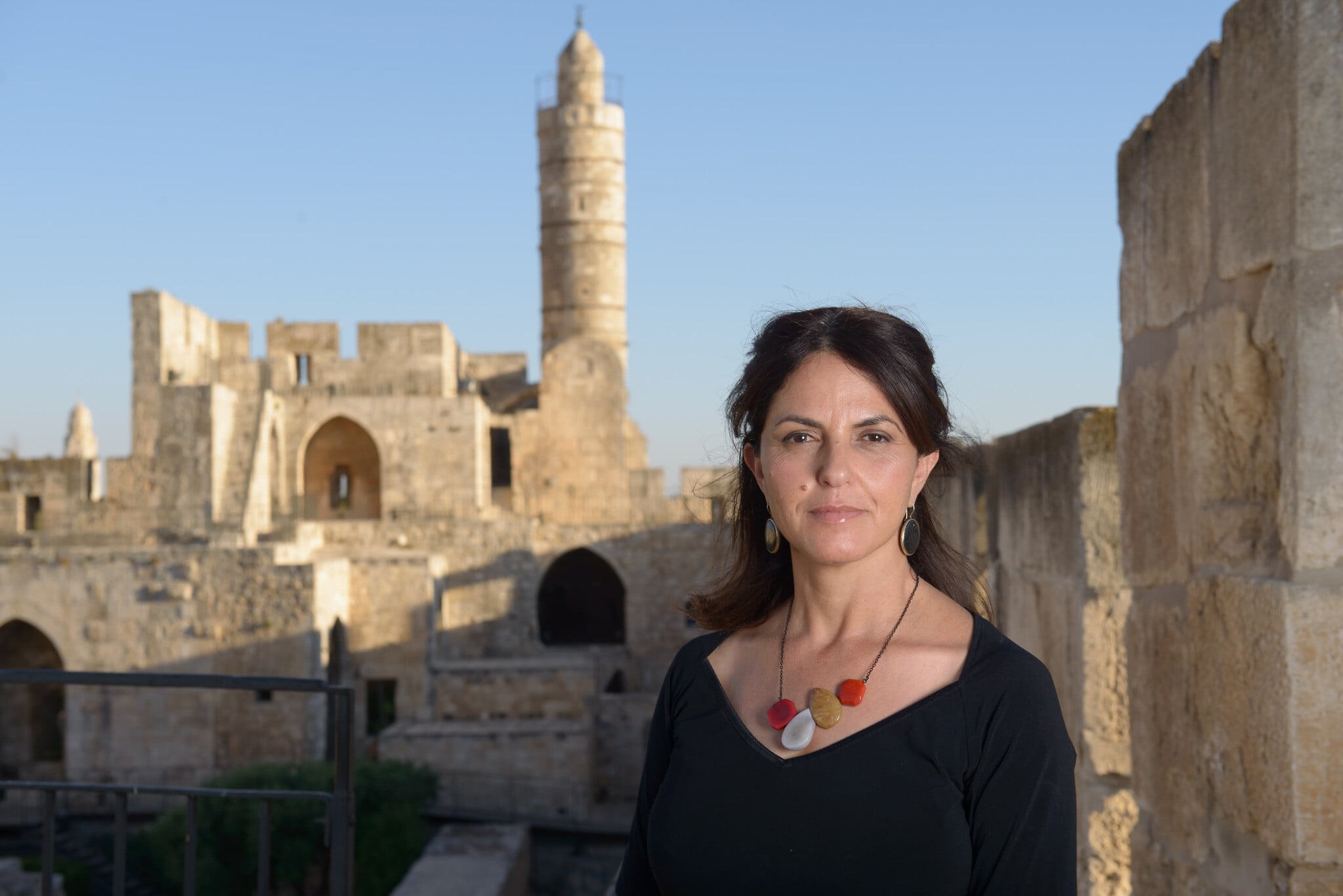
Eilat Lieber, director and chief curator of the Tower of David Jerusalem Museum. (Yuval Yosef/Tower of David Museum)
“We are committed to preserving this impressive and unique sight, and allowing the general public to experience this tangible link to Jerusalem’s past spanning thousands of years,” Eilat Lieber, the museum’s director, said in a statement. “In the new wing, visitors will stand on a transparent floor above these ancient stones, and, together with interpretations of contemporary artists, this wing will bring a new connection to the history and heritage of the city.”