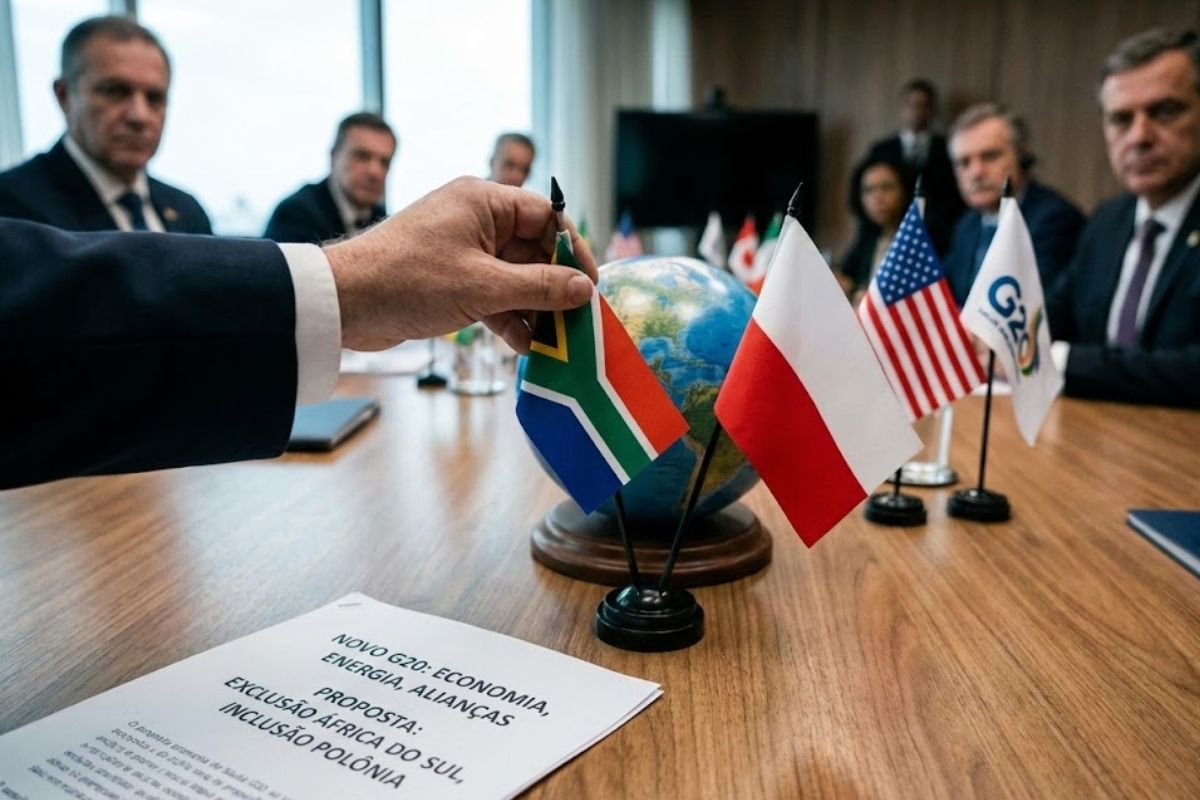
The Trump administration has laid bare its strategy for leading the G20 by to confirm that South Africa will not be invited. for the group’s upcoming meetings, Poland will be treated as a new member of the circle of the world’s largest economies. The message is clear: Trump wants to redesign the G20 to reflect the interests of the United States., selecting allies and priorities.
The decision is the latest point in a crisis that began at the G20 summit held in Johannesburg at the end of November 2025, which was boycotted by Washington. Since assuming the rotating presidency of the bloc in early December, The Trump administration began to speak openly about a “New G20” focused on the economyenergy and alliances more aligned with the American agenda., leaving environmental and social issues in the background.
Trump’s boycott of South Africa reaches the G20.
According to the White House, the veto against South Africa is part of a broader strategy of diplomatic pressure. Trump accuses the South African government, without presenting evidence, of persecuting the white minority. and to promote land expropriations without compensation.
See also other features
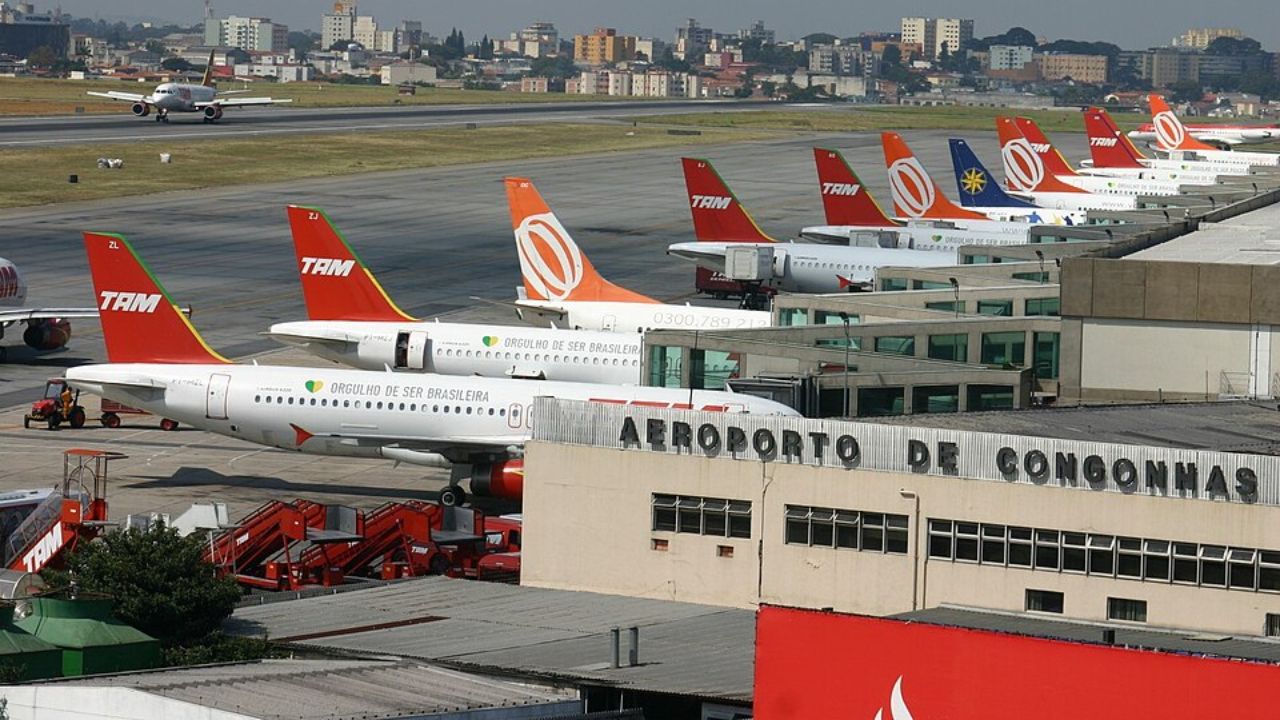
BNDES releases R$ 4,64 billion for Aena to boost and modernize 11 airports, expand Congonhas with a new giant terminal, and promote projects that will generate thousands of jobs by 2028.
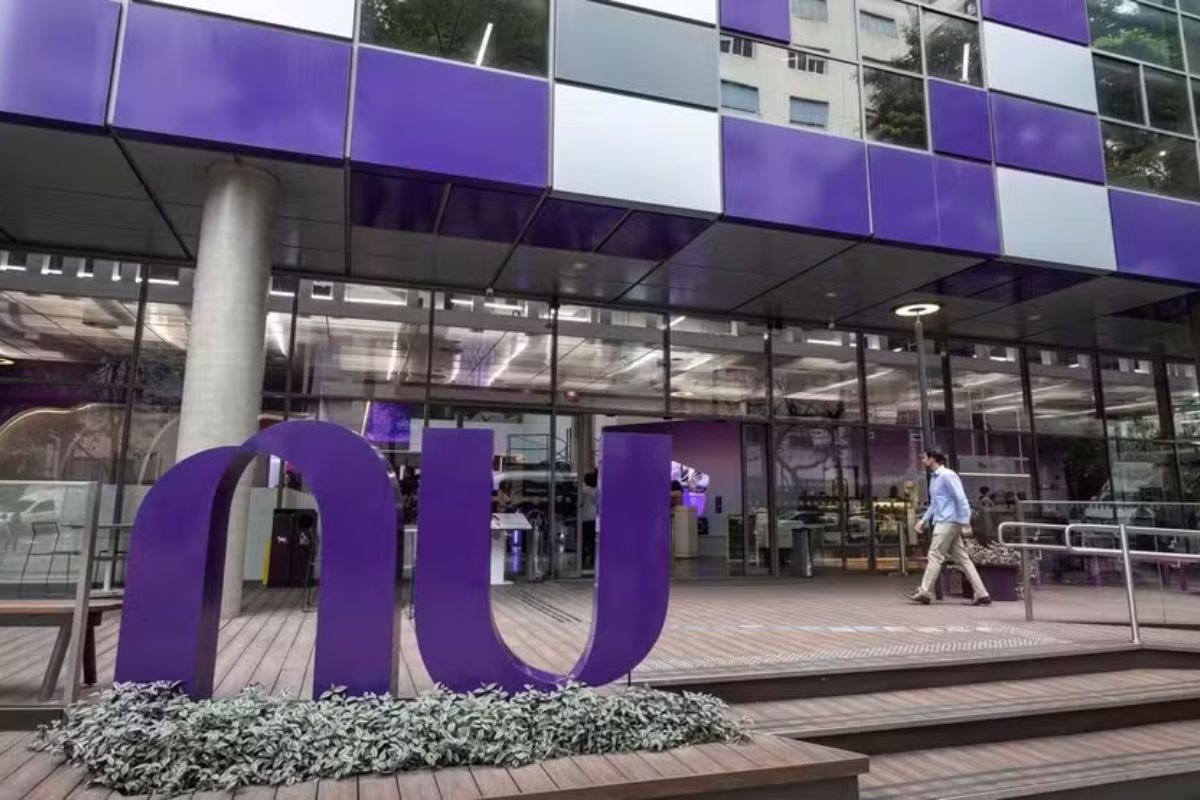
Nubank is rushing to become a real bank by 2026, requesting official licensing from the Central Bank following a new CMN rule, promising to maintain everything the same for its 110 million customers while aiming to join the club of large, regulated Brazilian banks.
PicPay signs agreement with INSS (Brazilian National Social Security Institute), will return approximately R$ 1 million in loan insurance, promises to end tied selling of benefits, and reimburse beneficiaries within 60 days via debt reduction, PIX (Brazilian instant payment system), or amounts to be received.

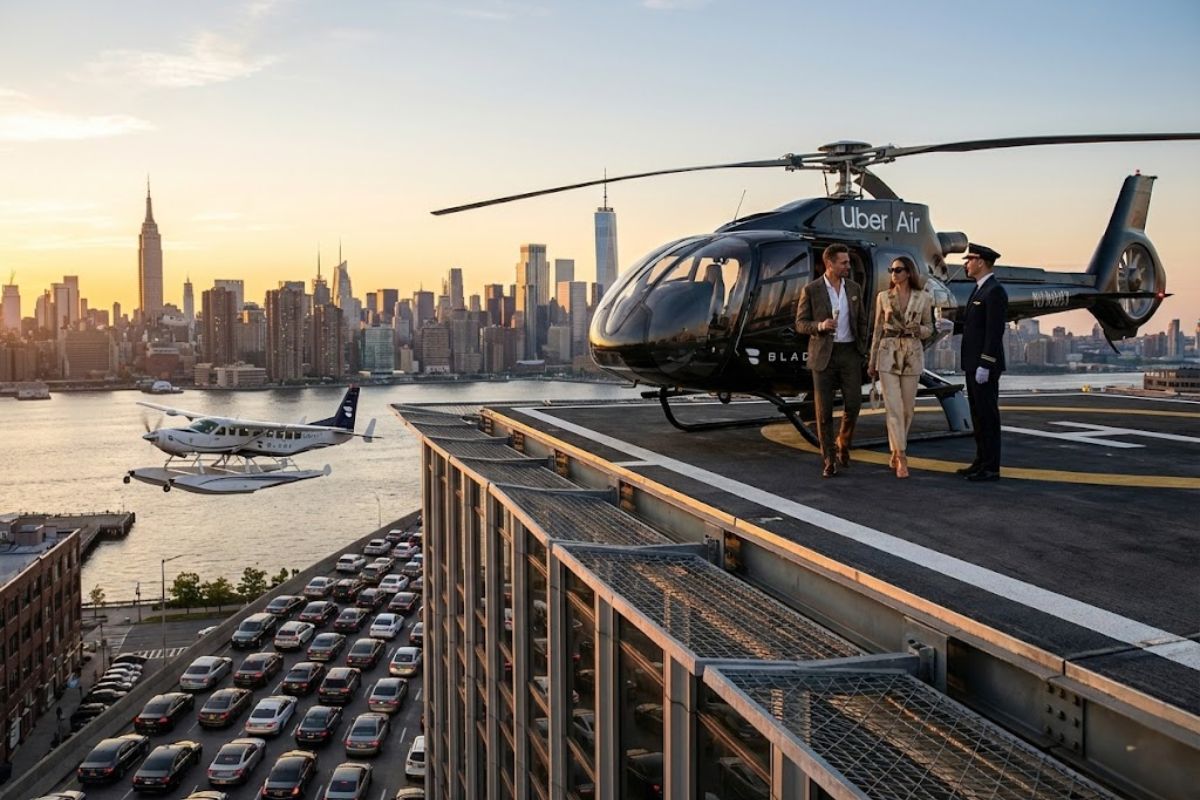
Uber announces the most expensive air travel category in history, selling helicopter and seaplane flights in partnership with Blade between Manhattan, the Hamptons, JFK, and Newark, targeting the super-rich who trade traffic jams for precious minutes of extreme exclusivity.
This narrative had already been used to justify the United States’ boycott of the G20 summit in Johannesburg at the end of November, and to support the retaliatory measures announced since Trump assumed the presidency of the group in early December.
The offensive ceased to be just a threat last week.when the Secretary of State, Marco Rubio, formalized the veto.
Rubio stated that “President Trump and the United States will not extend an invitation to the South African government to participate in the G20 during our presidency.”
At the same time, it confirmed that Poland had been invited to fill the space left open by South Africa’s exclusion, consolidating the idea of a political rearrangement within the bloc.
The conflict with Pretoria had already been intensifying. During South Africa’s presidency of the G20, Washington acted to Blocking topics, stalling negotiations, and even attempting to prevent the approval of the final communiqué. from the summit, deepening the isolation between the two governments.
Poland becomes a showcase for Trump’s “new G20”.
In the same statement, Rubio described Poland as a “natural partner” of the United States. He highlighted that the country, once trapped behind the former Iron Curtain, now ranks among the 20 largest economies in the world and that its trajectory symbolizes the kind of ally that… Trump wants to promote this within the G20..
According to the Secretary of State, “Poland’s success proves that it’s better to focus on the future than to cling to resentment.”, reinforcing the argument that closer ties with Washington and American companies would boost Polish prosperity.
In the Trump administration’s view, Warsaw offers the example of a reliable ally, aligned both in political values and economic strategy.
Poland is currently one of the European governments closest to the United States, and this year it elected the right-wing nationalist Karol Nawrocki as president.
For American diplomacy, this political profile reinforces the alignment with Trump’s approach, including on issues of security, energy, and border policies.
Criticism of the South African government and the Johannesburg agenda.
Washington’s rhetoric against Pretoria has taken on new dimensions in Rubio’s latest statements. He stated that “The South African government’s appetite for racism and tolerance of violence against its Afrikaner citizens has become central policy.”In addition to accusing South Africa of land confiscation and economic mismanagement.
Rubio also directly attacked the agenda pursued by the South African presidency at the G20. According to him, the summit in Johannesburg “It was an exercise in resentment, division, and radical agendas.”, by prioritizing discussions on climate change, diversity, inclusion, and dependence on foreign aid.
These themes, however, are recognized as pillars of global cooperation and multilateralism in international forums.
For the Trump administration, however, they divert attention from what should be the core of the G20’s actions: economic growth, competitiveness, and trade agreements favorable to the United States.
Rubio even went so far as to condition South Africa’s eventual return to the G20 on a change of government in Pretoria. In his formulation, The United States “supports the South African people, but not their radical ANC-led government.”.
He stated that when the country makes “the difficult choices necessary to fix its broken system” and is ready to reintegrate into the “family of free and prosperous nations,” a place will be reserved for it. Until then, Washington says it will move forward with a “New G20” without Pretoria at the table.
Trump wants a G20 focused on economy, energy, and technology.
In practice, the proposal of Trump for the “new G20” The goal is to reduce the scope of the group to three main axes. The first is… Reducing regulatory hurdles, with a focus on reducing bureaucracy in investments and facilitating the flow of capital and business considered strategic for the United States.
The second axis is the Strengthening energy supply chains, at a time of global competition for gas, oil and new energy solutions.
The idea is to strengthen partnerships with countries that can guarantee stability and predictability, reducing dependence on regions seen as unstable or politically divergent from Washington.
The third point is the stimulating new technologies and innovation., placing on the agenda topics such as the digitalization of the economy, technological infrastructure, and investments in research and development.
For the Trump administration, the G20 should serve as a platform to consolidate a bloc of countries willing to adopt rules and standards similar to the models advocated by the United States and its closest allies.
By prioritizing these three pillars, the White House is signaling that, Under Trump, the G20 tends to downplay debates on the environment, social inclusion, and reducing inequalities., which marked recent summits of the group.
Next steps for the “new American G20”
The first G20 negotiators’ meetings under the US presidency, with the participation of countries such as Brazil, are scheduled to take place in Washington on December 15 and 16, 2025. Following these dates, there will be a series of thematic and technical meetings throughout 2026, in which… Trump intends to consolidate his vision for the “new G20”..
The White House plan is to conclude the presidency with a summit of heads of state held at Mar-a-Lago, Trump’s property in Florida. The gesture is seen as a symbol of the effort to personalize American leadership within the bloc and reinforce the president’s political brand in one of the main global forums.
Until now, The other G20 members have not yet officially commented on the veto against South Africa. and the invitation to Poland.
Since the group’s decisions are usually made by consensus, diplomats believe that Washington’s move is likely to provoke intense debates about the rules of participation and the limits of the rotating presidency’s influence.
On the Polish side, Foreign Minister Radosław Sikorski confirmed that he had been negotiating with Washington for the country’s entry into the G20.
He argues that Poland has a right to the seat. “not only as one of the 20 largest economies in the world, but also as a country that presents political and intellectual arguments”, highlighting the transformation from a planned economy to a market economy as a credential for the new role.
Even with the veto in Pretoria, The G20 is still formally composed of 19 countries, in addition to the European Union and the African Union., This structure will now have to coexist with the American invitation to Poland and the pressure from Trump. through a redesign of priorities and alliances within the bloc.
And you, do you think Trump’s strategy of creating a “new G20” will strengthen the group or open up an even bigger crisis between the main global partners?