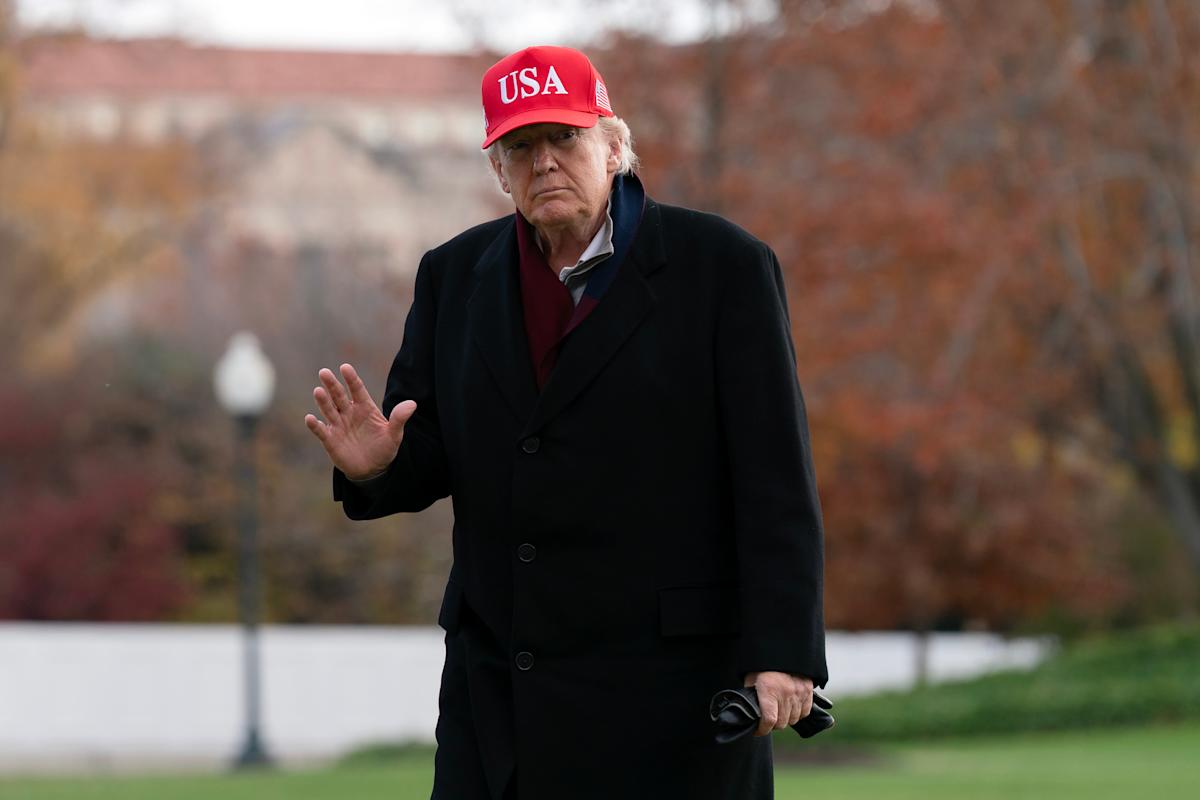
President Trump on Monday unveiled $12 billion in aid to US farmers, as the agricultural sector deals with the fallout from his sweeping tariff policies. Trump and other top administration officials discussed the package at a roundtable event with farmers at the White House.
The sector has been hit particularly hard from the president’s ever-changing trade policies, as they have struggled to sell crops and been hit by higher costs. Soybean exports have come in particular focus, with trade slowing to a crawl as China virtually halted its purchases before the countries agreed to a trade truce in October.
Trump said the money for farm relief would come from a “small portion” of tariff-related revenues.
The farm bailout comes as US Supreme Court is poised in the weeks ahead to decide the legality of the majority of President Trump’s tariffs. The president invoked the International Emergency Economic Powers Act (IEEPA) to levy blanket tariffs on goods from other countries. But Congress is the branch of the US government with oversight of taxation and spending — not the president.
As he has publicly braced for the high court’s decision, Trump has claimed the “full benefit” of tariff policies would take effect soon, arguing that foreign buyers who stockpiled inventory would be forced to buy more goods. Meanwhile, Trump has asked the Department of Justice and the Federal Commission to investigate the US food supply chain for possible price fixing to drive up costs of goods such as meat, especially by foreign companies.
The push to reduce food prices comes after electoral wins for Democrats across a number of key state and local races where candidates stressed affordability concerns. Trump has also in recent weeks floated the possibility of a tariff “dividend” for many Americans in the form of a $2,000 check.
Read more: What Trump’s tariffs mean for the economy and your wallet
China’s trade surplus in goods exceeded $1 trillion for the first time this year, meaning it exported more goods to other countries than it imported. Its shipments to the US, however, dropped 29% amid trade war between the two nations.
US Trade Representative Jamieson Greer told Politico that Trump is considering exiting the United States-Mexico-Canada Agreement (USMCA). Currently, under the USMCA, both Canada and Mexico pay little to no tariffs on products that meet the agreement’s rule of origin.
Several US companies, such as Costco (COST), have filed lawsuits and claims to the US government for tariff refunds in the belief Trump’s tariffs will be struck down by the US Supreme Court. If the courts rule against Trump’s tariffs, the president may be forced to repay billions of dollars in collected revenue from imports, according to a report in the New York Times.
LIVE 124 updates

Japan’s economy shrank 2.3% in the July-September period, according to data from the government. This contraction was partly due to exports suffering due to the impact of President Trump’s tariffs and a fall in public investments.
The AP reports: