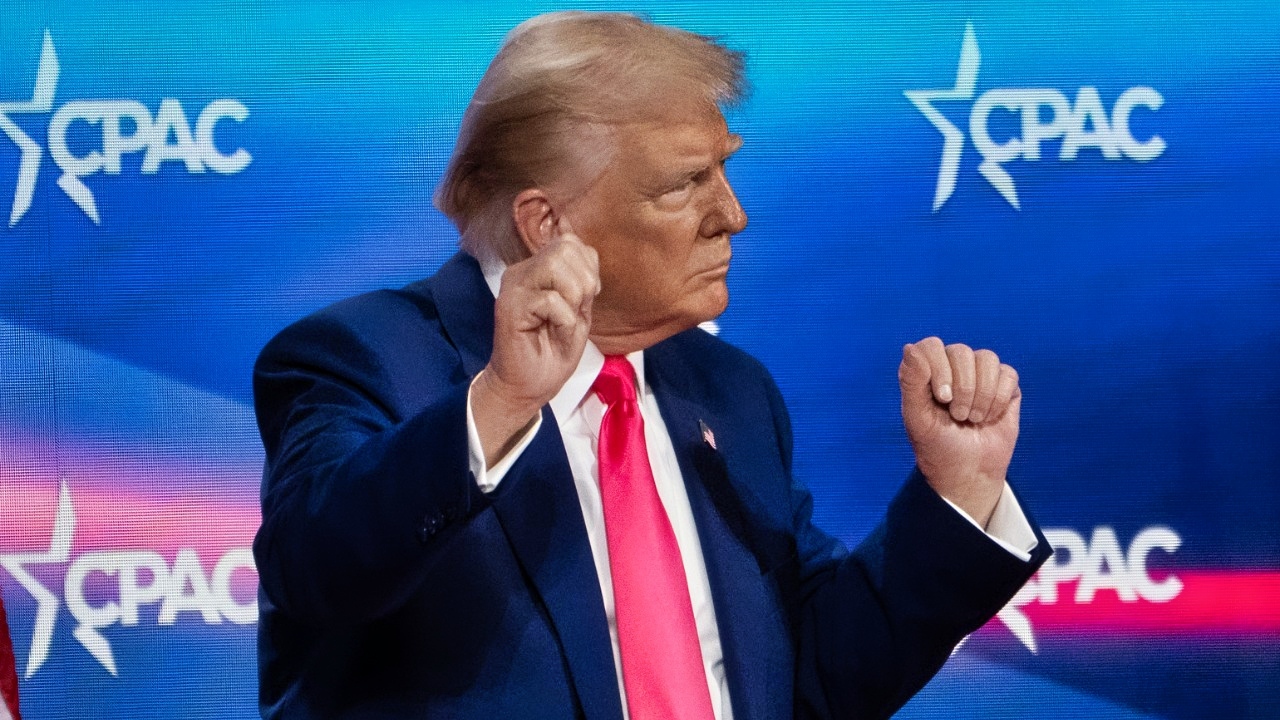
Key Points and Summary – The Trump administration’s new National Security Strategy is landing very differently in Moscow and European capitals.
-Kremlin spokesman Dmitri Peskov welcomed the document as “largely consistent” with Russia’s outlook, even as European officials saw a blueprint that sidelines the EU, backs “patriotic” nationalist parties, and downplays Russia as a threat.
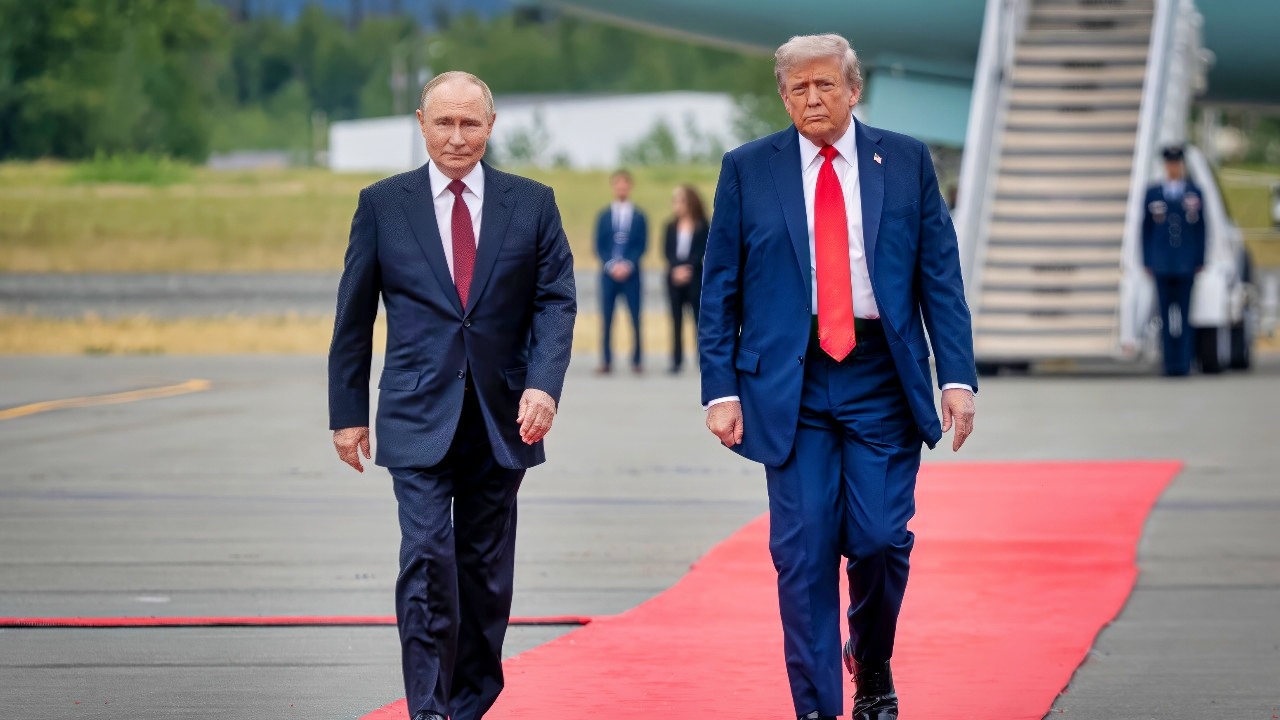
President Donald J. Trump welcomes Russian President Vladimir Putin to Joint Base Elmendorf-Richardson, Anchorage, Alaska, August 15, 2025 (DoD photo by Benjamin Applebaum)
-The NSS also appears to undercut European efforts to sustain Ukraine through the PURL scheme, despite allies agreeing to hike defense spending toward Washington’s new 5 percent target.
-Public pushback from leaders in Germany, Sweden, and Poland underscores a growing rift over values, Ukraine, and the future of the alliance.
Europe And the New US National Security Strategy: Trouble Ahead?
In Moscow, Dmitri Peskov, the Kremlin spokesman and the official press representative for Russian President Vladimir Putin, has praised chiefly the new US National Security Strategy (NSS) put forward by President Donald Trump’s administration.
“The adjustments we’re seeing [in the document] … are largely consistent with our vision,” Peskov said in an interview published by Russia’s state-controlled news agency TASS on Sunday. “We consider this a positive step,” he said, but he also added that Moscow would be analyzing the document before committing to any firm conclusions.
The 33-page document, released by the White House this week, seems to suggest Europe is facing “civilizational erasure” and does not directly characterize Russia as a threat to the US. Some of the priorities the report highlights are combating foreign influence in the US, ending mass migration practices, and rejecting practices within the EU and the UK that have been denounced as “censorship.”
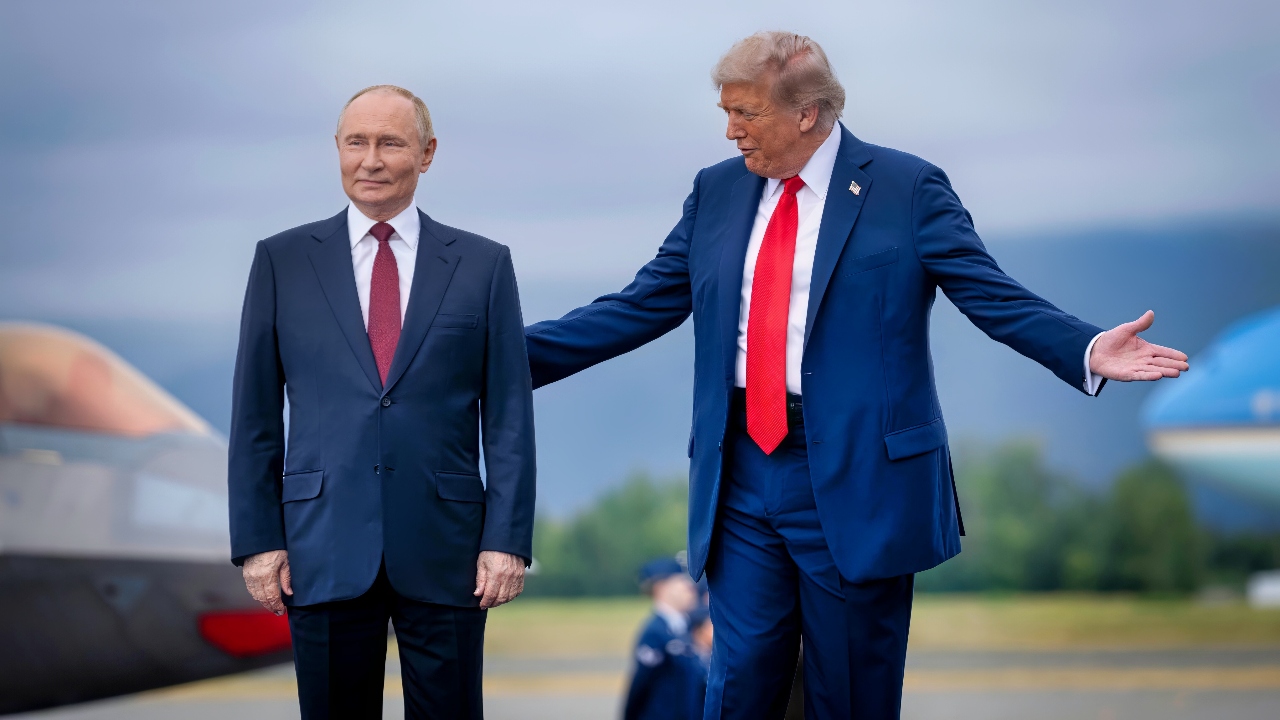
President Donald J. Trump welcomes Russian President Vladimir Putin to Joint Base Elmendorf-Richardson, Anchorage, Alaska, August 15, 2025 (DoD photo by Benjamin Applebaum)
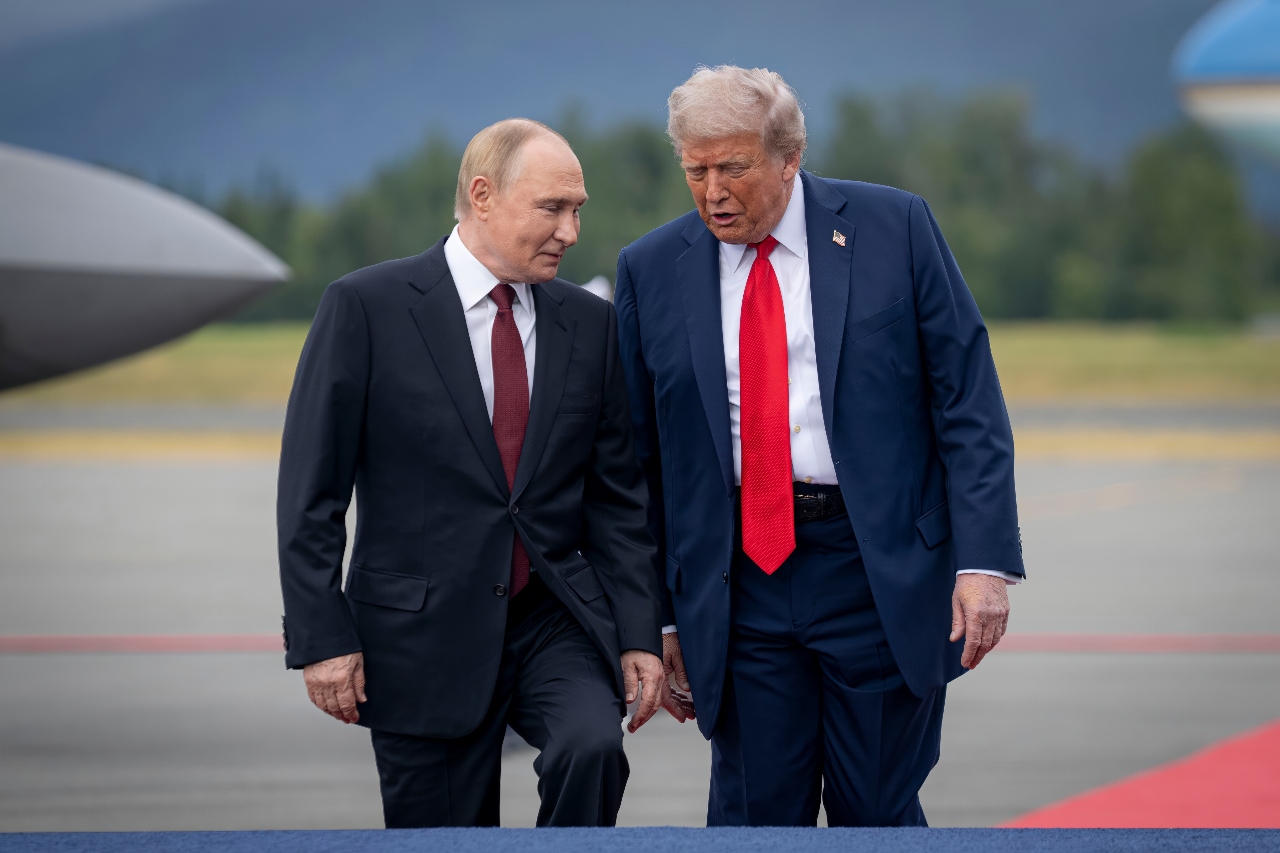
President Donald J. Trump welcomes Russian President Vladimir Putin to Joint Base Elmendorf-Richardson, Anchorage, Alaska, August 15, 2025 (DoD photo by Benjamin Applebaum)
Specifically, as Canada’s Policy magazine commented critically, the document accuses the EU “and other transnational bodies” of undermining “political liberty” and “sovereignty”, and censoring “free speech.” Overall, it says the NSS appears to be a repeat of US Vice President J.D. Vance’s criticisms he made of European leaders at the Munich Security Conference in February.
The Canadian publication also singled out the US Vice President’s decision to follow up his speech by “ostentatiously” meeting with the leader of the right-wing Alternative for Germany (AfD) but then refusing to meet with the then-outgoing German Chancellor Scholz. In this NSS, says the magazine, “the Trump administration pledges support for like-minded ‘patriotic’ parties in European liberal democracies who ‘fight against migration and promote nationalism.”
Ex-Prime Minister of Sweden Carl Bildt was quoted as saying the US appears to be moving politically “to the right of the extreme right in Europe.” The observation of Bildt and others is prompted by the document’s support for “patriotic European parties”. It includes statements such as, “America encourages its political allies in Europe to promote this revival of spirit.”
Trying To Maintain the Alliance
Several of Washington’s NATO allies feel somewhat “stung” by the document. Earlier this year, they had agreed mainly to accede to Washington’s request that they increase their national defense and military expenditures to 5 per cent of GDP.
This was done, they say, mainly so Trump could save face with the US public, especially among his base, many of whom feel the US has been paying more than its fair share to support the alliance.
In a move to secure at least some US military support for Ukraine and maintain the pressure on Moscow, the European NATO members plus Canada agreed to the US decision to cease sending US weaponry to Ukraine at US taxpayer expense. Instead, the allies have decided to join the Prioritized Ukraine Requirements List (PURL) initiative.
Under this program, NATO member states purchase advanced weaponry from the US and then donate it to Ukraine. During a meeting last week of allied foreign ministers in Brussels, two upcoming PURL packages, each comprising $500 million in military hardware, were announced. One of the packages was co-financed by Germany, Norway, and Poland, and the other by Germany, Norway, and the Netherlands.
But the new NSS almost seems to criticize the very PURL initiative that Washington itself pushed for, saying the EU is obstructing US efforts to end the Ukraine war and stating that the US must “re-establish strategic stability to Russia,” which would “stabilise European economies.”
Clarification and Strained Relations
European officials appeared to put the best face on the issues raised in the NSS and, alongside their concerns about some of the document’s content, offered positive statements about the importance of their long-standing relationships with the US.
“The US will remain our most important ally in the [NATO] alliance. This alliance, however, is focused on addressing security policy issues,” said German Foreign Minister Johann Wadephul last Friday.
“I believe questions of freedom of expression or the organisation of our free societies do not belong [in the strategy], in any case, at least when it comes to Germany,” he continued.
In a social media post that he addressed to his “American friends”, Poland’s centrist political bloc leader and Prime Minister Donald Tusk stated that “Europe is your closest ally, not your problem” and noted their “common enemies.”
“This is the only reasonable strategy for our common security. Unless something has changed,” he noted.
About the Author: Reuben F. Johnson
Reuben F. Johnson has thirty-six years of experience analyzing and reporting on foreign weapons systems, defense technologies, and international arms export policy. Johnson is the Director of Research at the Casimir Pulaski Foundation. He is also a survivor of the Russian invasion of Ukraine in February 2022. He worked for years in the American defense industry as a foreign technology analyst and later as a consultant for the U.S. Department of Defense, the Departments of the Navy and Air Force, and the governments of the United Kingdom and Australia. In 2022-2023, he won two awards in a row for his defense reporting. He holds a bachelor’s degree from DePauw University and a master’s degree from Miami University in Ohio, specializing in Soviet and Russian studies. He lives in Warsaw.