Facebook
Twitter
LinkedIn
Pinterest
Reddit
Email
Print
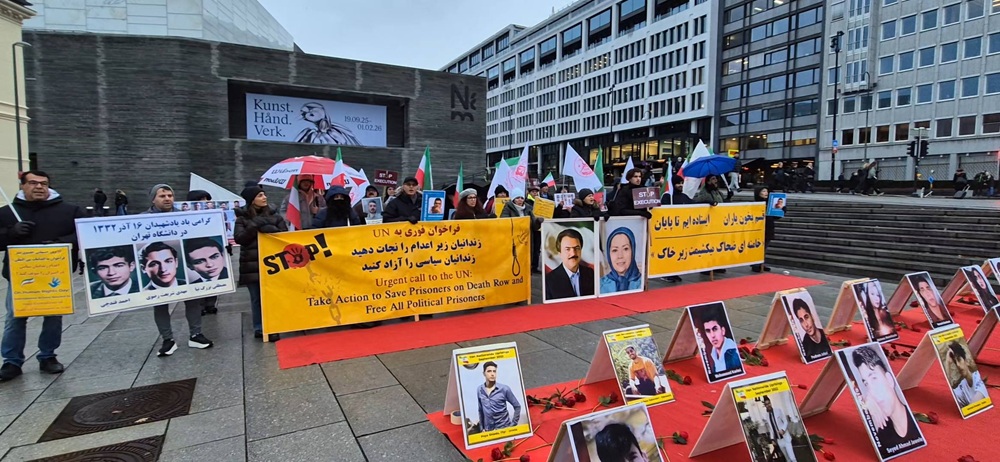 In Oslo – December 6 , supporters of the MEK gathered to mark Iran’s Student Day (December 7, 1953) — a reminder that the fight for knowledge and freedom is never silent.
THIS PAGE WILL BE UPDATED WITH THE LATEST NEWS
UPDATE: 08:00 AM CET
Iran’s paradox: Mountains of gold, empty dinner tables
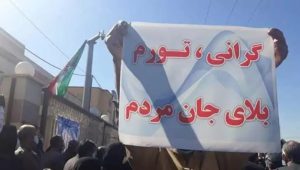
The Iranian regime’s own Statistical Center has once again laid bare the economic catastrophe it has inflicted upon the people. The latest report on inflation, released in late November 2025, is not merely a set of figures but a damning indictment of a system built on plunder. According to the regime’s doctored statistics, the consumer price index has surged by nearly 49 percent compared to the previous year, with annual inflation hovering above 41 percent. For millions of Iranian families, this means the cost of basic survival has become nearly impossible to bear.
From death row, Iranian student’s defiant message on Student Day ignites hope for a free Iran
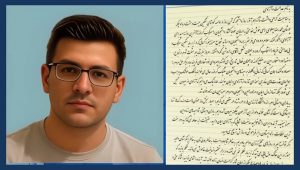
On Iran’s Student Day, a day seared into the nation’s collective memory as a symbol of the struggle against dictatorship, a powerful message of defiance has emerged from the depths of the clerical regime’s dungeons. Ehsan Faridi, a student activist sentenced to death and held in Tabriz Central Prison, has sent a statement that serves not as a plea for his life, but as a resounding call to resistance for the youth of Iran. His message affirms that true freedom will not be handed down by foreign powers but will be forged by the unbreakable will of the Iranian people themselves. Faridi’s voice from behind bars is a testament to the regime’s complete failure to extinguish the spirit of resistance that defines Iran’s future leaders.
Forough Taghipour: Student Day Message from Evin Prison
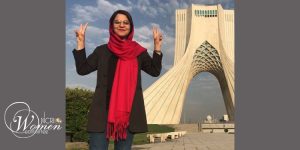
Forough Taghipour, a political prisoner currently held in Tehran’s Evin Prison, has issued a message on the occasion of Student Day, underscoring the historic and ongoing role of Iran’s student movement in the struggle for freedom and justice. “On December 7, 1953, while colonial powers, reactionary forces, and their eternal allies were celebrating the overthrow of the national government and preparing to welcome U.S. Vice President Richard Nixon to Iran, students at the University of Tehran rose up in protest. Following the Shah’s direct order to open fire, three young students were killed at the Faculty of Engineering. With their blood spilled in the classroom, they announced to the world that the university is not only a bastion of knowledge, but a fortress of resistance.”
Ayda Najaflou: Christian Prisoner at Risk of Spinal Cord Severance in Evin Prison

The health condition of Ayda Najaflou, an imprisoned Christian convert and prisoner of conscience in Tehran’s Evin Prison, has reached a critical stage, with doctors warning of the imminent risk of spinal cord damage that could lead to permanent paralysis. Her condition deteriorated significantly after falling from her bunk bed and undergoing emergency spinal surgery. Following the procedure at a hospital in Tajrish, Ayda Najaflou was transferred back to Evin Prison without recovery. However, the lack of sanitary conditions and the absence of proper medical facilities led to a severe infection at the surgical site, forcing another emergency transfer to the hospital.
The Corruption Network in the Mullahs’ Regime in Iran : Structure and Hidden Functions of Power
December 9, the International Anti-Corruption Day, is a reminder that corruption is not merely an economic offense; it is a direct threat to human rights, justice, and human development. On this day, the United Nations emphasizes that when corruption takes root at the heart of governance, it leads to poverty, repression, discrimination, and the systematic violation of citizens’ rights. In recent years, Iran has consistently ranked among the lowest countries on global corruption indexes. Yet the real issue is not the ranking; it is the architecture of corruption itself. In Iran, corruption is not an anomaly but a mode of governance, a tightly interwoven network in which the government, parliament, security institutions, the Islamic Revolutionary Guard Corps (IRGC), the judiciary, economic conglomerates under the Supreme Leader’s authority, and a series of extra-legal structures operate as components of a single system.
Stocks of Hundreds of Medicines in Iran Have Fallen Below Three Months

Iranian pharmaceutical officials, warning of an escalating medicine shortage crisis, have stated that stocks of hundreds of medicines in the country have fallen to below one to three months. At the same time, the director-general of drugs and controlled substances at the regime’s Food and Drug Organization announced that the country’s pharmaceutical system is in “the worst possible condition” in terms of foreign currency and rial funding. Akbar Abdollahi-Asl, speaking on the sidelines of a meeting held on Sunday, December 7, with the Association of Pharmaceutical Distribution Companies, said that out of roughly three thousand medicines on the country’s official list, 195 have less than one month of stock, 360 have less than two months, and 270 have less than three months.
Iran Regime’s Leaders Show the World How Not to Run an Economy
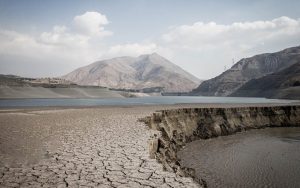
The Iranian regime is widely known for exporting terrorism and instability across the Middle East. But its leadership also provides a striking example of how a modern economy should not be managed. Nowhere is this clearer than in the regime’s decades-long experiment with ideological industrial policy—an experiment that has drained the country’s resources and pushed its society toward a crisis with irreversible consequences. From the earliest days of the 1979 revolution, the clerical establishment imposed a dogma of economic self-sufficiency. Rejecting what it called “Western ideas” such as globalization and market integration, the regime announced its intention to produce everything domestically, including all food needed for a country of more than 90 million people.
Also, read Iran News in Brief – December 8, 2025