When the announcement broke that the Trump administration would halt and rereview immigration cases for certain refugees who arrived during the Biden presidency, Jafar Wahidi’s phone started ringing nonstop.
“People are really concerned about this,” Wahidi said. “They are really worried.”
Wahidi helps run Afghan Hope Community Development, a volunteer-led nonprofit that assists Afghan refugees and families in the Sacramento, California, area. They’ve helped more than 5,000 Afghan families in the past five years, he says, and the fear spread almost instantly, and well before the shooting near the White House.
“Even people who are here legally, they are calling me because they are afraid,” Wahidi said.
One family called him asking whether they should still plan to attend their citizenship test in early December. Others, already scheduled for naturalization interviews this month, worry showing up could expose them to scrutiny or arrest.
“People worry any action might cause separation of children or spouse,” Wahidi said. “The communities and the families – they are hopeless, completely.”
From recent arrivals still waiting for work permits or green cards to longtime residents trying to reunite with spouses and children still in Afghanistan or in the region, he says many are now “giving up” on the idea of a stable future in the United States.
After working as an interpreter for the American coalition in Afghanistan, Wahidi resettled in California with his wife and seven children in 2017. Now, he says the life he built may not be available to many he is trying to help.
The panic Wahidi describes is rippling across the Afghan diaspora after a rapid one-two punch of policy shifts and breaking news right before the holidays.
First, an internal memo dated November 21 showed the Trump administration planned to reinterview and rereview refugees admitted under President Joe Biden.
The memo, which CNN reported November 24, instructed officers to reassess whether refugees met criteria at the time of admission; allowed for termination of refugee status with no right to appeal; and ordered a hold on pending green card applications for refugees until further notice. A year after refugees are admitted to the country, they are required under US law to apply for permanent status.
Refugee advocates called the move “unspeakably cruel,” warning that threatening to revoke protections could re-traumatize people who had already undergone years of intensive US security vetting.
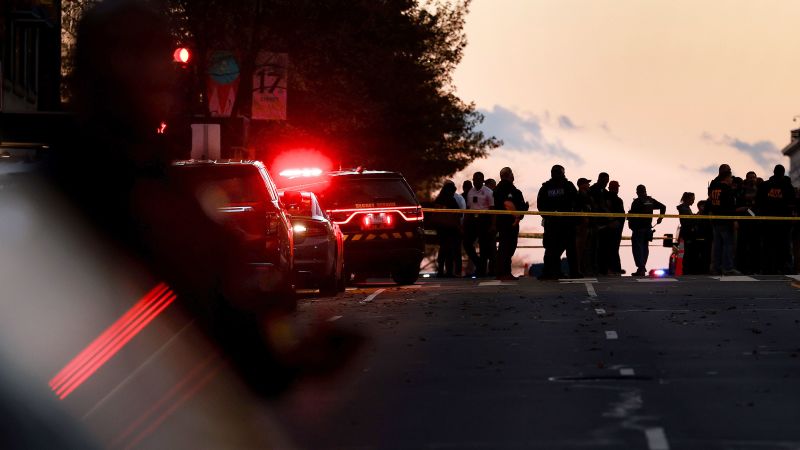
Then came the attack near the White House on November 26 in which two West Virginia National Guard members were ambushed and shot, one fatally. Within hours, after authorities identified the suspect as an immigrant from Afghanistan, US Citizenship and Immigration Services announced it would stop processing all Afghan-related immigration cases “indefinitely pending further review of security and vetting protocols.”
Days later, Trump said the pause in asylum request processing could be in effect for “a long time.” “We don’t want those people,” the president told reporters aboard Air Force One. “You know why we don’t want them? Because many of them are no good and they shouldn’t be in our country.”
The Department of Homeland Security identified the alleged gunman as 29-year-old Rahmanullah Lakanwal, who entered the United States in 2021 through Biden’s Operation Allies Welcome and was granted asylum earlier this year under the Trump administration.
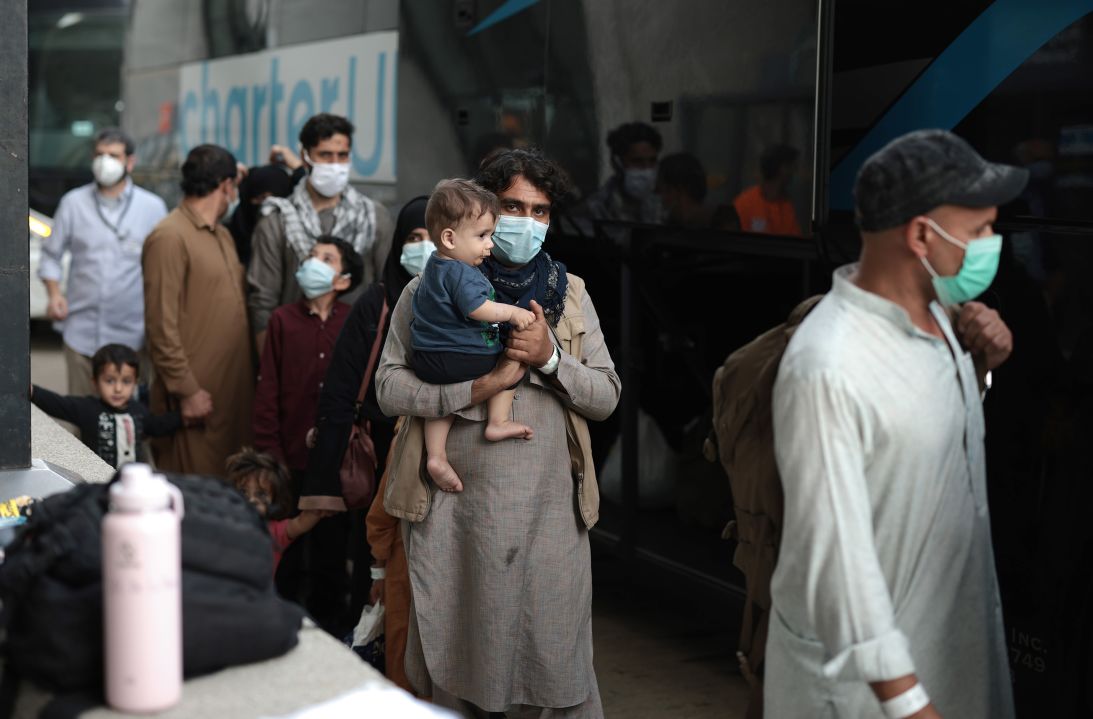
Altogether, more than 190,000 Afghans have been resettled in the US since 2021 under Operation Allies Welcome and its successor, Enduring Welcome, according to the State Department. Another 260,000 Afghans remain abroad waiting for US entry, often in precarious conditions, according to Shawn VanDiver, president of AfghanEvac, an organization that relocates and resettles Afghan people. Many of them are in Afghanistan and face persecution by the Taliban, he told CNN.
Wahidi said he noticed immediate changes on the ground in California when he tried to get in touch with Citizenship and Immigration offices. “No one was answering the phone, no one was responding (to) emails, so then we knew that something happened,” Wahidi said. “They stopped the process.”
Most of his clients are waiting for work permits, green cards or asylum decisions. Clients scheduled for citizenship interviews in early December have flooded his office with questions: Should they still go? Will the appointments be canceled? “I told them we don’t have any update,” Wahidi said.
On December 1, Wahidi said, he received an alert from the nonprofit NorCal Resist warning of what it described as “an increase in ICE arrests of Afghan neighbors,” claiming multiple Afghans had been detained at the Sacramento Immigration and Customs Enforcement field office and many others had been called to report immediately. “A young Afghan mother of a toddler was placed on surveillance through an ankle-monitor,” the alert read, adding a phone number for a legal aid hotline at the bottom.
CNN could not independently verify those arrests, and ICE did not respond to a request for comment.
The alert reflects the level of anxiety gripping Afghan communities in Northern California. Inside Wahidi’s office, he says, the toll is visible. “When they come to our office, we can see it in their faces,” he said. “They are scared.”
Many of the families he hears from are split across continents: a husband in California, a wife and young child in Afghanistan, relatives waiting in Qatar for final visa steps that have now paused indefinitely. “They are worried about their futures,” he said. “Especially for the people who live in Pakistan, in Doha, and here, we completely lost our hope.”
Communities condemn the shooting – and fear stigma
Across the country, Afghan American organizations are trying to balance grief for the National Guard members with deep concern about politicization of the attack.
Joseph Azam, board chair of the Afghan-American Foundation – the largest national Afghan American advocacy organization in the United States – said in a video message anyone responding to the shooting should begin with “unequivocal condemnation” of the “heinous” violence against the two Guard members and their families. But he sharply criticized political leaders and media figures who he said have seized on the attack to generalize about Afghans.
“It has been absolutely disgraceful,” Azam said, to watch people use “this moment of tremendous pain and agony and fear in our country as an opportunity to create division – to scapegoat Afghans, to scapegoat American Muslims, to scapegoat immigrants.”
“Anybody who is able to commit such an abhorrent, horrific and heinous act is committing an act that’s beyond the pale of humanity,” he added. “That is the baseline from which our response should start.”
Azam urged Americans to remember the tens of thousands of Afghan Americans who serve “across our armed forces and in harm’s way,” including some currently serving in the National Guard units now shaken by the shooting – even as their communities face heightened scrutiny.
Other organizations have issued similar calls. AfghanEvac issued a statement within hours of the shooting condemning it and asking Americans to not demonize an entire country because of the actions of one person.
“Those who would twist this moment to attack Afghan families aren’t seeking safety or justice – they’re exploiting division and endangering all of us,” the statement read.
In practice, the sentiment in these communities is they are being left behind.
A grassroots group calling itself the Afghan Coalition of the United States said in a statement to CNN, “for two decades, the Afghan people stood alongside U.S. forces in the fight against terrorism. Thousands of Afghan soldiers, police officers, interpreters, staff, and civilians sacrificed their lives for this shared mission. The wrongdoing of one person must not overshadow this historic partnership and collective sacrifice.”
In limbo and in fear of his life
While Afghans in the United States brace for new scrutiny, Afghans still waiting abroad – including those who once worked closest to American forces – say the freeze has placed them in immediate danger.
Mohammad, a former Afghan National Army officer who asked that his full name not be made public for fear of retaliation, said he spent more than a decade working “shoulder to shoulder with coalition forces.” From 2015 to 2018, he was an escort to Taliban detainees at Bagram Air Base – a role that, he says, left him recognizable to the very people now in power.
Once the Biden administration announced Afghans with active cases could move to a second country for processing, Mohammad says, he got his wife and two young children ready. “Because of that, we sold everything we owned, including our household items, thinking we would be able to leave.”
He said he envisioned his children growing up in California or Virginia, in communities with Afghan families and safe schools.
When the Afghan government collapsed in 2021, he says, the Taliban summoned him for interrogation and later attempted a night arrest. He fled first to the capital, Kabul, then across the border into Pakistan with his family.
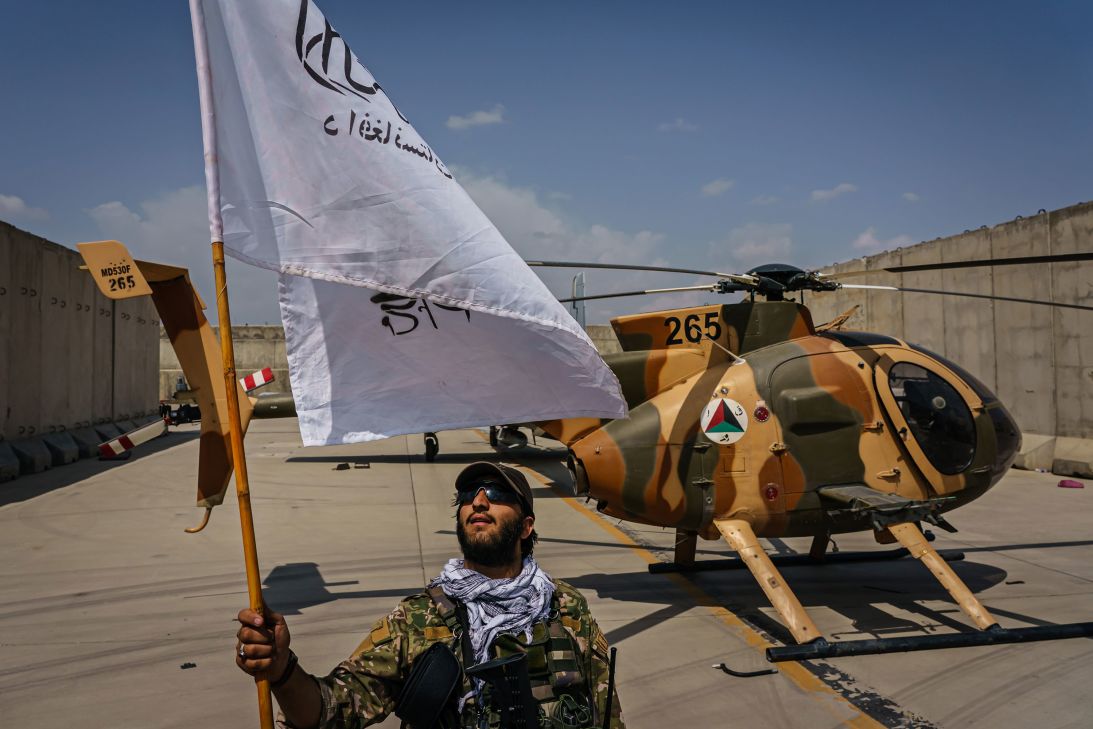
In Pakistan, he says, he was accepted into the US P-1 refugee referral program. “It felt like a door to safety had finally opened for me and my family,” he said. “After years of danger, I finally felt hope.”
But instead of advancing, his case stalled. And then, last month, everything collapsed.
On November 25, during Thanksgiving week, Mohammad says the Pakistani government told him he could no longer stay in the country, and he was deported the same day to Afghanistan. His children, ages 5 and 7, traveled with him on what he described as a long, punishing journey back into Taliban-controlled territory.
“Now we have nothing, and we are living in very difficult conditions in someone else’s house,” Mohammed said.
Since returning to Afghanistan, Mohammad says, he has been in hiding, fearing Taliban members might recognize their former jailer.
“If they recognize me, they would hang me,” he said. “My life and my family’s lives are under threat.”
Mohammed says the entire time he worked with US soldiers, there was mutual respect. “Many of them understood the risks we were taking and cared about the Afghan people. We shared the same mission, and their support kept us alive in dangerous situations,” he said.
“I want Americans to know that people like me did not just work a job,” he said. “We put our lives and our families’ lives at risk to stand with them. We believed in the values of safety, freedom and justice. We were their partners, their eyes and ears on the ground. Many of us are still in danger because of that service. We are not asking for favors; we are simply asking for safety and the chance to live without fear.”
With US processing now frozen, he says, he is weighing other options. One of them is Brazil, which created a special humanitarian program for Afghans after the Taliban takeover and has since issued more than 13,000 visas, but now requires local organizations to sponsor each application. Others in a similar situation to Mohammed have told CNN they are also considering Ireland, which has resettled 700 Afghans since 2021 and also requires community sponsorships, and Mexico – the latter on a temporary basis, for its proximity to the United States.
“Right now, the best-case scenario is simple,” he said. “Safety. I hope my family can reach a country where my children can go to school and where I can work and rebuild our lives. If the US can accept us, that would be ideal because my case was already in process there. But any safe country that gives us protection would be a blessing.”
Advocates warn that thousands of Afghans like Mohammad – former partners of US forces who moved to third countries for processing – may now be stranded indefinitely, vulnerable to Taliban retribution and worsening economic hardship.
Back in Sacramento, Wahidi says his community feels abandoned.
“Every day I receive calls from my people – ‘My green card isn’t approved, my asylum isn’t approved, I don’t have food, I don’t have a job,’” he said. “It is too hard for them to live here in America. Now this has made it even harder.”
Afghans who staked their lives on the US mission are now questioning whether the country still wants them, he says.
“We sacrificed for American people and for America and for Afghanistan,” he said, pointing to the thousands of Afghans who were killed while fighting on America’s side. “We hope they help us here, too.”