Jim Leahey, the voice and face of local sports (and much more), once told me Hawai‘i’s DNA is a triple helix of unique geographies, ethnicities and our own way of talking.
Others I know say we are a melting pot, a term my colleague Chuck Crumpton despises. He says, “We aren’t some kind of mush or gruel; we’re a fresh salad with lots of nourishing ingredients.”
Our social, political and economic genetics — our salad — has always been influenced by events that washed up here from elsewhere, usually America. All of the changes, some of them major upheavals, are chronicled in books like “Shoal of Time,” “Catch a Wave,” “Captive Paradise” and even the quirky “Unfamiliar Fishes.”
Yet, here we are. We are still “us.”
What islands know for sure is waves will always keep coming. The world today is interconnected and fraught with challenges that will wash over us. Some will just be little ripples that come and go on the breach. Others will be tsunamis.
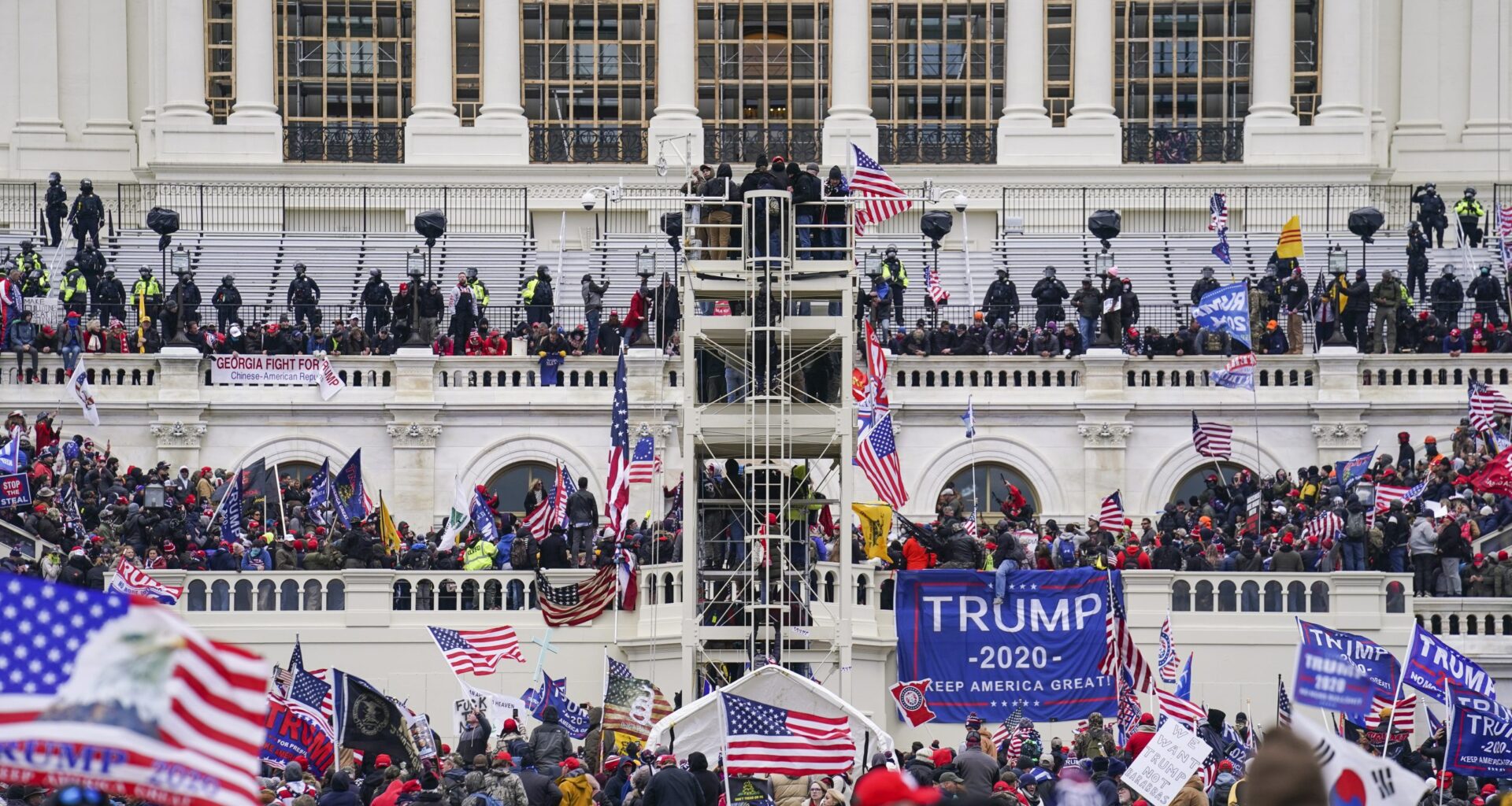
When armed thugs stormed the nation’s Capitol on Jan. 6, 2021, and threatened to hang Vice President Mike Pence, I started seriously thinking about the prospect of a second American civil war. Even though I am kama‘āina, I come from immigrant holocaust survivors, so those horrors are family memes.
Could this really be happening in the United States?
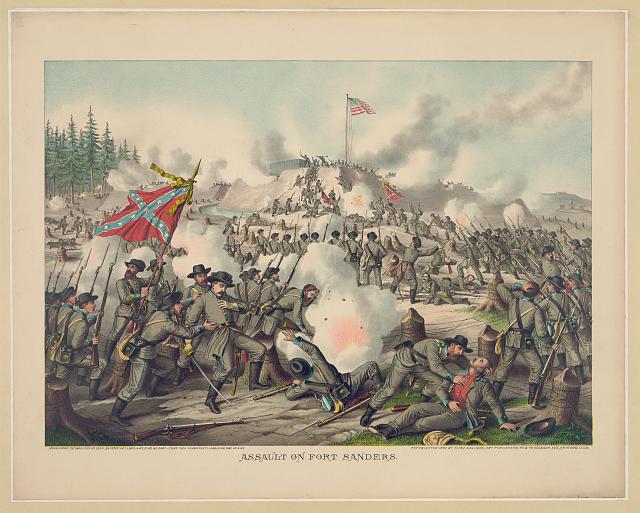 “Assault on Fort Sanders,” a depiction of a U.S. Civil War battle that took place in 1863. (Library of Congress)
Being a frustrated optimist and an incurable scribbler, my musings in the dark days of Covid and Trump 1.0 led me to create a story coming out next February called “The Duck Springs Defiance: A Novel of the Next Civil War.”
My tale is set in the near future. It centers on a defrocked lawyer and ex-Marine escaping from an unhappy past. He is drawn into a quirky rural community in Washington state.
His arrival coincides with a violent coup d’état that throws America into conflict with armed militias and right-wing fanatics. The story depicts how his spirit is revived and how his adopted community successfully resists when attacked.
While I hope my story is a very readable yarn, it is also a warning and raises the more cerebral issue of how likely an armed 1860s-style conflict actually might be. Are my familial and literary fears of another civil war overblown?
Maybe, maybe not.
In 2020, the Department of Homeland Security called virulent white supremacists the “most persistent and lethal threat in America.” Several years later, 75% of all Americans thought armed insurrection was inevitable.
A policy professor friend told me, “It’s 1859 again. Everyone is angry, everyone is tribal, and everyone has a gun.”
My “defiance” story is a snapshot of one future scenario, but there are others, some of them more likely, and some of which could wash over Hawaiʻi.
Scenario A: Diffuse/Dispersed Rebellions
In 1968, police violently clashed with demonstrators at Chicago’s Democratic National Convention. When Martin Luther King Jr. and Robert Kennedy were assassinated, protests and riots broke out in major cities.
Political issues developed collaterally with cultural and generational changes in music, fashion and social mores. The ’60s were angry years, in Hawai‘i as well. That could lie ahead again.
Scenario B: Gray Zone Conflict
“Gray zone warfare” refers to a blurry middle space between kinetic conflict and peace. It can involve cyber fights, financial wars, espionage, sabotage and short outbreaks of violence.
It resembles the “Troubles” in Northern Ireland, or the civil war in Sri Lanka in the 1970s when the Tigers sought to create a new state called Tamil.
Despite the violence, most Sri Lankans just went about their everyday lives. Would that be true here too?
Scenario C: The Tide Turns
The nervous tension between democracy and autocracy could lessen. Abatement could come from key electoral changes, from the rise of some new political coalition, or from repugnance over a killing incident like Kent State.
It might emerge from a resurgent tolerance for immigrants and new immigration policies. Would a national turning land here?
Scenario D: External Crisis
External wars tend to divert us from internal problems, letting us rally together temporarily. The second Bush administration took us to war in Iraq in 2003 because of Saddam Hussein’s brutal invasion of Kuwait during the first Bush administration and the allegation that he had weapons of mass destruction.
There were no WMDs, but for a time our attention was on a second Gulf War, not on our internal hatreds. Would our perennial Hawaiian internal divides lessen?
Scenario E: Charismatic Bridge Builder
Sometimes a unifier emerges. Think about Lech Wałęsa in Poland, Gandhi in India, or even Jack Burns here.
In South Africa, after 27 years of imprisonment, Nelson Mandela was elected president. He sought to unify a divided country but was deeply resented by Afrikaner whites and Zulus, each of whom thought they should be running the country.
Mandela was diplomatically adept and politically savvy and avoided civil war. South Africa changed.
The world is full of uncertainties and our “fresh salad” future remains impossible to predict. My future civil war story and the five scenarios above suggest possibilities. Though imperfect, scenario planning helps companies anticipate geopolitical curve-balls that can affect their businesses, assists corporate and government planners in providing outlooks to shareholders and constituents, and lets meteorologists prepare people for dangerous winds and waves.
My cautionary tale is about a possible human hurricane. I pray it never happens.

Sign up for our FREE morning newsletter and face each day more informed.
Sign Up
Sorry. That’s an invalid e-mail.
Thanks! We’ll send you a confirmation e-mail shortly.